Democrats warn federal voucher credit would spread Arizona’s problems nationwide
Oct 21, 2026 | 7:11 pm ET

Description
(Photo via Getty Images)
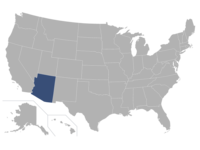
Arizona’s congressional Democrats are calling to repeal a federal plan that would spend billions on a school voucher tax credit, saying the Grand Canyon State’s universal voucher program is proof that public schools across the country will suffer.
The “One Big Beautiful Bill” that President Donald Trump and congressional Republicans championed last year included a tax credit, beginning in 2027, that would reimburse individual filers up to $1,700 and up to $3,400 for married couples who donate to organizations that award students educational scholarships. The tax credit is projected to cost $26 billion by 2030.
The plan has been widely criticized as a strategy to promote the creation of state-run private school voucher programs and encourage students to leave public schools.
Arizona was among the first states to set up a voucher program that pulled money from public schools to pay for a student’s education elsewhere. Initially designed as a way to help students with special educational needs, Republicans have since expanded it for all students to use, even those who have never attended a public school.
It now costs the state about $1 billion annually, and it continues to grow. Opponents argue the program siphons money away from already underfunded public schools to pay for the private school tuitions of wealthy families.
Public education advocates fear the new federal tax credit will only worsen the blow for schools crippled by state voucher systems. While the tax credit theoretically allows for donations to be made to organizations that give scholarships to students who choose to attend public schools, the “Education Freedom tax credit” has been largely billed as a win for school choice, a movement aimed at supporting private schools. Students who move away from a public school education reduce the per-pupil funding that public schools receive.
In a bid to stop the federal tax credit from ever being implemented, U.S. Sen. Mark Kelly and U.S. Rep. Adelita Grijalva proposed legislation earlier this year to repeal it. In a written statement advocating for the legislation, Kelly pointed to Arizona’s Empowerment Scholarship Account system as an example of why a national voucher plan is the wrong move.
“Arizona is a clear example of the consequences of diverting taxpayer dollars to private school vouchers: fraud, benefits going to families who can already afford private school, and public schools losing funds they desperately need,” he said. “Now, the Trump administration wants to take that same approach nationwide. We should be investing in public schools that serve all kids, not expanding a voucher program that risks more waste and abuse.”
Grijalva told the Arizona Mirror that public education has made a positive impact in her family, and she strongly opposes policies that defund it. Her grandfather moved to the U.S. as a laborer under the U.S.-Mexico Bracero initiative, with a primary school education. And her father, Raúl Grijalva, later became a congressman, which she attributes to his access to public school.
“For in one generation to go from working the land to writing laws in the halls of Congress — that doesn’t happen without public education,” she said.
Grijalva added that there’s no flexibility for her on the issue, and claims from some Democrats that the tax credit could benefit public schools aren’t enough to sway her, she said. New York Gov. Kathy Hochul signed the state up to participate in the plan last week, saying she wouldn’t “leave money on the table” that could potentially go towards public schools.
And Grijalva said no amount of amendments ensuring school voucher programs have strict oversight would change her mind.
“My money needs to go to public schools and there’s no wiggle room for me on any of it, because what we are doing is we are lessening opportunities for people,” she said. “We are creating a society of haves and have nots — and if you have the money, you can get a quality education and if you don’t, you’re going to be relegated to whatever’s left in our public schools.”
The U.S. Department of Treasury released preliminary rules for the tax credit program on Oct. 2 that appear to block any effort by state leaders to regulate vouchers. States would be barred from earmarking the vouchers for public schools or creating accountability standards for participating schools must follow. And the rules don’t require schools that receive the money from the vouchers to meet state academic standards.
States are required to opt in to the program, and Arizona has not done so. Republican lawmakers sought to force the state to opt in earlier this year, but Gov. Katie Hobbs vetoed that legislation. Hobbs is seeking reelection in November and her opponent, Republican Andy Biggs, is a vocal school choice proponent. Biggs voted for the One Big Beautiful Bill Act as a member of Congress.
The push to eliminate the tax credit has so far been a nonstarter in Congress. Neither version of the repeal bill has been granted a hearing in either congressional chamber, both of which are controlled by Republicans. Grijalva said she doesn’t expect it to advance under the current political makeup, but is hopeful that the November midterms might change that.
“We have a lot of opportunity in the next Congress,” she said.
Phoenix, AZ