New Mexico medical malpractice reform leading to lower rates, but full impact years off, experts say
Oct 21, 2026 | 12:00 pm ET
Description
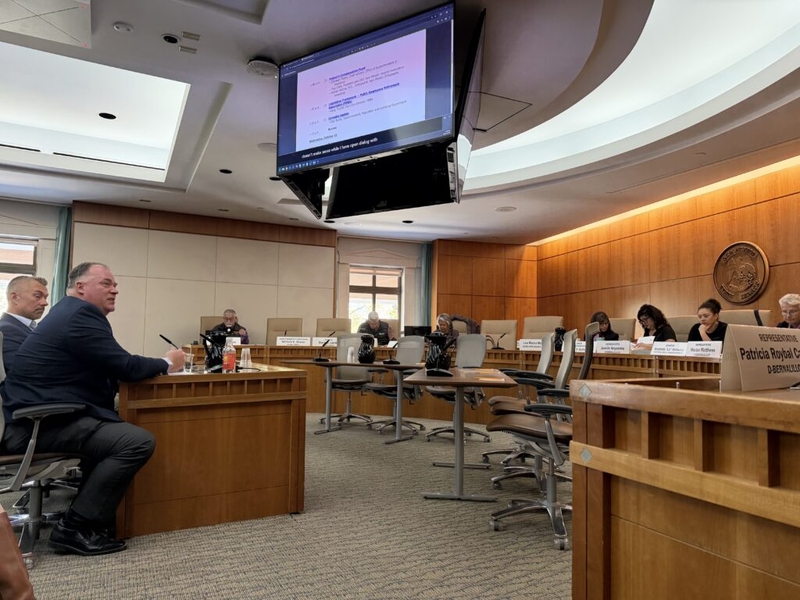
New Mexico Office of the Superintendent of Insurance Chief Actuary Christian Myers, left, and New Mexico Hospital Association President and CEO Troy Clark, right, speak before the interim Economic and Rural Development and Policy Committee in Santa Fe on Oct. 20, 2026. (Joshua Bowling/Source NM)
Medical malpractice insurance rates are set to decrease for hospitals and providers across New Mexico, but the full impact of the state’s recent legislative reform won’t take hold for another three to four years, experts told a panel of state lawmakers Tuesday.
Reforming New Mexico’s medical malpractice laws emerged as a key issue of this year’s legislative session. House Bill 99, which Gov. Michelle Lujan Grisham signed into law in March, capped the amount of damages juries can award in medical malpractice cases. It also specified that one injury counts as one malpractice claim — previously, patients could file separate claims against each provider who was present at an operation gone wrong.
A trio of healthcare and insurance experts told lawmakers on the interim Economic and Rural Development and Policy Committee that malpractice insurance rates are set to decrease for hospitals and independent providers, thanks to the new law.
“We anticipate (House Bill 99) will lower prices for providers and hospitals for medical malpractice in the long-term,” New Mexico Office of the Superintendent of Insurance Chief Actuary Christian Myers told lawmakers.
However, panel members said the state’s healthcare industry still faces several outstanding challenges. The annual number of medical malpractice settlements statewide continues to increase; only a handful of malpractice insurance providers will write policies in New Mexico; and specific data on how many physicians practice in the state is difficult to come by, they said.
“We hope that as HB99 continues to be in place longer; it’ll draw more insurance companies back to the marketplace so we get more competition and further lower the price of our medical malpractice insurance,” New Mexico Hospital Association President and CEO Troy Clark said at the Tuesday hearing.
Rep. Patricia Roybal Caballero (D-Albuquerque) questioned the panel of experts about whether the reform passed in this year’s legislative session has been successful in courting out-of-state physicians to move to New Mexico.
During the session, advocates for malpractice reform and interstate medical compacts often credited New Mexico’s outdated laws for a mass exodus of providers.
However, Roybal Caballero cited a report presented to the interim Legislative Health and Human Services Committee earlier this year that indicated that from fiscal year 2023 to fiscal year 2026, the number of medical doctors’ licenses increased statewide by nearly 4,000. She questioned whether that contradicted the “mass exodus” arguments made in favor of reform.
Clark responded that licensure numbers don’t accurately represent how many physicians practice in the state. Doctors who retire or leave the state often do not cancel their licenses, he said, meaning the figures are often an overcount.
He said that he has heard from leaders in the hospitals he works with that fewer doctors are leaving the state after the passage of medical malpractice reform, but believes that it will take “three to four years” to build up a healthy medical workforce.
“We actually have seen the exodus start to slow down,” he said. “Before, our success was trying to replace the ones that were leaving as quick as they were leaving. Now, I think we’re starting to see growth.”
Santa Fe, NM