Mass. spent nearly $400K on an energy study. Three years after its completion, the state hasn’t released the results.
Oct 21, 2026 | 9:56 am ET
Description
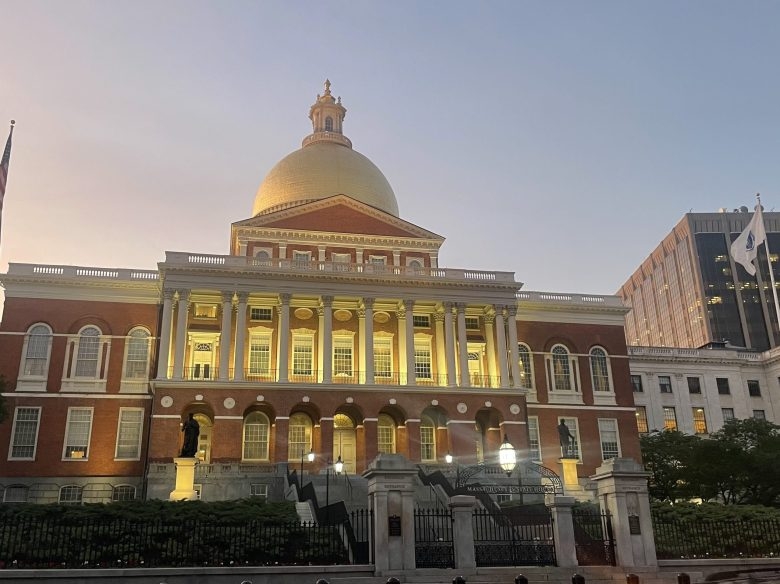
Officials on Beacon Hill are navigating the challenges of reaching net-zero greenhouse gas emissions while confronting high energy costs.
FIVE YEARS AGO, Massachusetts officials hired the Electric Power Research Institute (EPRI), a leading global energy firm, to help navigate a complicated problem quickly coming to the fore: how the state’s ambitious climate commitments would impact its electrical grid.
The expected growth in intermittent energy sources like solar and wind and rising demand for electricity for transportation and heating threatened to strain the state’s ability to deliver power reliably.
So the Massachusetts Clean Energy Center, a quasi-public state agency, set out to find innovative approaches to improve the electric distribution system.
The agency inked a $379,000 deal with EPRI in 2021 to host three workshops with the utilities, state officials, and other stakeholders, and submit a white paper to the agency outlining barriers and opportunities for meeting the climate targets. Samantha Gilman, a spokesperson for EPRI, confirmed that the organization submitted the required white paper to MassCEC in 2023 — and was paid the full amount of money for the work.
That report identified between $27 billion and $46 billion in investments that need to be made through 2050 in electric system infrastructure upgrades alone to connect more solar power, meet increased demand, respond to shifting electric generation patterns, and maintain overall reliability.
And it noted that the utilities were falling short of the average annual spending required to boost the distribution system by up to $800 million per year to modernize their vast network of substations, circuits, transformers, and other pieces of infrastructure.
Yet the study has not been publicly released. It’s one of at least three the state has commissioned but delayed or shelved on how it will reach net-zero emissions by 2050 and adapt to the impacts of a warming world.
The other cases involve a second MassCEC-led report and a high-profile analysis of the net-zero transition sought by Melissa Hoffer, the state’s climate chief. Those studies cost up to $200,000 and $650,000, respectively, putting the total cost of these delayed or buried reports in addition to the EPRI study at roughly $1.23 million.
CommonWealth Beacon independently obtained a copy of the 2023 EPRI report that MassCEC didn’t make publicly available. When presented with the report, the agency didn’t dispute its authenticity and legitimacy.
When asked why the report hasn’t been released in the last three years, MassCEC spokesperson Victoria King said in a written statement that “other state processes kicked off shortly thereafter on electric distribution investments, and the focus shifted to more concrete planning efforts being undertaken by the utilities.”
King didn’t elaborate on what other state processes she is referring to that would render the need for the EPRI report moot, given that the state had already paid for it.
Evan Horowitz, executive director at Tufts’ Center for State Policy Analysis, said in an interview that reports like these, commissioned with public money and dealing with substantive decision-making around policy choices of this magnitude, “as a matter of law, have to be publicly available, as a matter of principle, should be made public.”
“Why are you commissioning the reports and then hiding them? One possibility is content-neutral: Different people care about different things,” he said. “The other possibility is it’s not content-neutral, and the findings are somehow concerning or worrisome, and you don’t want the findings to be shared. But then the question is: What are the reports for in the first place if not to provide crucial information?”
What’s more, all three studies were set to be completed in 2023, 2024, and spring 2025, respectively, the latter of which was some 18 months before this year’s general election.
Even before Gov. Maura Healey entered the heart of campaign season — one that has been defined by skyrocketing energy costs and affordability issues — her administration has seemed sensitive to the price tag attached to the tens or hundreds of billions of dollars likely needed to support a sweeping green transition.
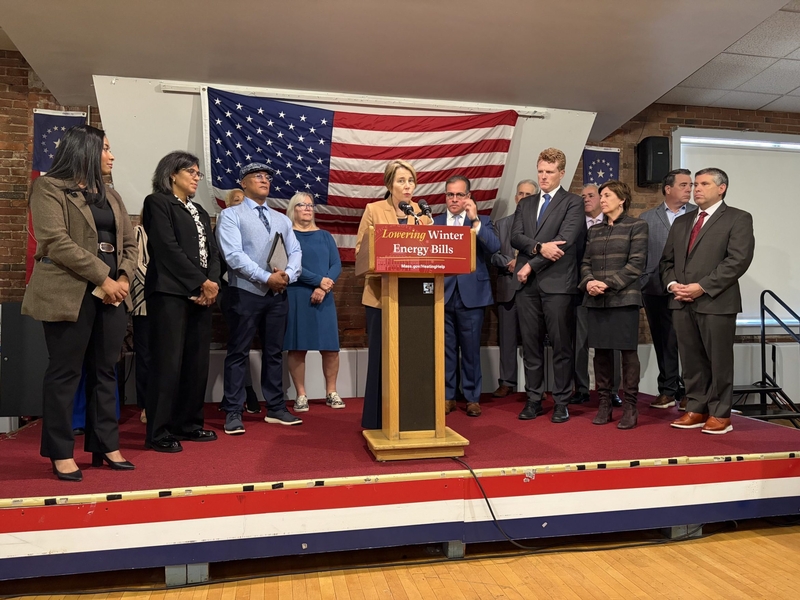
Larry Chretien, executive director of the Green Energy Consumers Alliance, said that while he didn’t know about the study or the reason it hasn’t been published, he hopes it’s not being held because the Healey administration is concerned with how the large dollar signs within reports will be perceived.
Infusing the electrical system with more clean energy and doubling down on energy efficiency would result in savings from reduced fossil fuel use and lower overall demand, resulting in less money spent on the distribution system in the first place, he added.
“If you run around just telling people it’s too complicated, we can’t deal with it, then you get the ‘don’t look up’ approach, which is when people run away from the tough conversation,” Chretien said. “There are ways of making this understandable. It’s not an excuse that it’s complicated or that the numbers are big.”
Peak demand in Massachusetts is projected to more than double by 2050, according to the unreleased ERPI report. Without addressing capacity constraints across the distribution system, a doubling of electricity would result in “overloading” distribution feeders, the conductors that transport power, that serve three-fourths of customers in the state, the study found — potentially leading to power outages and equipment damage.
The steep price tag included in the report lands among a volatile energy landscape in the state. Healey has sought to shield ratepayers from rate hikes and cast the utilities as greedy, but the EPRI study makes the case that there are legitimate significant new investments that the utilities will need to make.
Burying these findings doesn’t make the problem go away, Horowitz said.
“If you’re going to spend that much money on reports,” he added, “you better care about what they tell you.”
In another case, MassCEC hired Somerville-based consulting firm NMR Group, Inc. to study the upfront costs of electrifying and increasing the energy efficiency of existing buildings in Massachusetts.
“Our plan is to disseminate the findings broadly,” reads a description of the project on MassCEC’s website.
According to screenshots of an archived version of the webpage that show the project timeline, the report was due in spring 2025, with future updates to come in early 2026 and early 2027.
Yet in June, the webpage was changed to simply say: “The study started in September 2024 and is expected to be completed early 2027.”
King, with MassCEC, didn’t dispute the changes on the website, saying that the new timeline reflects “project delays as well as changes in scope” but didn’t provide any explanation for the delays. The request for proposals released by MassCEC in February 2024 allocated $200,000 to this project, though the agency didn’t comment on whether the final total was more or less than that amount.
NMR didn’t respond to multiple emails and calls seeking comment.
These two examples follow another previously reported case of the Healey administration seeking to slow-walk or outright avoid the release of reports that would put a large dollar figure on the cost of the green transition.
Hoffer, the nation’s first cabinet-level climate chief who was appointed by Healey on her first day in office, laid out an 87-page agenda in 2023 detailing her priorities. The first item on that list was an economic analysis of the cost of the state’s net-zero policy and the financial investments required for state officials to consider to meet that cost and dramatically cut pollution.
Hoffer wanted the report done by the end of 2024. Yet after receiving five bids to conduct this work and selecting Boston-based AECOM to embark on the sprawling study at a cost of up to $650,000, the contents of the report remain unknown to the public nearly two years after Hoffer’s due date.
In an interview earlier this year as part of a wide-ranging profile, Hoffer indicated that the report has in fact been submitted and she has seen it. The net-zero analysis is “largely informing policy,” she said, but “is still under review.”
Robert Rio, a former senior vice president at the Associated Industries of Massachusetts who now lobbies on energy issues through his own firm, said that businesses and residents are already at a “breaking point” when it comes to energy costs.
“Any initiatives from here on,” Rio said, “need full cost transparency to regain the trust of the ratepayer.”
Boston