Idaho helped start the nuclear age. We should help write what comes next.
Oct 21, 2026 | 6:00 am ET
Description
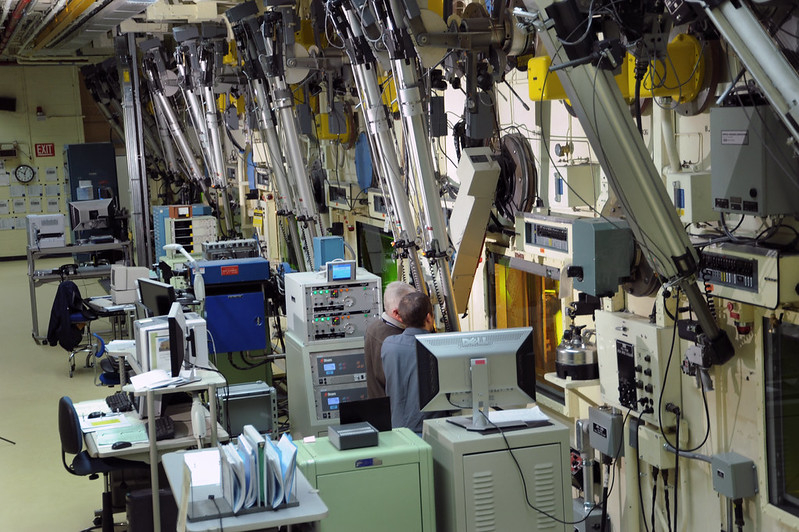
Researchers work in the Idaho National Laboratory's Hot Fuel Examination Facility. (Photo courtesy of the Idaho National Laboratory)
In July, the U.S. Department of Energy named Idaho as a finalist to host one of three Nuclear Lifecycle Innovation Campuses.
As former legal counsel for Idaho Gov. Butch Otter and administrator of the Idaho Governor’s Office of Species, Minerals, and Energy Coordination, I’ve spent years working on nuclear policy. I think Idaho is the logical location to host one of these campuses. I also think we can do so without surrendering the protections two governors fought hard to win.
In nuclear campus talks, Idaho Gov. Brad Little says protecting Snake aquifer is ‘nonnegotiable’
As proposed by DOE, winning campuses would accept approximately 33,000 tons of the country’s used nuclear fuel and radioactive waste from other states where some would remain for final disposition. Understandably, that might set off some alarms— perhaps images of the green goo from “The Simpsons” come to mind.
And given the federal government’s proclivity prior to 1995 to dump nuclear waste here without a clean-up plan, our state leaders were right to fight for the health and safety of Idaho’s people and environment.
Idaho is in the lead when it comes to nuclear technology
For the past 30 years, the 1995 Settlement Agreement has served as Idaho’s strongest and one-of-a-kind negotiating tool with the DOE to protect public health and the environment while addressing nuclear waste. But technology has advanced rapidly, and we’ve discovered that what was previously deemed “waste” or “spent fuel” has a lot more life left and can be recycled and reused.
In 1995, the signers of that agreement could not have contemplated a thriving nuclear industry where fuel is not merely used once in a reactor and then prepared for permanent disposal. Today, new reactors can run on used fuel, and there’s a growing interest in recycling and repurposing its components.
Much of what we know about the opportunities for used fuel is the result of the work done at Idaho National Laboratory. INL leads the pack nationally in used-fuel research. Next year, it will evaluate how used high-burnup fuel holds up in long-term storage. Being named host of a Nuclear Lifecycle Innovation Campus recognizes what is already happening in Eastern Idaho and expands on it.
The opportunities for recycling fuel at or near INL are significant. And recycling what’s onsite now and what may come from other parts of the country ultimately means less material that is truly “waste.” That is a win for the industry and a win for Idaho.
Questions remain on what a Nuclear Lifecycle Innovation Campus would mean for Idaho
There are still many unknowns and unanswered questions about what becoming a Nuclear Lifecycle Innovation Campus might mean for Idaho. The Nuclear Waste Policy Act must be amended by Congress before any new campus can be designated. That law names Yucca Mountain in Nevada as the location for the used fuel and waste contemplated by the DOE.
The Nuclear Waste Policy Act is also not clear about if or when DOE must take title of commercial used fuel.
All used fuel at INL is owned by DOE. But as commercial reactors continue to be developed, questions remain over whether DOE is ever obligated to take ownership of the fuel used by these reactors or whether there is opportunity for those companies to recycle and reuse it.
DOE must also pay significant sums to whoever is storing this used fuel and waste. So far it has remained silent on that point.
We should build upon Idaho’s foundation with the 1995 Settlement Agreement
The Settlement Agreement is Idaho’s strongest negotiating tool, and we should continue to use it that way as we look closely at the opportunity to be a Nuclear Lifecycle Innovation Campus host.
Idaho’s current practice is to allow, through waivers to the Settlement Agreement, limited “research quantities” of used fuel to enter the state for INL to study. (The Navy’s fuel, which differs from this research fuel, is handled under its own addendum and negotiated separately.)
The innovation campus deal should be contemplated the same way. What is DOE trying to build, and what does it aim to deliver by the end of 2027, 2028 and beyond? Much of what it hopes to accomplish is already in progress in Idaho.
A comprehensive overhaul of the Settlement Agreement is likely not necessary for all parties to win. Keep the agreement intact, and write Idaho’s terms into whatever comes next.
How, for instance, can the nuclear sector take advantage of reprocessing and recycling opportunities to minimize the overall volume of genuine “nuclear waste” requiring secure disposal? It would be a shame not to leverage the existing Settlement Agreement, but even more disappointing to let this opportunity that bolsters our economy and puts Idaho front and center of the burgeoning nuclear energy surge fall away.
Idaho is uniquely positioned to be the place that figures out how to study, recycle and reuse that fuel, a contribution that could shape national and global energy for generations.
Boise, ID