Husband of RI Democratic Party leader indicted on federal fraud charges in Ohio
Oct 20, 2026 | 1:32 pm ET
Description
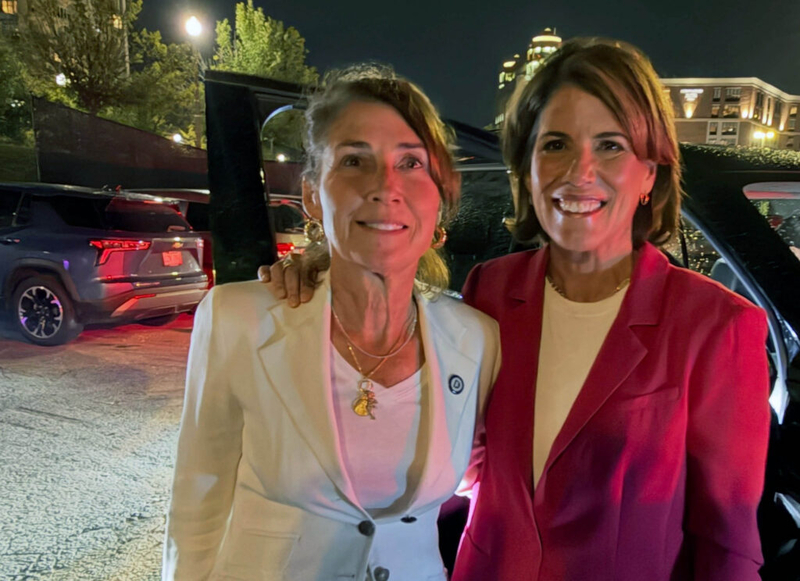
Rhode Island Democratic gubernatorial nominee Helena Buonanno Foulkes, right, is shown at her victory celebration in Providence on the night of the Sept. 9 primary, with state Democratic Party Chair Liz Beretta-Perik, left. Foulkes has called for Perik to step down after Perik's husband was indicted on 12 felony charges in Ohio. (Rhode Island Democratic Party Instagram post)
Rhode Island Democratic Party Chair Liz Beretta-Perik is facing calls to step down in the wake of her husband’s indictment by an Ohio grand jury on felony fraud and racketeering charges.
Michael Perik, of Jamestown, is one of three people facing charges of stealing $20 million in federal grants and aid intended to support students at the now-closed Eastern Gateway Community College in Ohio. Ohio Auditor General Keith Faber announced the grand jury indictment on Oct. 8, which includes 12 felony charges against Perik for theft, fraud, bribery, money laundering and corruption.
Beretta-Perik declined to comment. In a text message Monday, she said the charges were unrelated to her or her work as chair of the state party.
Perik’s attorney has denied any criminal wrongdoing, calling the investigation “purely political payback” from a change in federal administration.
Helena Buonanno Foulkes, the Democratic gubernatorial nominee, on Monday night called for Beretta-Perik to step down from her elected position as party leader, citing the upcoming Nov. 3 election.
“These are serious and concerning allegations,” Foulkes said in a statement. “While everyone is entitled to due process, we are weeks away from a pivotal election that will determine the future of our state for years to come. I thank Liz for her service, but in the best interest of the future of Rhode Island, she should step aside at this time.”
As party chair, Beretta-Perik plays a key role in raising money for and awareness of Rhode Island’s state and local Democratic candidates, including Foulkes. Elected unanimously by the Democratic Party State Committee in 2023, Beretta-Perik is the first woman to lead the state party.
Campaign finance records show her husband, Michael Perik has donated to dozens of high-ranking Democratic politicians in Rhode Island, including $2,000 to Foulkes during her first gubernatorial campaign in 2022. Angelika Pellegrino, a spokesperson for Foulkes’ campaign, did not immediately respond to requests for comment about the donations from Perik.
Across the aisle, Aaron Guckian, the Republican gubernatorial candidate, also called for Beretta-Perik to resign. And GOP Party Chairman Allyn Meyers urged Democratic party officials to address the allegations publicly.
“While the Democratic Party Chairwoman has not been charged with any wrongdoing, Rhode Islanders deserve transparency when allegations of corruption of this magnitude involve the immediate family of our state’s top Democratic Party official,” Meyers said in a statement Monday.
Calling the charges against Perik “disgraceful,” Meyers said the allegations, if proven, are a “staggering betrayal of public trust.”
Independent gubernatorial candidate Ken Block opted not to enter the fray. Block said he would “leave it up to Democrats” to decide party leadership.
Katherine Riordan, executive director for the Rhode Island Democratic Party, declined to comment.
Joe Paolino Jr., the state party’s national commiteeman, defended Beretta-Perik.
“This is her husband, not her,” Paolino said in an interview Tuesday. “Why get penalized by her spouse?”
Paolino, a former Providence mayor and prominent downtown developer, also said there was a double standard for women in high-ranking positions.
“If her husband had been Democratic state chair, and she had been indicted, I don’t know if anybody would ask for his resignation,” Paolino said.
As former CEO of an education consulting firm, Perik worked with the Ohio community college, overseeing a tuition discount program for students who belonged to or had family members in unions.
The program, which included online options available to students nationwide , contributed to “enormous” enrollment growth at the Steubenville, Ohio, college until 2021, when state and federal education regulators put the college on probation amid evidence of mishandling federal financial aid.
Enrollment plummeted, and the college closed in October 2024. A year later, the state auditor, now the state’s Republican attorney general nominee, released an audit showing serious recordkeeping problems at the college, including more than $17 million in federal Pell Grants.
The 23-page indictment against Perik, his business partner and the former college president traces the federal financial aid through a series of business entities owned by Perik, alleging the shell companies were set up expressly to take advantage of the college’s federal grants and aid over a six-year period, ending in March 2022.
“They hid behind contracts to fool regulators and then disregarded those contracts and engaged in activities to control enrollment and financial aid for the purpose of maximizing their incentive compensation in violation of Federal law,” the indictment states. “Students were led to believe that they were receiving a Union-funded scholarship, when in fact their Federal financial aid dollars were taken and used to pay the education of less-needy students, and for unlawful incentive compensation payments.”
It also alleges that Perik violated the terms of the pandemic-era Paycheck Protection Program, applying for forgivable federal loans for costs already covered by the college through the grant programs.
Perik sold his company in 2021, prompting two federal lawsuits by the buyer, who alleged Perik failed to disclose that the Ohio community college that the business derived most of its revenue from was in financial trouble, the Providence Journal reported.
He pleaded not guilty in an initial court appearance last week, according to news reports.
“There was no crime or lack of transparency,” Brad Barbin, Perik’s attorney, said in a statement to Rhode Island Current Monday.
Barbin noted that the college’s financial operations were reviewed by multiple state and federal regulators for more than a decade, ending in 2024 when the Department of Justice dropped a lawsuit against the college.
“Through no fault of his own, Michael Perik followed all the protocols and received signoffs from agency lawyers,” Barbin said. “When the administrative reviewers changed, so did the interpretation of its legality.”
Providence, RI