Putting food on the table is now even harder for Michiganders
Oct 20, 2026 | 8:00 am ET
Description
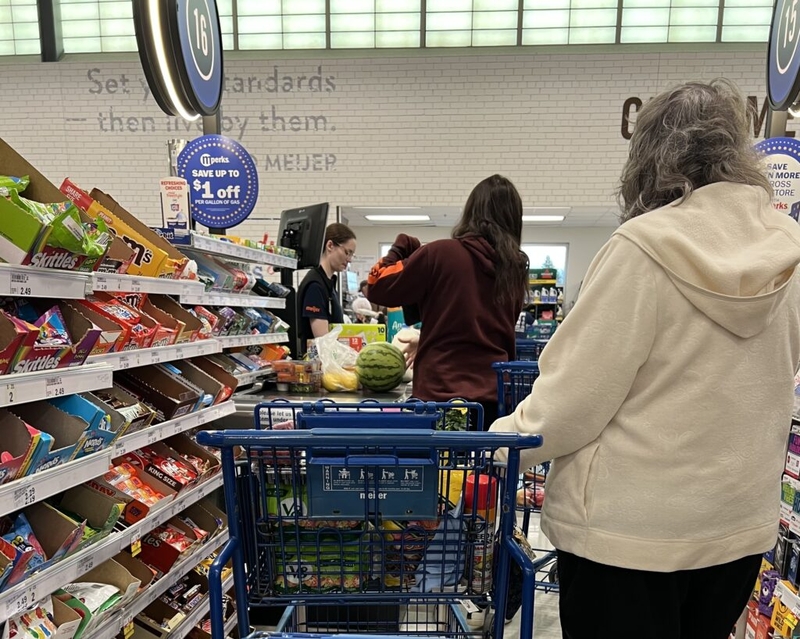
Checkout lane at Meijer store in Howell, Michigan. (Photo by Jon King/Michigan Advance)
In Michigan, the Supplemental Nutrition Assistance Program (SNAP) shows up at every kind of table: rural and urban, young families and veterans, working parents and grandparents. Right now, those tables are at risk of looking bare.
In late September, the Michigan League for Public Policy brought together parents, food pantry leaders, a school food service director and a legal aid attorney for a roundtable to discuss concerns around changes to SNAP. The event opened with the data, and it’s hard to hear.
Since the so-called “One Big Beautiful Bill Act” passed in July of last year, more than 172,000 Michiganders have lost their SNAP benefits. More than 56,000, or 1 in every 3 of those Michiganders, are children.
With Michigan’s unemployment rate barely moving since last summer (it’s still higher than the national average), the need for SNAP has certainly not decreased. These families are being pushed off because of red tape and heartless restrictions from the federal administration. And what we heard on that call showed the potential impact.
Melissa Miles, a graduate student and mom of a 6-year-old in Hillsdale County, said there’s just not enough time in the day to keep up with everything the new rules require. They change faster than she can track them. Colleen Sadows, a parent and graduate student in Washtenaw County, described being right on the edge of eligibility. If she picks up a little extra income, she loses SNAP, even if that income still falls short of a living wage.
Elly Jordan of the Michigan Poverty Law Program pointed out that these changes are hitting everyone on SNAP, including people with disabilities who are supposed to be exempt from work requirements. Shelters and domestic violence programs are now spending their own limited resources just helping residents keep up with paperwork. And Dan Gorman, who runs the food service department at Montague Area Public Schools, explained that his district qualifies for a federal provision that provides access to free school meals, but that eligibility depends on how many local families qualify for SNAP. As SNAP enrollment drops, schools lose that eligibility and the state has to pick up the extra cost.
Food banks cannot possibly make up for the losses this preventable crisis is causing. Greta Faworski from Kalamazoo Loaves and Fishes told us her pantry has seen a 56% jump in people asking for help. Last November, when the federal shutdown delayed SNAP benefits, they went from serving about 800 people a day to 1,200 a day. That meant adding staff and buying more food when shortages and rising prices made things even harder, especially in northern and rural counties where the percentage of children facing food insecurity is often over 20%.
As of October 1, the federal administration now requires states to pay a larger share of SNAP’s administrative costs. In Michigan, that adds up to $95 million this year alone. By next October, the cost could rise to $400 million a year. Where will we come up with that money? It will mean cuts to something Michiganders need.
But Congress has an opportunity to turn this around for the people they serve. Michigan members of Congress can protect SNAP and delay these devastating cost shifts by acting by the end of this year. For the sake of every community in our state, we hope they do the right thing.
Lansing, MI