Tennesseans should oppose displays of the Ten Commandments in public schools
Oct 20, 2026 | 6:00 am ET
Description
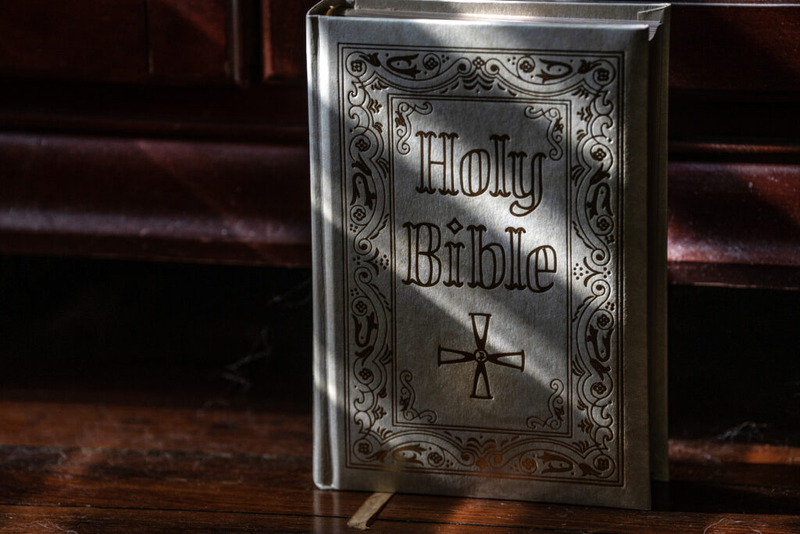
At least five public school districts have approved the display of the Ten Commandments since a GOP-backed law allowing them to do so took effect July 1. (Photo: John Partipilo/Tennessee Lookout)
Photograph by John Partipilo/
My parents homeschooled me through 11th grade to ensure religion would play an essential role in my upbringing.
Then they sent me to public school for 12th grade and a public college to ensure I had a well-rounded education and a fulsome understanding of how civil, secular America worked.
What would my education, or yours, have looked like if our parents didn’t have the choice to bring religion into, or keep it out of, our schooling?
When government-run institutions such as Tennessee public schools recognize a specific faith, even in something as seemingly anodyne as a depiction of the Judeo-Christian Ten Commandments, it sets a precedent for sidelining all other faiths and establishing a state-recognized religion, an act anathema to what the Founding Fathers intended.
Republican legislators want to rewind Tennessee into the pre-Enlightenment era when religious power and state power were one and the same
Following a Republican-led bill that became law on July 1, at least five Tennessee public school districts have voted to display a specific, state-approved version of the Ten Commandments in prominent common areas like entryways and cafeterias throughout dozens of schools.
To use public schools to boldly depict Biblical scripture is to interfere with parents’ well-established rights to guide their children’s religious education. Furthermore, it is a significant step in the direction of using state power to recognize the religious laws of one faith.
The move is reminiscent of a period in history no one in their right mind would want to return to.
Before and during the 1688-1789 Enlightenment period that gave us sweeping democratic revolutions and the idea that legitimate political power comes only from the consent of the governed, European monarchs ruled their countries and colonies not just with sheer military force, but by so-called divine decree bestowed upon them by a singular, state-recognized religion; be it Roman Catholicism in Spain, France, and Italy, Anglicanism in England, or Lutheranism and Protestantism in Prussia and much of northern Europe.
The irony, of course, is that Tennessee’s Republican leaders, many of whom claim to be constitutional conservatives and admirers of the Founding Fathers, are attempting to create in Tennessee the very pre-Enlightenment conditions that the founders boldly repudiated.
What the Founding Fathers actually said about religion and the government
Christian nationalists who seek to remove the barrier between church and state often trot out the line that, because many of the Founding Fathers were vocal about their Christian and Deist beliefs, that must make the nation Christian.
They never make the next obvious logical step.
The Constitution is one of humanity’s greatest creations because it was created by deeply faithful men who knew our founding document had to be secular, not in spite of it.
The Founding Fathers did not err when they wrote “Congress shall make no law respecting an establishment of religion” into the First Amendment. And they did not make a mistake when they explicitly banned religious tests for public office under Article VI (both instances of which are the only times the Constitution ever mentions the word “religion”).
If you do not believe me, just hear it from them.
In 1802, then-president Thomas Jefferson came to the aid of the Danbury Baptists who were being forced to pay taxes to Connecticut’s then-official Congregationalist ministers and buildings. Jefferson said the First Amendment’s establishment clause built “…a wall of separation between Church & State.”
James Madison argued that only by preventing the government from recognizing a state religion could America truly promote religious freedom. “The number, the industry and the morality of the priesthood, and the devotion of the people have been manifestly increased by the total separation of the church and state,” he wrote. He also penned Memorial and Remonstrance against Religious Assessments in 1785 to protest a bill that would have used public tax money to pay Christian teachers.
George Washington opposed establishing a state religion and rejected infusing Christian language into government. “You will permit me to observe that the path of true piety is so plain as to require but little political direction,” Washington wrote in 1789. “To this consideration, we ought to ascribe the absence of any regulation, respecting religion, from the Magna-Charta of our country.”
In 1787 John Adams wrote, “The United States of America have exhibited, perhaps, the first example of governments erected on the simple principles of nature. In the formation of the American [state] governments, it will never be pretended that any persons employed in that service had interviews with the gods, or were in any degree under the influence of heaven. These governments were contrived merely by the use of reason and the senses.”
Contrast those founding principles with Tennessee’s Republican lawmakers’ efforts to legislate a single religious doctrine into public schools, and you can see how far we have fallen from what the founders intended.
Demanding the separation of church and state isn’t an attack on religion; it is a means of protecting all faiths
At the time of this writing, the ACLU of Tennessee, ACLU, Americans United for Separation of Church and State and the Freedom From Religion Foundation have sent letters requesting public records from school districts planning to put the Ten Commandments in school buildings, but no lawsuits have been filed yet.
Tennesseans need to make their voices heard. Even, and especially, the most religious among us should demand a government that does not play favorites with faith.
The Founding Fathers rebelled against totalitarian alliances between churches and kings. The fruits of that rebellion are borne in the freedoms we enjoy today.
We would be fools to surrender them.
Nashville, TN