Women see gains, but still struggle to stay in Maryland workforce compared to men
Oct 20, 2026 | 5:00 am ET
Description
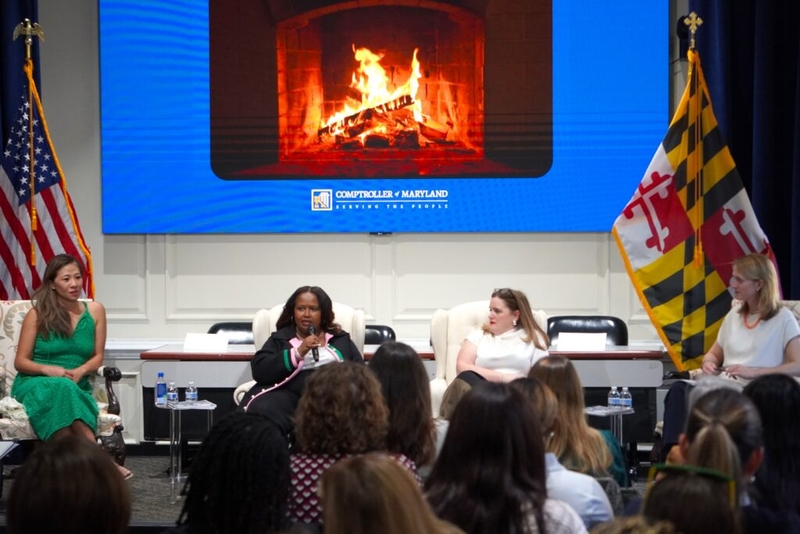
Comptroller Brooke Lierman, right, invited women's advocates and laid-off federal workers Monday to discuss a recent report on how women fare in Maryland's economy. (Photo by Danielle J. Brown/Maryland Matters)
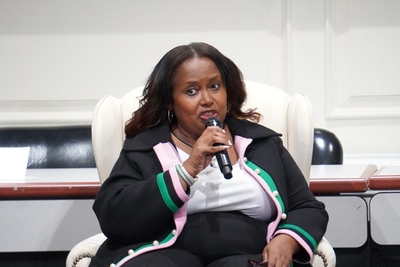
Ronicsa Chambers did not expect that her job at the Federal Aviation Administration would be one of thousands that would be suddenly cut last year under the second Trump administration’s efforts to reduce federal spending.
But Chambers, who was the FAA’s Diversity, Equity, Inclusion and Accessibility manager, was one of almost 30,000 Marylanders who lost federal jobs in the rapid layoffs and project terminations that began in early 2025, cuts that may have disproportionately affected Black women, according to a recent report.
“They said, ‘Don’t show up, and we’ll call you back,’” Chambers said Monday. “And then I got a call later on that said, ‘You are now officially on administrative leave.’ It happened so fast I couldn’t even put out an out-of-office message.”
Chambers told her story to an audience of dozens of state and local leaders, organizers and women’s advocates at the comptroller’s office, where the report was released outlining women’s experience in the Maryland economy.
Among the findings in the Women and the Economy report was that Black women’s overrepresentation in federal jobs compared to their share of the state population may have led to them being hit hardest by the federal layoffs.
“Women, especially Black women, were over-represented in departments that experienced large-scale layoffs, like the Department of Education. National estimates suggest that by August 2025 … cuts had reduced Black women’s federal employment by 25%,” said the report, released earlier this month.
The report also found that women continue to participate in the labor force at lower rates than men; that the participation gap is wider in some parts of the state and for non-English speakers; and that women are more likely to start their own business than men, among other findings.
It’s the latest in a series of “State of the Economy” reports from the comptroller’s office that have focused on the state’s major industries and the effect of migration trends on the economy, among other topics.
The latest report is the first broad statewide analysis of women’s participation in the Maryland economy, said Comptroller Brooke Lierman, the first woman to hold that office. She said nine roundtables, engaging more than 200 women across the state were convened to learn what barriers keep women from reaching the same economic standing as Maryland men.
Lierman, who is running for reelection, said she hopes that reports like the most recent one will help guide future economic deep-dives under the next comptroller — whether it’s her or someone else.
“I am a working mom, I have two school-age kids … I am the first woman to serve as Maryland’s comptroller. Even if I were not any of those things, I think it is important to recognize the significant contributions that Maryland women make to our economy,” she said Monday. “It should not be contingent on having a woman in office to recognize the opportunities and challenges that are presented to over half of the population through our economy.”
Labor gap and barriers
Much of the “Women and the Economy” report focuses on gap between men’s and women’s participation in the workforce. Overall in Maryland, 68% of people age 16 or older in the civilian, non-institutionalized population are working or actively looking for work, the report said. But the rate for men is 73%, compared to 65% for women.
The reason for the gap is nuanced and varies by population, the report said.
Some counties in Western Maryland and on the Eastern Shore, for example, have a wider gap than more populous areas. Roundtables with residents of those areas attributed the gap to “limited job opportunities, fewer options for higher education and lower educational attainment among residents, inadequate access to public transportation and childcare, and societal expectations placed on women regarding ‘appropriate’ forms of employment and unpaid work – chiefly caregiving.”
Ariana Kelly, a former state senator from Montgomery County who is now executive director of the Maryland Commission for Women, said a top concern is the caregiving economy, both in terms of the workforce and the pressure for women to take on caregiving duties in their personal lives.
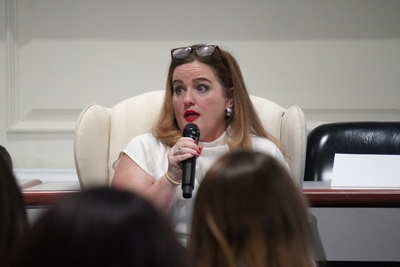
“A huge number of women are professional caregivers, which are profoundly underpaid,” Kelly said. “We need to figure out how to treat childcare and elder care as an important part of our economy, of the economic structure we live in, in the same way we treat transportation and public safety and education.”
The report identifies policies that could ease the childcare burden on women to let more of them return to the workforce, including work policies for remote work or hybrid options. It also says paid family leave policies can help keep women in the workforce. Maryland is set to have paid family leave benefits available across the state starting next year.
The labor force divide grows when other elements are factored in.
Men aged 25-64 without a high school diploma have an 81% workforce participation rate, compared to 57% for women in the same group, for example. The largest gap occurs in the working age population who are not proficient in English: Men in that group had a 91% participation rate, compared to 59% for women, the report said.
It also said women are more likely to work part-time occupations that may not offer benefits like health insurance, in industries like hospitality, retail and personal care, contributing to an overall affordability challenge for women.
That said, there are areas where women are making gains. Women were responsible for 58% of new business startups in the state between 2019 and 2023, according to the report.
Comptroller report reveals steep challenges facing Maryland’s healthcare industry
Women also make up the majority of workers in Maryland’s largest industries: They represent 80% of the healthcare workforce and 67% of educational services jobs. And women make up half of Maryland’s federal government workers.
But even those metrics come with caveats, as women are less represented in the highest-earning positions in those industries.
And the high representation of women in the federal workforce is why they were likely hit hardest by the Trump administration job cuts.
After legal challenges and other efforts, Chambers returned to the FAA in a different position, but she knows that there are thousands of other former federal employees who have not been able to come back to their jobs.
She said that during the 377 days between being laid off and finding an new job, she helped form a community with other women impacted by the federal layoffs.
“Just think about it, you had talented, professional, excited people who just weren’t allowed to come into work, and that’s just a waste in of itself,” she said. “You realize that across this state, and across the country, many women are experiencing this … such needless suffering and trauma for families and communities.”
Annapolis, MD