When it comes to Medicaid cuts in Kentucky, it’s always Groundhog Day
Oct 16, 2026 | 5:30 am ET
Description
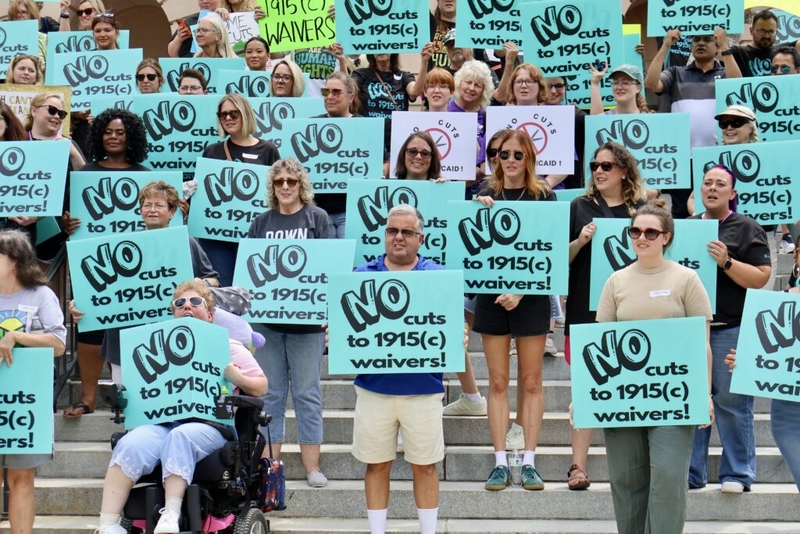
Hundreds of Kentuckians with disabilities and their loved ones and advocates came to Frankfort and pleaded with elected officials to find a way to protect the services they receive through Medicaid waivers. July 17, 2026. (Kentucky Lantern photo by Sarah Ladd)
Over the next few years, Kentucky is facing the largest Medicaid cuts in the program’s history. Starting in January, the federal One Big Beautiful Bill Act will take Medicaid coverage away from many thousands of Kentuckians. Separately, state Medicaid cuts will go into effect in July unless the 2027 General Assembly restores funding to the program. And in January 2028, the OBBBA will begin lowering Medicaid payments to providers with reductions that will deepen over the following decade.
If allowed to occur, these perilous cuts will worsen Kentuckians’ health and well-being, increase burdensome medical debt, and cost providers and jobs including by putting 35 rural hospitals at risk of closure.
The cuts are the latest in a long series of threats. Medicaid has faced danger ever since the Affordable Care Act (ACA) expanded the program in 2010 and became a political punching bag. But here’s the thing: time after time, in the face of organized public opposition, decision makers have halted major Medicaid rollbacks before the pain to communities began.
That tells us a lot about what’s at stake. And it shows why Kentuckians should urge federal and state lawmakers to stop harmful cuts yet again.
The push to cut Medicaid and repeal the ACA began as soon as the law passed. Republicans were unified in their opposition and rode the Tea Party wave in the 2010 midterms catalyzed in part by opposition to so-called Obamacare. Opponents demonized the ACA and capitalized on all it didn’t do to fix an ailing American health care system, while obscuring the good it did.
However, then-Governor Steve Beshear expanded Medicaid under the ACA in 2013, citing an obscure state law and acting right after the General Assembly had adjourned for the year. By the time the legislature reconvened, thousands of people were already gaining coverage and getting healthcare. Republicans controlled the state Senate and could have picked a fight over blocking Medicaid expansion and refusing the federal funds. But knowing that would be devastating to constituents and providers, they stood aside.
Nevertheless, rhetorical opposition to Obamacare continued throughout the 2010s — with the U.S. House voting over 50 times to overturn it — until Republicans took control of the Congress and the presidency with Donald Trump’s election in 2016. But even with a unified government, their effort to repeal the ACA failed with then-dying Senator John McCain’s famous “thumbs down” vote on the floor of the Senate. Though Republican leaders expressed disappointment at the loss, some no doubt felt relieved when tens of millions of Americans did not lose their health care.
Back in Kentucky, the legislature kept Medicaid expansion even after Republicans took full control of the legislature in 2016. Then-governor Matt Bevin attempted to establish paperwork requirements like are now in law from the OBBBA but lost in court and then in his re-election bid, in part due to his unpopular positions on health care, education and public employees.
The legislature also tried to put in place similar barriers to Medicaid enrollment through four different bills in 2019, 2020, 2022, and 2025. All of them failed to pass or were largely stripped of their harmful measures after concerted opposition campaigns led by health advocates.
But after Trump was elected a second time with Republican majorities in Congress, lawmakers passed the OBBBA and its major cuts to Medicaid in 2025. Yet fearing backlash, the law was designed so the pain didn’t go into effect immediately. It pushed the paperwork barriers until after this year’s midterm elections and set the payment cuts to start a year later and grow gradually over time.
Most recently, the Kentucky General Assembly passed a budget in April that underfunded Medicaid by hundreds of millions of dollars compared to the executive branch forecast of costs. That forced Governor Beshear to put in place Medicaid payment cuts this summer. After an outcry from constituents and providers, he reversed course and made extraordinary appropriations to Medicaid that are likely outside his legal authority. Legislators chose not to sue, standing aside yet again and averting the pain that would result.
It’s always Groundhog Day when it comes to Medicaid. We see repeated efforts to cut the program and create barriers to care. But after patients, providers and communities organize, lawmakers pull back from the brink.
Will this time be different? If so, we’ll finally witness the harm long feared by so many.
Frankfort