After the announcement, who owns the promise?
Oct 16, 2026 | 4:55 am ET
Description
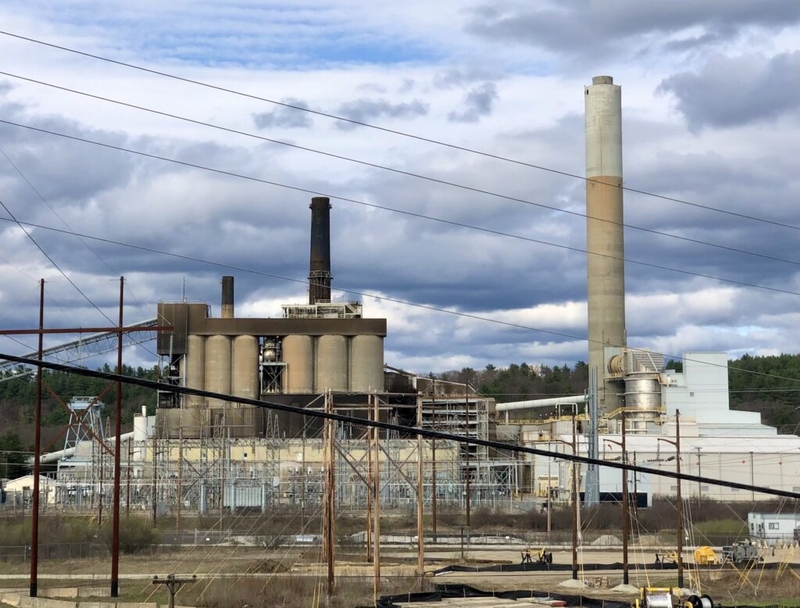
In 2024, Granite Shore described plans to turn Merrimack Station into a renewable energy park. (File photo by Hadley Barndollar/New Hampshire Bulletin)
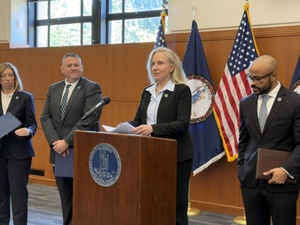
Most of us know the feeling. A statement goes out from Concord or Washington, and the thing we were worried about has been saved. New Hampshire heard that news in May, when Gov. Kelly Ayotte, Sen. Jeanne Shaheen and Agriculture Secretary Brooke Rollins announced that Hubbard Brook Experimental Forest would stay open and that plans to close facilities at Bartlett Experimental Forest would be reexamined.
The relief was earned, but the harder question comes once attention moves on: Who carries the commitment now?
I ask because of where I have worked. As the Forest Service’s Federal Register notice officer, and earlier while running a geospatial system serving nearly 300,000 Homeland Security users, I learned how decisions pass between offices. One controls staff, another controls buildings, a third controls money. An outside partner may control something essential. A public commitment needs a responsible party with the authority and resources to carry it out.
The governance failure at Hubbard Brook: Why New Hampshire must demand a transition plan
What keeping a promise requires
Hubbard Brook shows what is at stake. Scientists there have collected weekly precipitation and stream-water samples since 1963. Its physical archive holds tens of thousands of cataloged samples requiring a functioning building, environmental controls and active stewardship. A missed season cannot be collected later. Last month’s rain is gone. Keeping the research continuous requires people, money and facilities long after the announcement.
Shaheen’s May 11 release also noted that she had helped secure increased research funding and language directing the Forest Service to fill vacancies at experimental forests in the Northeast, and that she and Ayotte had requested more staffing support. That is a meaningful step. It leaves a practical question: Which vacancies were filled, and what capacity did that restore? A funding priority and an operating capability are different things.
Bartlett needs its own answer. In September, the Forest Service announced plans to close 23 research facilities, and an agency official said the work done at those stations would continue at other sites. For research tied to one forest, continuity depends on maintaining measurements at that forest. Moving staff or offices does not, by itself, establish whether that continuity survives. That assurance should be accompanied by a plain account of which Bartlett facilities remain available, who supports the research, and what the five-year research plan mentioned in May commits the agency to provide.
Development carries obligations too
The same discipline applies to the possible data center in Bow. In April, PSNH, doing business as Eversource, filed an agreement to study whether a 350-megawatt facility could connect to the grid at Granite Shore Power’s request. Reporting subsequently linked the request to a possible data center. Granite Shore owns the former Merrimack Station coal plant.
The agreement makes one responsibility explicit: Granite Shore pays for the study, with an estimated $75,000 due before work begins. It also calls for estimating the supporting infrastructure needed and the customer’s potential share of its costs. That distinction matters. Paying for an assessment does not settle the final allocation of costs for whatever is eventually built. The public should be able to follow that question into the next agreement.
Merrimack Station carries earlier public commitments, too. In 2024, Granite Shore described plans to turn the site into a renewable energy park. Residents can fairly ask how a proposed data center would relate to those plans, and which commitments are documented obligations. The answer belongs in the public record before anyone concludes that the earlier promise has been fulfilled or abandoned.
Support for a statewide moratorium crosses party lines. A pause needs an authority, a scope, a duration and a purpose. The budget proposal described by NHPR would not take effect until at least July 2027. Its eventual wording would determine what it covers. Does it pause studies, applications, approvals or construction? Those are different decisions. Calling for a moratorium leaves the work of defining and implementing it.
Who carries responsibility forward
Three questions separate a commitment from an assurance: (1) Who owns the obligation, with suitable authority and resources to meet it? (2) What evidence would show whether it is being met? (3) What survives a change in leadership, funding or ownership? If an announcement cannot answer all three, residents are holding an assurance, however sincere. Answers do not guarantee follow-through, but they make it possible to check. A forest’s staff can be reassigned. A data center can be sold. Responsibility needs to survive those changes.
A jobs forecast, a staffing request, a study agreement and a completed hire establish different things: a projection, a requested priority, an assigned obligation and a completed action. A press release records what was said on a given day. Assessing fulfillment requires evidence of what happened afterward.
Nobody can guarantee everything. A developer at the study stage cannot answer every question, and early studies have a legitimate role. But each consequential question needs an owner and an answer before the decision it affects. For a research forest, that means continuity arrangements before an irreversible reduction. For a new project, it means resolving costs and applicable impacts at the stages when the relevant commitments and approvals are made.
The people who wrote letters for Hubbard Brook, and the Bow residents who spoke at their select board meeting last month, deserve that follow-through. When the answers are public, credit the people who provided them. When they remain unclear, keep asking. Hubbard Brook’s record exists because someone showed up to collect it week after week for six decades. Public promises deserve the same sustained responsibility.
Concord, NH