Wyoming wildlife managers want to nix the Roadless Rule. Hunters and anglers want to keep it.
Oct 15, 2026 | 7:23 pm ET
Description
Photo courtesy of WyoFile
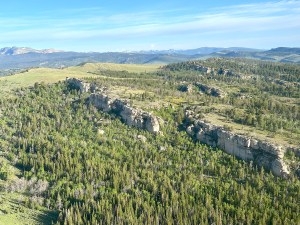
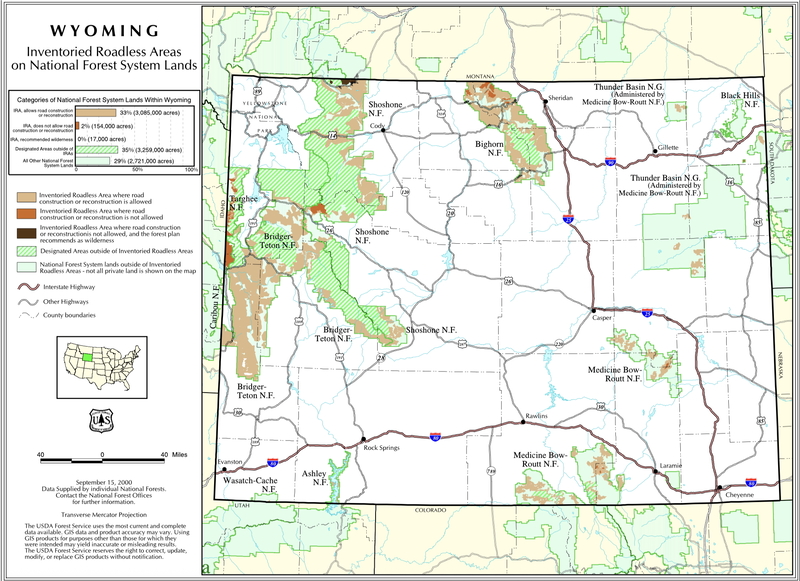
The Wyoming Game and Fish Department is among the few parties encouraging the Trump administration to fully eliminate the 2001 Roadless Rule, which safeguards roughly 3.3 million acres of backcountry in the state — valued habitat for wildlife and hunters alike.
State wildlife officials took that position in an Oct. 6 comment letter signed by Game and Fish Deputy Director Jeff Davis. It’s a stance that’s related to a desire for more local control and dissatisfaction with a “blanket federal rule,” he told WyoFile in an emailed statement.
“Locally driven planning — focused on forest health, habitat restoration, and improving public access without increasing impacts to fish, wildlife, and natural landscapes — is best guided by the people of Wyoming,” Davis said.
Game and Fish’s comment letter asks federal officials to adequately staff the Forest Service so the federal agency can successfully administer the Roadless Rule cancellation. The memo also encourages deference to the state agency’s own expertise.
“That expertise should shape decisions from the outset and should not be overridden by national-level direction without prior consultation and a transparent, science-based explanation,” the letter reads.
Regardless of its reasoning, Game and Fish’s position puts the agency at odds with the overwhelming majority of hunters, anglers and the general public. Overall, 99.1% of the 370,238 public comments received by the U.S. Forest Service opposed eliminating roadless areas.
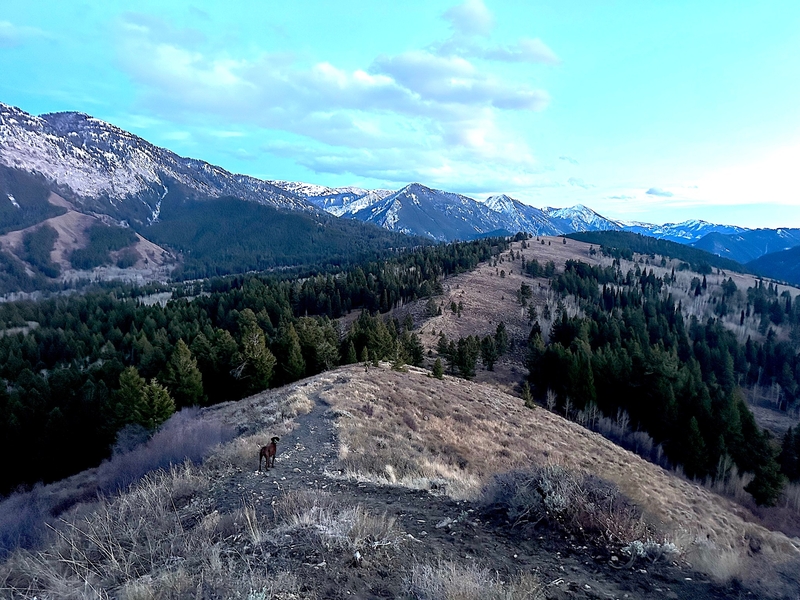
Nationally, there are 44 million acres of national forest with roadless area protections. It’s a class of land that’s often akin to backcountry, and the rule keeps it that way — future roadbuilding isn’t allowed under most circumstances. In Wyoming, there are big tracts of inventoried roadless areas in mountain ranges like the Absarokas, Tetons, Winds, Bighorns, Snowies, Laramie Mountains and the Wyoming Range.
The Trump administration has argued that the Clinton-era land protections should be eliminated to remove a barrier for wildfire-risk reduction work.
There were 95 organizations and government agencies that supported the repeal, according to an analysis from a Substack outlet, More Than Just Parks, which first pointed out Game and Fish’s support for the rescission. Industry groups — including timber and logging, mining and energy, ranching and grazing and motorized recreation — accounted for the majority of parties wanting to wipe out roadless area protections.
The Wyoming Game and Fish Department appears to be the only state wildlife management agency that submitted a comment letter supporting eliminating roadless areas, though directors for Nevada’s Division of Forestry and Department of Wildlife submitted a joint letter also favoring repeal.
Most state wildlife agencies simply didn’t comment.
Many Wyoming conservation groups did. One coalition of 18 groups wrote they “stand in strong and unanimous support” for keeping roadless areas intact, and they partly posed a wildlife argument.
“Roads fragment habitat and degrade the migration corridors that Wyoming’s big game herds depend on,” the letter from Wyoming Outdoor Council, Greater Yellowstone Coalition, Wyoming Wilderness Association and others states. “Fragmentation occurs when continuous habitat is broken into smaller, disconnected pieces, most often by roads and the development they enable.”
For those reasons, some Game and Fish retirees were miffed by their former employer’s position. Ecologist and longtime Wyoming Wildlife Magazine editor Chris Madson, who’s been an occasional critic of his former employer, said that it’s evident that roads do more harm than good for wildlife, but also hunting.
“I’m alarmed,” Madson said. “Anybody who spends any time on the public domain knows, just by the seat of his jeans, that deer and elk move away from motorized disturbance. And the more disturbance, the farther away they move.”
Craig Benjamin, executive director of the Wyoming Wildlife Federation, said that he has “tremendous respect” for Game and Fish, but he argued the agency missed its mark in asking to eliminate roadless areas.
“Wyoming’s forests need active management, and our wildlife needs intact habitat,” Benjamin said in a statement. “We can do both. If there are barriers to good management, let’s identify them and fix them rather than eliminate the entire Roadless Rule.
“In Wyoming, we fix things,” he added. “We don’t throw them away.”
Cheyenne, WY