Ballard is hoping for another once-in-a-lifetime upset
Oct 15, 2026 | 5:00 am ET
Description
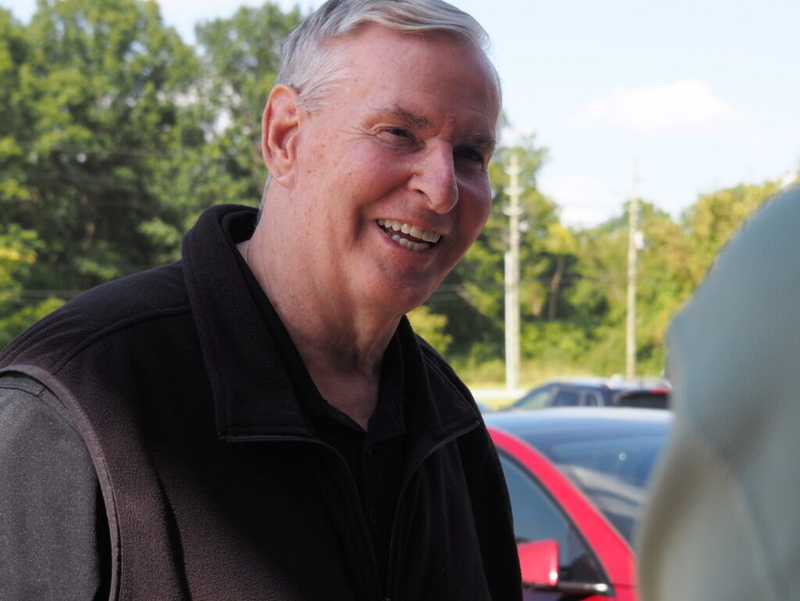
Greg Ballard, a Lincoln Party candidate for secretary of state, chats with the Indiana Capital Chronicle on Aug. 24, 2026. (Photo by Leslie Bonilla Muñiz/Indiana Capital Chronicle)
This is the second of four profiles in Indiana’s secretary of state race.
Greg Ballard has overcome the odds before.
As an unknown Republican in 2007, he forced a popular Democratic mayor out of the Indianapolis City-County Building by just 5,000 votes, despite being outspent 10-1.
Ballard widened his reelection margin in 2011, even as Democrats took control of the City-County Council. He chose not to seek a third term, leaving office at 66% approval.
He spent a decade largely outside the spotlight — including two years in North Carolina — fending off requests to run for mayor, governor, Congress and more.
Now, he’s reintroducing himself to voters, this time as an independent candidate for secretary of state. The beleaguered office leads Indiana’s elections.
“My heart is in this one. I want to do this. All the other offices I was asked to do, (for) one reason or another, just didn’t feel right to me. This one does,” Ballard told the Capital Chronicle in March, when he announced his campaign.
But he’ll have to overcome major disadvantages in money and time racked up this spring, when his campaign devoted most contributions to collecting the tens of thousands of signatures required to land Ballard’s name on the ballot without a political party’s backing.
“If we could have spent $840,000 on advertising instead of on help with signature collection, I think the race would be different today than it is right now,” Campaign Manager Nathan Gotsch said. “Now, we still have time to catch up.”
Former mayor goes statewide
Ballard was born and raised in Indianapolis, and earned a bachelor’s degree in economics from Indiana University’s flagship Bloomington campus.
Then, he joined the Marines, kicking off a two-decade career that included a master’s degree in military science, a family — his wife, Winnie, and two children — as well as service in the Gulf War.
He returned to his hometown in 2001, working for Bayer Diagnostics and as a consultant.
Ballard harnessed discontent over high property and income taxes to eke out a victory over former Mayor Bart Peterson, in what has been called Indiana’s biggest-ever political upset.
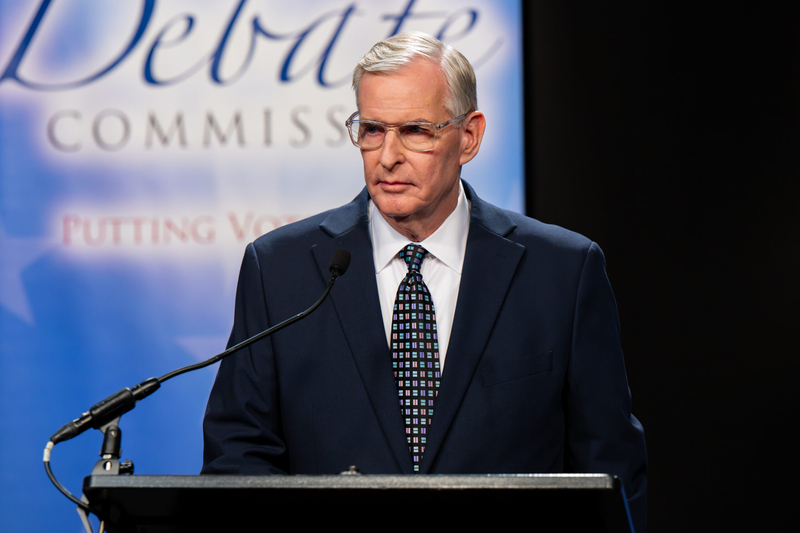
He entered the mayor’s 25th floor as a 53-year-old political newcomer at the head of a Marion County Republican Party that was navigating an increasingly Democratic city.
“He was the ‘accidental mayor.’ But what people didn’t give him any credit for was (his) military career,” recalled Joseph Loftus, a Republican and retired attorney who led the nascent Ballard administration’s transition into office.
“It wasn’t Republican and Democrat politics, but being successful inside the military apparatus required a lot of political skills … Ballard had what I always felt was a sort of uncanny political common sense about him,” Loftus said.
Ballard’s style often eschewed partisanship.
“This election shouldn’t be about Democrats or Republicans. To me, it’s about the future of our city,” he said in a 2007 TV ad for his first campaign, according to the Howey Political Report. “… I don’t care about the politics. I care about our city and I know you do, too.”
Although Loftus sought out rising young GOP stars to staff the administration, he noted some Democratic holdovers not only stayed, but were “critical” to some major initiatives.
“There was not a litmus test,” Loftus said. “I mean, it was all based on: Are you the right person for for the position? … Are you going to work real hard?”
A new kind of political party?
Ballard’s independent secretary of state bid prompted alarm within the Republican and Democratic parties in Indiana, including former allies and cheerleaders.
“I was the Republican mayor in a Democratic city, and they all loved me,” Ballard told the Capital Chronicle. “… I was the golden boy. (I) make one video saying I’m running as secretary of state, and now I’m the devil. I haven’t changed.”
He’s hoping to siphon off dissatisfied voters of both parties in his appeal to apolitical practicality — a contrast to the outbound, scandal-plagued GOP Secretary of State Diego Morales.
“I think I can clean that place up nicely,” Ballard said of Morales’ office.
He has proposed banning the secretary of state from partisan actions — endorsing, fundraising for or donating to candidates — while in office.
Other goals include a similarly anti-partisan shakeup to the Indiana Recount Commission, improved election training for county election workers and a printed voter guide sent to all registered Hoosier voters. It would be customized to the precinct level and feature candidate-submitted descriptions, and come with an estimated price tag of $2.5 million to $3 million.
But underpinning his candidacy is a challenge to the two dominant political parties.
Independent candidates in Indiana must meet signature thresholds to get on the ballot. For a statewide office, that’s 2% of the total vote cast in the last secretary of state race — totaling roughly 37,000 signatures from across Indiana.
Ballard is running under a new “Lincoln Party” label in an attempt to give future independents access to the ballot sans signature requirements.
If he clears 2% of the vote in November, the party’s candidates would be on the general election ballot for the next four years. At 10%, the party would hold a state-funded primary.
Ballard has taken significant criticism — particularly from GOP nominee Max Engling — for launching a potential party without a stated ideology or structure.
“The intent in the future is to run what we call practical, problem-solving people that you’d be proud to have in office,” Ballard said. “Both parties have numerous purity tests, have extreme ideology, and they’re playing to their (bases) now because, as I mentioned, the primary is now the main election.”
The Lincoln Party this month released what it called a statement of principles, which Gotsch has said all party officials and candidates will be required to sign and uphold. They include the “ideals of American democracy,” “standards for governing in the public interest,” and “serving with integrity and humility,” with more characteristics listed under each category.
Libertarian candidate Lauri Shillings knocked that as a “bare minimum standard” that serves as a code of conduct rather than a policy platform.
For Gotsch, however, the Lincoln Party will simply operate with a different perspective.
“This new party is not going to be like the current parties,” he said. “They’re really built on models from the the 1800s, and we have not had innovation in this space in, you know, hundreds of years. And the reason for that is because they get to set the rules.”
Racing to the end
Ballard has millions and months to make up in the last days before the Nov. 3 election.
“The disability of having to spend so much money … getting on the ballot and … then running a fall campaign — that is just a large agenda, and I’m sure hurt him for the fall,” said Jim Merritt, a Republican former state lawmaker who chaired Ballard’s mayoral campaign.
While other candidates with guaranteed ballot access began campaigning upon launch, Ballard’s campaign spent March through July collecting and submitting signatures, then waiting for their certification by state election officials.
“That was completely unfair, what they had us do,” Ballard said. “… It’s unfair for me to have to spend that money to go get signatures.”
The campaign’s strategy is to get Ballard in front of as many Hoosiers as possible. His first television ads went up Monday, weeks behind his major-party opponents. He also this week pledged to avoid negative campaigning.
Robert Vane, a Republican strategist, said he saw the makings of a similar “perfect storm” that heralded Ballard’s first surprise victory: “It’s very easy to believe that Greg Ballard is the right man at the right time, yet again.”
Vane, who served as a deputy mayor under Ballard, said he is in it for the “right reasons.”
“He’s not in it to build a resume to go on to bigger things — he’s already done the biggest things. He’s got an unbelievably successful marriage. He has two phenomenal kids. He’s served his country. He’s made Indianapolis a much better place,” he said. “When Greg Ballard tells you why he’s running for office and what he wants to do for secretary of state, believe him, because honesty is the foundation of his entire life.”
Indianapolis, IN