‘Jeffrey, I forgive you’: Father of slain children supports clemency for Indiana death row inmate
Oct 15, 2026 | 4:30 am ET
Description
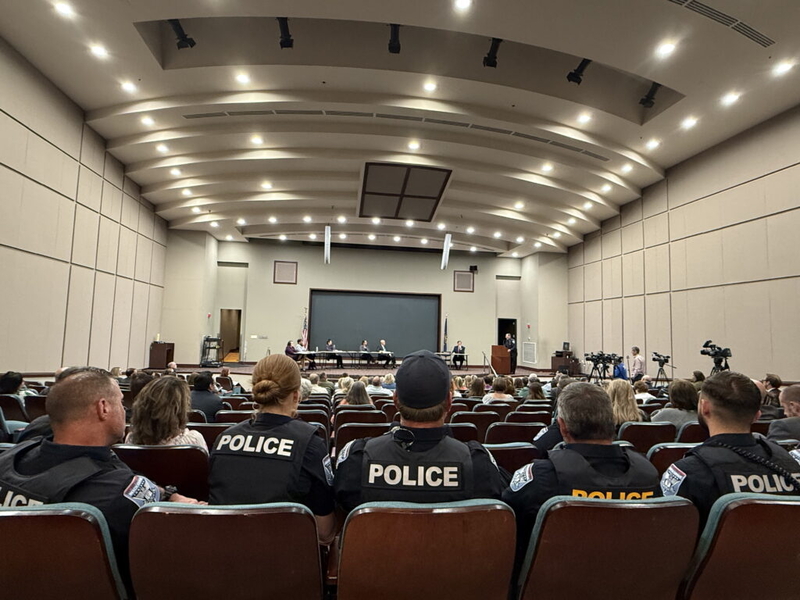
The Indiana Parole Board holds a clemency hearing on Monday, May 12, 2025, in Indianapolis, for death row inmate Benjamin Ritchie. (Casey Smith/Indiana Capital Chronicle)
The father of Alyssa and Caleb Lynch is urging Gov. Mike Braun to spare Jeffrey Weisheit from execution, saying the man who murdered his children should remain in prison for life without the possibility of parole.
Steven Lynch, whose children died in a 2010 house fire set by Weisheit, signed an affidavit urging mercy ahead of Weisheit’s scheduled Nov. 5 execution. His plea comes as the Indiana Parole Board prepares to begin clemency hearings Friday.
“What good does it do the memory of my children to put this man to death?” Lynch wrote.
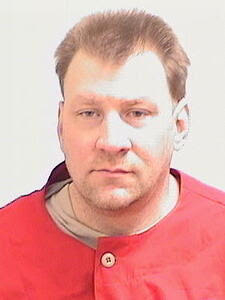
His statement, provided to the Indiana Capital Chronicle by Weisheit’s attorneys, supports their request for Gov. Mike Braun to commute the death sentence to life imprisonment without parole.
“I request that Jeffrey Weisheit receive life in prison without eligibility for parole,” Lynch wrote. “With the remaining years of his life, he would be able to continue seeking the Lord’s forgiveness and redemption for his actions.”
Steven Lynch and the children’s mother, Lisa Lynch, did not respond to the Capital Chronicle’s requests for comment.
Written clemency materials are due to the Indiana Parole Board Thursday. Board members are scheduled to interview Weisheit at Indiana State Prison in Michigan City on Friday, followed by public testimony Monday in Indianapolis. The board will make a recommendation to Braun, who has the final say.
Weisheit was convicted and sentenced to death in 2013 for murdering 8-year-old Alyssa Lynch and her 5-year-old brother, Caleb. Their mother, Lisa, was in a relationship with Weisheit and had left the children in his care while she worked.
The Indiana Supreme Court set his execution date in August. He is scheduled to die by lethal injection before sunrise Nov. 5.
Weisheit’s attorneys are seeking a two-week delay of the execution and clemency proceedings to obtain brain scans and expert analysis they want the board and governor to consider.
On Wednesday, the Indiana Supreme Court ordered the state to respond to the transportation and rescheduling requests by 4:30 p.m. Friday. Weisheit’s attorneys have until 4:30 p.m. Monday to reply.
Those deadlines fall after Friday’s scheduled prison interview and Monday’s public testimony, respectively. The order does not decide either request or change the execution date or clemency schedule. All five justices concurred.
A spokesperson for Indiana Attorney General Todd Rokita said only that the office “can’t comment on ongoing litigation.”
‘Jeffrey, I forgive you’
In his affidavit, Steven Lynch said executing Weisheit would cause another family to experience a loss he knows firsthand.
“Hurting Mr. Weisheit’s family by executing him is not the outcome my children would want,” he wrote. “I seek to save his family the great pain and loss from the taking of his life. I want to prevent another parent from experiencing the loss I have experienced.”
The two-page affidavit was signed by Lynch and notarized Oct. 7.
“I would like more time for Jeffrey to live,” Lynch wrote. “He knows in his heart what he did. What I want is to extend an act of mercy.”
He ended with a direct statement to Weisheit: “Jeffrey, I forgive you.”
Story continues below.
Joseph Perkovich, an attorney with the nonprofit law practice Phillips Black who represents Weisheit, emphasized that Lynch speaks for himself.
“From the depths of unfathomable grief, Alyssa and Caleb Lynch’s father has summoned mercy,” Perkovich said in a statement. “But it must be underscored that he simply speaks for himself, and in no way purports to speak for all the children’s family bereaved in this unspeakable tragedy. Understanding that others desire privacy, that privacy is categorically respected.”
Weisheit’s convictions stem from a fire at the Evansville home he shared with Lisa Lynch and her children.
Court documents detail how Weisheit bound Caleb with duct tape and gagged him before setting the fire with both children inside. Records also details his preparations to flee, including quitting his job and withdrawing his money before the killings.
Jurors found in 2013 that the state had proved death penalty aggravating circumstances involving multiple murders and victims younger than 12. They recommended a death sentence. Weisheit was also convicted of arson.
Dispute over brain-injury evidence
Weisheit’s attorneys argue that evidence of brain injuries, mental illness and childhood trauma was not adequately developed or presented during his trial and subsequent court proceedings.
In two emergency motions filed Monday with the Indiana Supreme Court, they requested an order directing prison officials to take Weisheit to the Franciscan Health Diagnostic Imaging Center in Michigan City for magnetic resonance imaging, or MRI, and positron emission tomography, or PET, scans.
They also asked the justices to move the execution to Nov. 19, the written-materials deadline to Oct. 29 and the public clemency hearing to Nov. 2.
The attorneys contend that imaging and more detailed analysis could help establish that brain injuries affecting Weisheit’s behavior preceded the murders. He also suffered a head injury during his arrest after police used a Taser and he fell, striking his head.
Indiana death row inmate seeks execution delay for brain scans ahead of clemency hearings
But the timing and extent of earlier injuries have been disputed in court.
U.S. District Judge Sarah Evans Barker authorized funding for investigative services Sept. 16. But in an Oct. 7 order, she denied the transportation request, distinguishing her authority to approve funding from her authority to compel state officials to help gather evidence for state clemency.
Attorneys from Indiana Attorney General Todd Rokita’s office opposed the federal transportation request, arguing that Weisheit’s federal case had ended and that the funding law did not authorize the requested order.
Weisheit’s lawyers then turned to the state’s highest court, which set the response deadlines Wednesday without ruling on their requests.
Braun ultimately decides
Braun said Tuesday that he wants information from the proposed testing available for consideration in Weisheit’s clemency case.
“We’re not going to dismiss it,” Braun said. “We’re not going to try to slow it down.”
The governor said the state’s legal team would review the information and advise him.
Under the current clemency schedule, the parole board will interview Weisheit at the prison Friday at 10:30 a.m. Central, or 11:30 a.m. Eastern.
Monday’s public hearings are scheduled in conference rooms 1 and 2 at the Indiana Government Center in Indianapolis. Testimony supporting clemency is scheduled from 9 to 11 a.m., followed by testimony opposing it from 1 to 3 p.m.
The notice provided to Weisheit says the hearing dates will not change unless his execution is stayed or rescheduled.
Braun denied clemency to Benjamin Ritchie and Roy Lee Ward before their executions last year. Weisheit’s execution would be Indiana’s fourth since the state resumed carrying out death sentences in December 2024 after a 15-year pause.
Indianapolis, IN