State study aims to identify retired power plant sites that can be reactivated
Oct 14, 2026 | 4:42 pm ET
Description
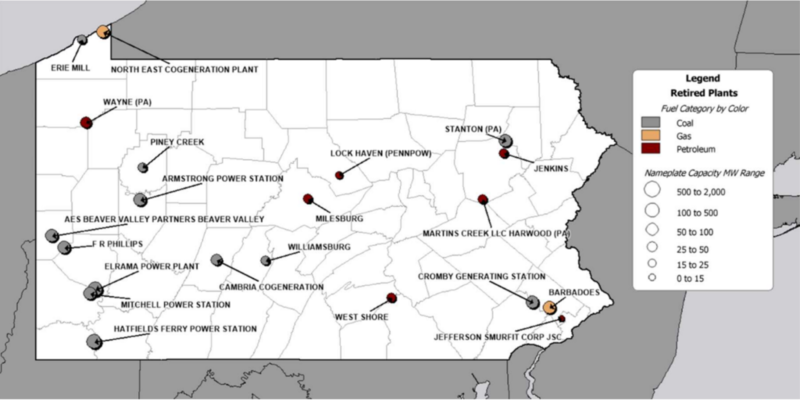
A map from the Pennsylvania Accelerated Transmission and Energy Redevelopment Study report shows sites that could be chosen for redevelopment. (Screenshot/Pennsylvania Capital-Star)
Nearly two dozen former power plant sites across Pennsylvania are part of a study to identify potential locations for new generating facilities that could help ease the region’s power crunch.
The study is being carried out with a $2 million U.S. Department of Energy grant awarded to the Pennsylvania Public Utility Commission (PUC). It’s being conducted by consulting firm KeyLogic Systems and the Electric Power Research Institute in a partnership between the PUC and the economic development nonprofit Team Pennsylvania.
The goal is to narrow the list to five to seven sites with the best opportunities to quickly deploy new power generation and optimize investments to get the most out of existing infrastructure. That will help ensure the reliability of the region’s power grid as unprecedented demand from data centers and other large electricity users mounts, according to those carrying out the process.
Named the Pennsylvania Accelerated Transmission and Energy Redevelopment (PATER) Study, it also aims to revitalize communities with industrial legacies to create long-term economic growth.
Tom Murphy, managing director for energy at Team Pennsylvania, said PATER is a way to look at Pennsylvania’s power generation and transmission system as a whole, while energy regulators and state leaders across the country look to spur new investments in the electricity grid.
“Is it possible to bring some of those brownfield sites back into the grid and restore power back?” he said, adding that the site assessments look at the potential for any new power technology such as battery storage, renewables or new nuclear technology, such as small modular reactors.
Team Pennsylvania, funded by philanthropic foundations, federal grants, public-private partnerships and industry contributions, is co-chaired by Gov. Josh Shapiro and McNees Wallace & Nurick law firm chair Brian Jackson.
The PUC held a nearly-three-hour hearing on the initial part of the study Oct. 5. The second part will run from November through March, with a public meeting set Feb. 10. That will be followed by an opportunity for public comment, PUC spokesman Niks Hagen-Frederiksen said.
Pennsylvania, the study notes, is the nation’s leading energy exporter, sending nearly 89 million megawatt-hours of electricity to other states in the PJM Interconnection grid and beyond.
PJM, based near Philadelphia in Montgomery County, is a nonprofit company tasked with managing the electricity supply and distribution for 67 million electric customers in 13 states including Pennsylvania.
In the last two years, PJM has faced pressure from regulators and elected officials, including Shapiro, as electricity prices soared, driven by forecasts showing the demand for power will increase to unprecedented levels in coming decades.
At the same time, electricity industry leaders and public officials have criticized PJM for delaying approvals for new generation to connect to the grid.
While PJM halted the queue from 2022 until this spring, it has since cleared a backlog of projects and reformed its review process to prioritize proposals with significant financial commitments.
But another report from the PUC released in September warns that the PJM region could experience rolling blackouts even if new power generation resources are built over the next 15 years, as data centers come online.
The PATER study will provide guidance for future investors on where new power plants can be added to the grid to power homes, businesses and industry, Murphy said.
“How much can we squeeze out of the grid that we have? How much can we squeeze out of the power gen that’s out there, and where do we need to upgrade both of them?” he said.
“We’re also agnostic on what the end use of the power could be. We’re not suggesting this power needs to go to this manufacturing plant or to a data center or to an EV plant or whatever,” he noted “We’re saying, ‘Where can you bring more power into the grid in a place that the grid can accept it?’”
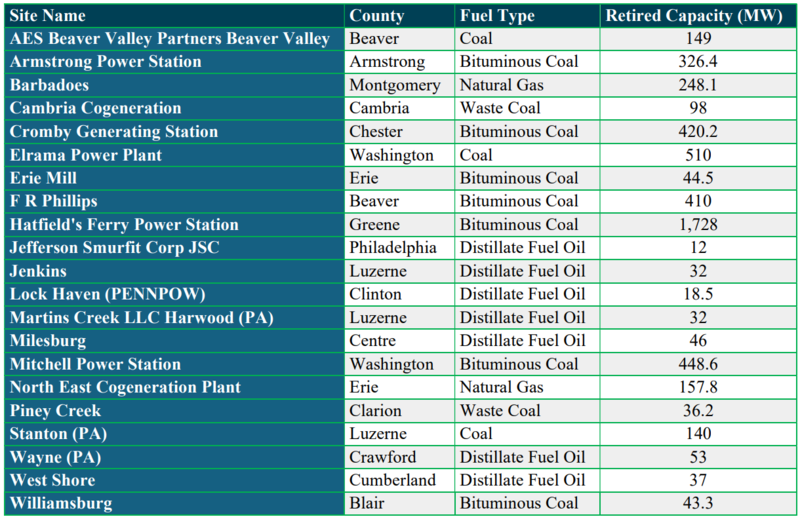
The study began with 76 power generation sites that have been decommissioned since 1971. Those locations were filtered by the size of the former power plant, whether the site is fully retired and whether the circumstances make redevelopment feasible to narrow the list to 21.
Those sites identified in the first phase of the study include retired coal-, natural gas- and oil-fired power plants in 16 counties.
The analysis found most of the sites are physically ready for redevelopment with transmission lines and substations within a mile. About half are less than 1.5 miles from natural gas pipelines and many are within a few miles of major fiber networks. The average size of decommissioned coal-fired power plant sites is about 200 acres, while former natural gas and oil-fired sites were much smaller, with nine at less than 100 acres.
Transmission capacity for those sites is significant but limited at 9 gigawatts statewide, the study found, indicating the commonwealth’s grid “retains meaningful capability to support both new generation and new load development at the candidate deactivated sites.”
It also analyzed risks present at the site, identifying groundwater contamination, flooding and geological issues at potential liability. Available transmission capacity is site-specific and could be taken up as PJM approves more new power generation.
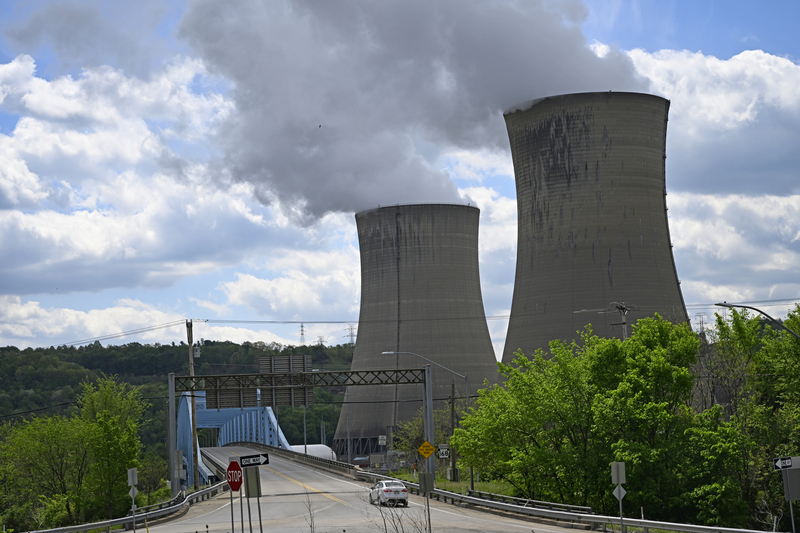
It also notes that any new development would be subject to complex regulation for air, water and land use permits and that local opposition could present challenges. It cited the redevelopment of the former coal-fired Homer City power plant as a massive natural gas plant and data center campus as an example.
Energy and tech industry leaders appear bullish on investment in new power generation, which would benefit the grid as a whole. Earlier in October, Baltimore-based Constellation Energy and Google announced a $4.3 billion commitment to upgrade 11 of its nuclear power plants, including three in Pennsylvania, to generate an additional 890 megawatts of power.
In addition, the companies inked a 15-year agreement to add another 2,700 megawatts of generating capacity to Constellation’s fleet.
And PJM is planning to conduct an auction, known as a Reliability Backstop Procurement, intended to match data center companies with investors willing to build new generating capacity in a process designed to put more power on the grid while insulating residential and business ratepayers from additional costs.
The Federal Energy Regulatory Commission last month accepted PJM’s proposal but delayed the process by five months to work out details of the plan.
“At the end of the day … it’s a story about economic development in Pennsylvania,” Murphy said, noting the PATER Study is intended to fill a need driven by increased electrification.
“If we don’t have the power, or if we have the power and we don’t have the transmission capacity to move it from point A to point B, then it’s going to stifle economic development someplace within the state, if not multiple locations,” he said.

Harrisburg, PA