Indiana lawmakers punt on high school NIL regulations
Oct 14, 2026 | 3:11 pm ET
Description
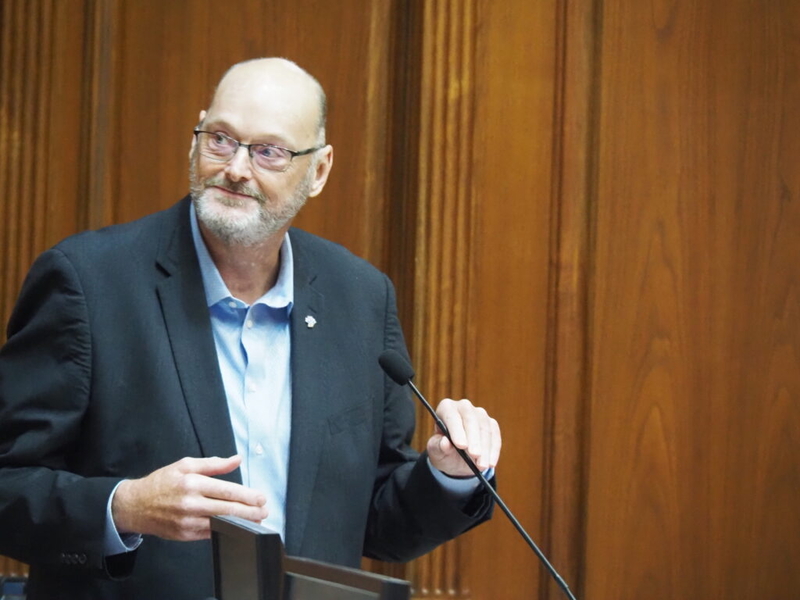
Paul Neidig, commissioner for the Indiana High School Athletic Association, addresses the Interim Study Committee on Education on Wednesday, Oct. 14, 2026. (Photo by Mackenzi Klemann/Indiana Capital Chronicle)
The name, image and likeness brand deals prevalent in collegiate athletics are trickling down to high school athletes, but Indiana lawmakers appear unlikely to regulate the practice for now.
The Indiana High School Athletic Association in May authorized its own version of the deals known as personal brand activities.
High school athletes can now broker brand deals, so long as they don’t appear in uniform or mention their team name in the advertisements.
Already, the association counts 54 student athletes making money from brand deals, IHSAA Commissioner Paul Neidig told the Interim Committee on Education Wednesday morning.
The deals range from a $5,000 contract to wear New Balance sneakers for a cross country athlete to promotional endorsements for local businesses on Instagram or apparel branded with the student’s name in exchange for a portion of sales, he said.
The personal brand activities model is designed to function as a tamer version of NIL agreements now dominant in collegiate athletics and preserve the amateur status of high school sports.
“Everyone owns their own name,” Neidig said. “We understand that.”
Coaches cannot use the deals to recruit students to transfer to their program, nor can booster clubs pay student athletes to promote their schools.
In addition to bans on wearing their uniform or mentioning their team, student athletes are not allowed to promote gambling, alcohol, tobacco, cannabis, illegal substances, sexually explicit content or weapons either.
While the IHSAA does not approve deals, students are required to report any personal branding activities to their school so the association can monitor activity and make changes as necessary.
Rep. Alex Burton, D-Evansville, asked for the study after he introduced a floor amendment on high school NIL deals last session.
Burton said the deals are an opportunity for students to learn financial management, entrepreneurship and marketing — skills that will follow them long beyond their athletic careers.
But personal brand deals present challenges too.
“How do we prevent exploitation?” he said. “How do we discourage transfers driven primarily by financial incentives? How do we establish fair and consistent expectations for public, charter and private schools? And above all, how do we ensure that a student’s education remains a priority?”
Sen. Shelli Yoder, D-Bloomington, asked whether the IHSAA offers support for families who are not familiar with how to land promotional deals, so the benefits are not limited to students of former athletes who’ve already navigated NIL systems.
Neidig said this should come from athletic departments and coaches, but acknowledged schools are struggling to recruit coaches due to increasing demands from parents and social media harassment.
Asked how closely IHSAA officials monitor student brand deals, Neidig said the association is often notified by community members who spot potential violations.
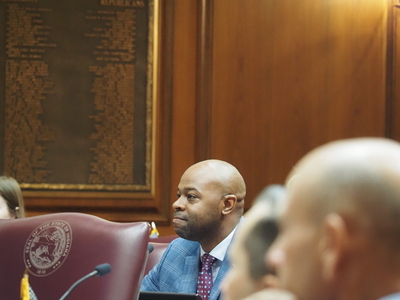
“Our first approach is to fix it,” he said. “We don’t go immediately to penalty or suspensions.”
Sen. Spencer Deery, R-West Lafayette, asked if a car dealership offering $10,000 sponsorships to every quarterback at a specific high school would qualify as recruitment.
“It could be permissible,” Neidig said. But such an arrangement would likely prompt an investigation into undue influence, he said, because all personal branding activities are to be reported to the IHSAA.
Still, Neidig conceded proving a student was recruited by the promise of a brand deal could be difficult, since few athletes or coaches would admit to it.
“That’s a significant concern, and that’s why we stay away from collectives and some of those things, and that’s why we record these types of deals so if over time we see a local car dealership that’s offered every quarterback at a local high school … we’re going to have to come back and look and see if we can make some adjustments.”
Neidig said students must pass at least 70% of their classes to remain eligible to compete in IHSAA sports.
Burton described the new era as the “calm before the storm,” as brands look for new faces to represent them when collegiate athletes age out.
“It’s going to force its way down to the high school level,” he said.
While the committee did not recommend legislation on the topic for next session, it informally asked the IHSAA to incorporate financial literacy education for student athletes.
In a statement Wednesday, Burton said he hopes to continue the discussion next session.
A survey Burton sent to parents earlier this year found great interest in investing a child’s personal branding activity money into college savings accounts or other accounts.
“Every one of the parents were supportive of that,” he said.
Indianapolis, IN