The Fix Our Forests Act builds on years of wildfire lessons
Oct 14, 2026 | 2:47 pm ET
Description
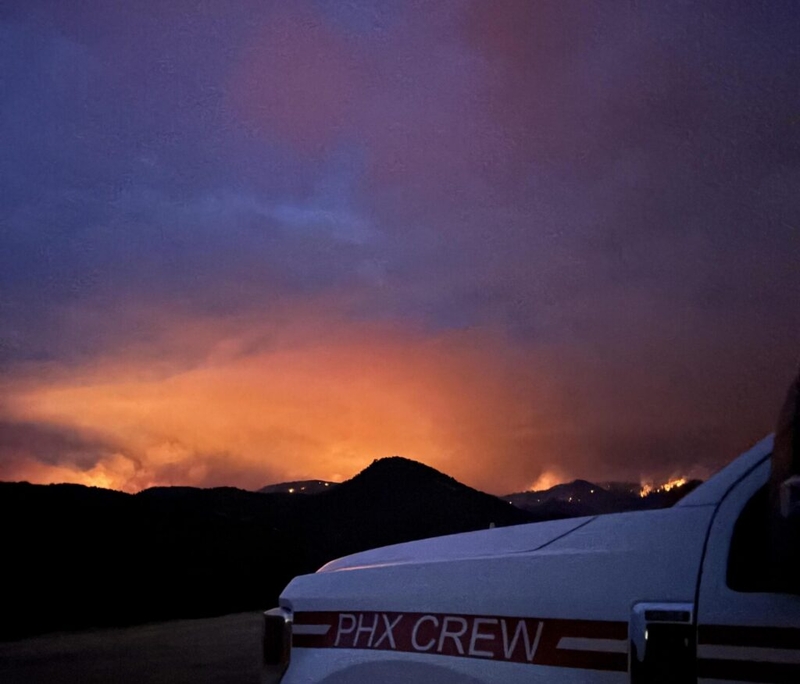
Smoke rises Aug. 15, 2026, from the Frijoles Fire, which was 90% contained at 15,956 acres as of the end of September. (Photo courtesy Inciweb)
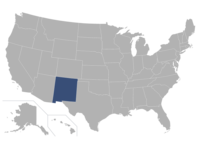
New Mexico is the Land of Enchantment. From the spruce and aspen slopes of the Carson to the wildflower meadows of the Gila, its forests sustain communities, watersheds, outdoor traditions and local economies. They are also increasingly exposed to catastrophic wildfire risk.
As executive director of Hispanics Enjoying Camping, Hunting, and the Outdoors (HECHO), I have spent more than a decade working with Hispanic leaders across the Southwest on conservation and public lands policy. Through that work, I have come to know New Mexico’s communities, landscapes, and conservation challenges well.
I was there as the 2022 Hermits Peak/Calf Canyon Fire raged. My heart was heavy as I listened to friends, partners, and local leaders share their fears for their homes, communities, and places they loved. This summer, the Frijoles Fire burned more than 15,000 acres. Even without the devastating property losses seen elsewhere, suppression has cost tens of millions of dollars, with recovery work needed to address watershed impacts after the fire subsides.
New Mexicans who have lived with wildfire risk and cared for these landscapes for generations have made it clear: we cannot simply wait for the next catastrophic fire. We must manage our forests and watersheds proactively and do it well.
How to do that has evolved over decades. In many ponderosa pine forests, grazing, logging, fire exclusion and suppression disrupted the frequent, lower-severity fires that historically shaped these landscapes, which has contributed to denser stands and accumulated fuels. Research has found that treatments such as thinning combined with prescribed fire can reduce the severity of subsequent wildfires.
Federal policy has evolved as well. The Forest Service developed the “fireshed” concept to identify, at a landscape scale, and then manage, where wildfire poses the greatest risk to communities and infrastructure. That work became part of the agency’s 2022 Wildfire Crisis Strategy, which called for treating up to an additional 20 million acres of National Forest System lands and 30 million acres of other lands over 10 years.
The Senate’s Fix Our Forests Act (FOFA), S.1462, would build on that important work. Using the Wildfire Crisis Strategy’s fireshed framework to focus on high-risk areas and expand categorical exclusions, it would give managers more flexibility to undertake larger forest management projects. It would also strengthen coordination among federal, state, local, and Tribal partners.
Effective stewardship requires managing forests proactively, at the pace and scale needed to reduce wildfire risk, while ensuring treatments are grounded in science and consistent with forest plans and existing laws.
FOFA mandates that fireshed assessments use the best available science and include a 45-day public participation period with at least one public meeting. Individual projects must also comply with applicable forest plans and environmental laws. For example, a wildfire resilience project of up to 10,000 acres could use a categorical exclusion (a streamlined form of environmental review) only if it meets the requirements Congress has established for that type of project.
Ten thousand acres may sound large, but the Frijoles Fire has already burned more than that. Wildfire can move across a landscape faster than land managers can complete years of planning and review, not to mention treatment. FOFA’s larger project authorities allow managers to act at the pace and scale needed.
These fireshed authorities are not indefinite. The bill requires an independent National Academy of Sciences evaluation of fireshed projects, reporting to Congress within five years. The authorities themselves sunset after seven years, creating an opportunity to learn from what worked and what should come next.
While FOFA is not a comprehensive solution to the wildfire challenge, it is the next step in years of federal wildfire policy. As a new HECHO case study found, its development also reflects a collaborative, bipartisan process that allowed policymakers to build on earlier efforts, work through disagreements, and develop a practical, durable path forward.
New Mexico’s leaders have been part of that evolution.
Senator Ben Ray Luján helped shape the Fix Our Forests Act through the Senate Agriculture Committee, securing provisions reflecting New Mexico priorities, including local contractors, a seedling center supporting Hermits Peak/Calf Canyon recovery, wildfire research, and access to technology.
Senator Martin Heinrich’s bipartisan Forest Bioeconomy 5 Act complements that work by finding productive uses for small diameter trees removed during forest treatments, helping offset treatment costs and support rural economies.
With years of bipartisan work behind it, FOFA now awaits consideration by the full Senate. New Mexico’s senators are well positioned to help make the case for bringing that work to the Senate floor.
Camilla Simon is the Executive Director of Hispanics Enjoying Camping, Hunting, and the Outdoors (HECHO)
Santa Fe, NM