‘Green button’ was supposed to lower KY electricity bills. Nonprofit says it doesn’t work.
Oct 14, 2026 | 10:12 am ET
Description
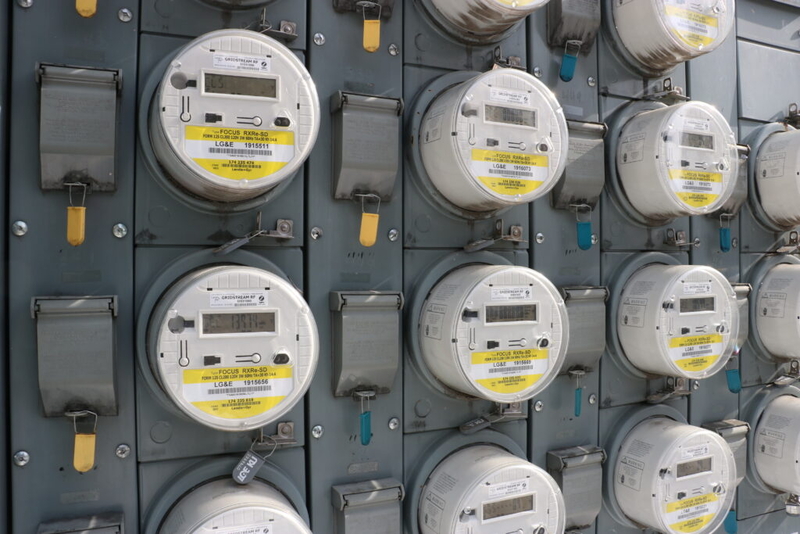
A matrix of electric utility meters for Louisville Gas and Electric. (Kentucky Lantern photo by Liam Niemeyer)
Kentucky’s largest electric utility has saved tens of millions of dollars in recent years by installing more than 1 million digital “smart” utility meters at homes and businesses in large part by being able to check the meters remotely for energy usage, disconnections and reconnections.
But a national nonprofit argues that while the utility reaps those cost savings, a key energy-saving tool for ratepayers made possible through those smart meters is “non-functional”, leading to almost no one using it.
Only 15 LG&E and KU customers had used Green Button Connect despite the tool being promoted on LG&E and KU’s website and newsletters, according to June 2025 testimony in a utility commission case.
That Seattle-based nonprofit Mission:data coalition audits and critiques utilities on the functionality of the Green Button Connect tool, which allows ratepayers to share their real-time utility usage data with a third party, such as an energy efficiency firm or a rooftop solar installer to help a ratepayer save money on their utility bill. The tool is a part of the Green Button program first launched in 2012.
Former Kentucky Public Service Commission chair Kent Chandler told the Lantern utilities don’t have an incentive to make a tool like Green Button Connect available because it could help reduce a ratepayer’s energy usage and therefore reduce their revenue.
“In between rate cases, the more inefficiently or the more electricity that electric utilities sell, especially investor-owned utilities, the better off their bottom line is,” Chandler said. “Without a mandate from the regulator to make customers’ own data readily accessible to customers, the strongest tool they have to save money is just not available to them.”
LG&E and KU has said it spent approximately $350 million on smart meters and has seen $25 million in savings on reading meters. In 2021, the Public Service Commission required LG&E and KU to seek a certification for a Green Button system.
However, the Green Button Connect program appears not to work, so customers don’t use it, said Michael Murray, president of Mission:data coalition.
“If you do want someone to advise you and you don’t trust the utility to provide that advice, this is empowering you, the consumer, to access other services and to get a second opinion. And that’s what consumers are being robbed of here,” Murray said.
In a emailed statement Tuesday afternoon, LG&E and KU spokesperson Liz Pratt said utility customers can see energy usage, download their data through the utility’s online portal and sign up for the utility’s energy efficiency programs.
Pratt said the utility is “addressing a sign-on process technical glitch” with Green Button Connect and has provided a temporary workaround process online that “multiple third-party vendors” have used to register “with no reported issues.”
“We provide customers every opportunity to have direct access to their data and provide a variety of tips, resources and programs to help customers reduce energy usage,” Pratt said. “We remain committed to ensuring that customers can utilize the temporary sign-on process to access all the GBC features until the current issue can be resolved.”
Green Button Connect problems ongoing
Mission:data coalition’s concerns about LG&E and KU’s Green Button Connect tool have stretched over a number of months.
Murray said when the nonprofit learned very few LG&E and KU customers had used Green Button Connect, his staff contacted LG&E and KU customers and tried to unsuccessfully share their utility data with the nonprofit. Murray called LG&E and KU’s Green Button Connect system as “non-functional” with the utility “not taking GBC seriously” in December 2025 testimony.
“There was just simply no way for the customer to share their data,” Murray told the Lantern.
Murray then filed a complaint to Kentucky Attorney General Russell Coleman. In a May answer provided by the utility in response to the complaint, LG&E and KU wrote the problem was technical errors that a vendor would be working to fix.
“Mission’s assertion that LG&E is lying and has been unresponsive to technical issues raised by Complainant are unfounded and belied by additional facts omitted by Mission in its complaint,” the utility wrote in its response.
In a Tuesday email, Green Button Alliance executive director Jeremy Roberts told the Lantern that the nonprofit’s testing “verifies that the utility’s implementation conforms to the Green Button standards” and that if problems are reported, it can conduct additional testing.
Murray said the Green Button Connect tool is about providing control to ratepayers over their data, something utilities across the country are generally opposed to.
“I think a lot of it is competitive fears that energy management companies and smartphone apps can do a lot better job helping customers save on their bill than the utility, and there’s a reputational aspect to that that I think utilities are seeking to avoid,” Murray said.
Frankfort