Take it from a Floridian: You don’t want NextEra in South Carolina
Oct 14, 2026 | 6:30 am ET
Description
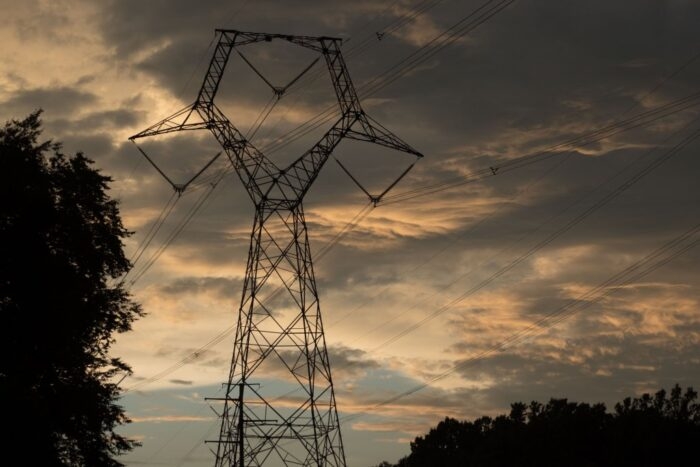
Under a timeline adopted in August 2026, the South Carolina Public Service Commission is scheduled to decide by Jan. 29, 2027, whether to approve a merger of NextEra Energy and Dominion Energy. The combined utility would serve 10 million customers across Florida, South Carolina, North Carolina, and Virginia. (File photo by Ned Oliver/Virginia Mercury)
South Carolinians already know what it costs when a utility bets your money on something that never gets built.
You paid for it. You are still paying for it.
That spectacle should shape how South Carolina considers NextEra Energy’s $67 billion offer to buy Dominion Energy — a deal that would create the largest regulated electric utility in the world and put South Carolina inside it.
I am a native Floridian. I served on the staff of the Florida Public Service Commission, as counsel in the Florida Legislature, and later as an appointed commissioner of the Florida Public Service Commission.
SC utility regulators set January deadline for decision on Dominion, NextEra merger
I have watched NextEra operate in Florida from inside the room. What follows is not a prediction. It is a record.
Start with what a regulated utility actually sells. Its profits come less from the flow of electricity than from capital investments: the plants, poles, wires and substations it owns.
Regulators let it charge customers enough to recover prudent costs plus a return on that investment.
In exchange, it accepts an obligation: deliver fair, safe, reliable service at just and reasonable rates. That bargain is the regulatory compact, and it is the only thing standing between an electric monopoly and its customers.
Florida shows what happens when regulation fails and the bargain runs one way.
The national average authorized return on equity for capital investments by investor-owned utilities for 2024 and 2025 is about 9.8%.
Through settlement agreements in Florida that largely excluded residential and small-business voices, Florida Power & Light — NextEra’s flagship — secured a return of 10.95%, plus provisions letting it reach as high as 11.95%.
Every point above the national average is worth roughly $500 million a year, according to Timothy Devlin, the former executive director of the Florida Public Service Commission.
At the top of the range that Florida Power & Light will likely reach, it reaps about $1 billion a year above the national average, with households and small businesses bearing the heaviest burden.
The result is a company that in 2024 kept almost 30 cents of profit on every customer dollar, according to the utility’s own accounting records submitted to Florida regulators — against an industry average closer to 13 cents in 2024.
Thus, on a $200 monthly bill, more than $50 is profit, according to the Energy & Policy Institute’s utility tracker.
Here is what a utility profit margin of almost 30% looks like from a kitchen table: high bills and deep economic insecurity leaving working households in jeopardy.
Since the pandemic, Florida utilities have been among the worst actors in the nation for disconnections. In 2024 alone, Florida’s utilities shut off electricity to more than 2.1 million customers, and 60% of those shutoffs came from NextEra’s Florida Power & Light.
That means 23 of every 100 customers served by Florida Power & Light in 2024 lost power for unpaid bills, which is more than twice Dominion Energy’s 1 in 10 disconnections in South Carolina, according to an analysis by the Energy & Policy Institute.
Meanwhile, Florida Power & Light earned more than $5 billion, and NextEra CEO John Ketchum received about $24 million in compensation, according to NextEra Energy’s 2025 proxy statement.
When Floridians asked their local governments for relief from this economic onslaught, the utilities went to the Legislature and had local authority over energy choices preempted. There was nowhere left to appeal.
Now consider in this merger, where Dominion’s Virginia Power keeps about 18 cents of profit on the customer dollar, not 27%, in part because it operates inside a competitive wholesale market called PJM, where cheaper third-party power can beat utility-owned assets.
NextEra’s practice in Florida has been the opposite: wall off wholesale access and move as much generation as possible into the regulated rate base.
South Carolina’s municipal utilities, electric cooperatives and industrial customers buy from those same wholesale markets.
Other regulators have viewed the legacy of NextEra and said no. NextEra has failed to close at least five acquisitions — Oncor in Texas, Hawaiian Electric, Maryland’s Constellation Energy, and Jacksonville (Florida) Electric Authority — most under regulatory scrutiny.
In 2016, Hawaii’s commission found NextEra financially fit, willing and able, and yet rejected the deal anyway. Capacity to pay is not the same as commitment to the public interest.
South Carolina’s Public Service Commission does not have to consider this bid on faith, and it should not take it on promises. It can follow the wisdom of other informed leaders and reject it.
Columbia