Public parks aren’t development opportunities
Oct 14, 2026 | 5:30 am ET
Description
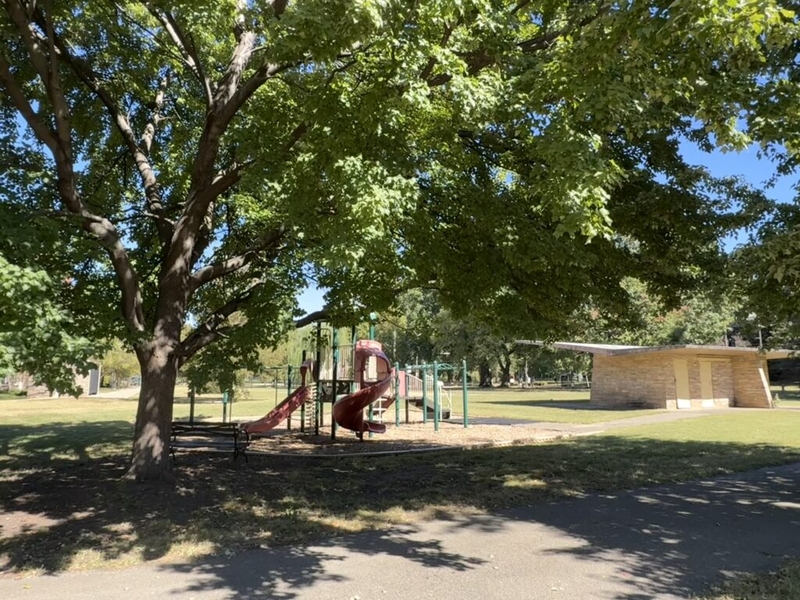
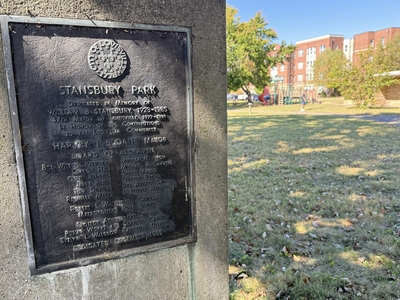
Stansbury Park in Louisville was designed by fames landscape architect Frederick Law Olmsted. It sits near the University of Louisville campus. (Photo by Bonnie Jean Feldkamp for the Kentucky Lantern.)
I thought the University of Louisville had listened.
Two years ago, the university hosted public meetings about the prospect of developing Stansbury Park, a historic Olmsted-designed park at the edge of campus. The community pushed back and the idea seemed to disappear.
Then, in August, UofL President Gerry Bradley listed Stansbury Park development among his fiscal year 2027 priorities.
So here we are again, asking the question: Shouldn’t the community have input when it comes to the fate of a public park?
Let’s be clear. The university does not own this park, but its interest in acquiring it is well documented. They’ve been eyeing it for years. An internal campus plan I obtained in 2024 even included a drawing labeled “Intramural Fields at Stansbury Park.”
The park is a seven-acre triangle at the edge of UofL’s campus and it is the linchpin of Louisville’s Olmsted Park System.
Frederick Law Olmsted envisioned park systems instead of stand-alone parks. His designs treated them as civic infrastructure, not decorative leftovers. He intentionally designed parks to improve the lives of the entire community. “Parkway” is a term that Olmsted coined, meaning wide urban greenways that connected the parks.
Not every city Olmsted worked with implemented this vision, but four cities did: Rochester and Buffalo, New York; Boston, Massachusetts; and Louisville, Kentucky.
Stansbury Park is the connecting hub for the Olmsted parkways in Louisville. It is green infrastructure and the park system is on the National Register of Historic Places. Stansbury Park deserves to be showcased in a way that demonstrates its significance.
After reading UofL’s 2027 intentions, I submitted an open records request with both the university and the city. What I received in return was pages of heavily redacted emails citing the Kentucky statute that permits such redaction if the records are “preliminary recommendations, and preliminary memoranda in which opinions are expressed or policies formulated or recommended.”
That statute means some of the preliminary discussions and recommendations about this park can happen behind closed doors and remain shielded from public view. I understand that we elect public officials to work on our behalf, and every action cannot be open to public debate. But a historic park that the community has already spoken out about feels like the right time to be transparent. Especially since the city has a history of leasing park space to UofLouisville. In 2017, the city leased Churchill Park, which was also an Olmsted park, to the University of Louisville for the development of soccer fields, putting it off limits for public use.
In the heavily redacted emails I received, one sentence stood out. U of L President Gerry Bradley wrote this regarding Stansbury Park: “University Ownership is the best and only feasible option for the University to provide the financial investment necessary to achieve our shared goal.”
When I asked if the university would like to comment on this they responded, “We look forward to sharing details at the appropriate time.”
When I asked the Louisville city officials if they plan to sell this park to the university, Matt Mudd, Mayor Craig Greenberg’s press secretary responded, “No. Stansbury Park is an important city park. It is also in need of significant improvements.”
Both the university and the city say they are discussing ways to work together to significantly improve the park. But if the city isn’t selling the park and the university is saying ownership is the only way they’ll invest, does this mean there’s another long-term lease in the works that basically hands control of the park over to the university?
Forgive me if I sound suspicious. I’ve seen this play out before. Louisville has watched its mayor waste time and resources planning for park improvements only to learn he was completely tone deaf about what the public wanted. I’m looking at you, Creason Park.
Louisville isn’t unique. Across the country, cities are being asked to balance aging parks and limited public budgets against developers, universities, sports organizations and other institutions with money to invest. The temptation is understandable: If someone else is willing to pay for improvements, why not let them?
Because the question isn’t simply who can afford to improve a park. It’s who gets to decide what that park space is used for. A city park isn’t the city’s private real estate. The city holds the land for the public’s benefit and the public deserves a voice before any ribbon-cutting press conference.
Thoughtful planning means listening to the community you claim to serve while protecting the public spaces entrusted to you. Once parks are lost, they are rarely reclaimed. Louisville is lucky to have one of the four complete historic Olmsted park systems in the country, and its significance is not only local but national. If Stansbury Park needs “significant improvements,” as the mayor’s office says, that’s on the city. Prioritize funding for it. Make it a place that visitors, residents and UofL students alike can be proud of. But don’t trade away public control simply because someone else is willing to pay for the improvements.
Frankfort