State Question 847 would cap Oklahomans’ property tax growth. At what cost?
Oct 14, 2026 | 6:30 am ET
Description
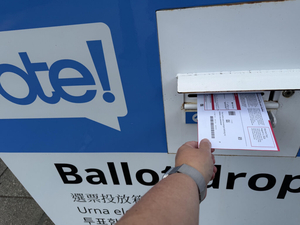
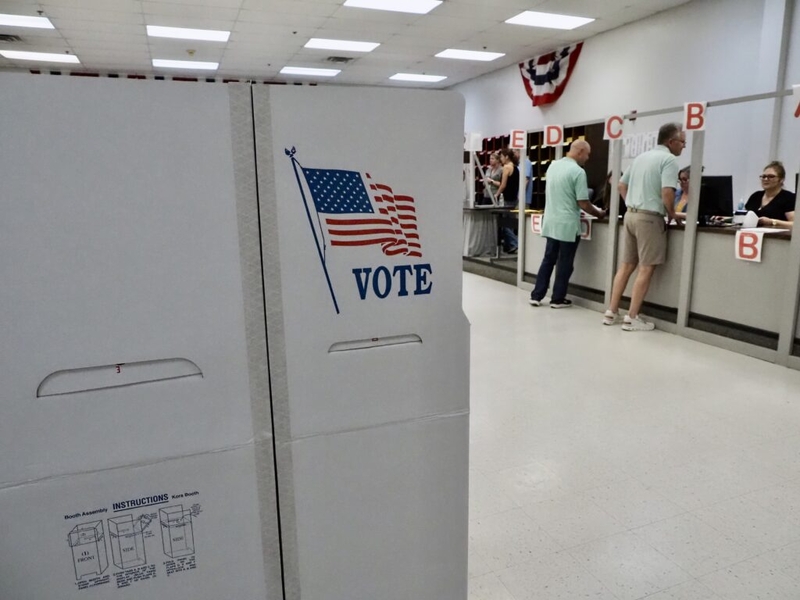
Voters mark their ballots in the Oklahoma County Election Board on June 11 in Oklahoma City. (Photo by Courtney Bell/Oklahoma Voice)
OKLAHOMA CITY — A state question on Oklahoma general election ballots could slow the growth of property taxes, but it has raised concerns about the financial impact on public services.
If State Question 847 passes on Nov. 3, the assessed value of a homestead or agricultural property could increase by no more than 1.75% per year, down from the current cap of 3%. The fair cash value of non-homestead properties could rise by a maximum of 4% annually rather than 5%.
The state question also would add similar caps ranging from 0.35% to 1.75% for Oklahomans age 65 or older who make too much income to qualify for the “senior freeze,” which locks recipients’ property taxes at the value of the time they apply.
The ballot measure wouldn’t cut Oklahomans’ property taxes, but it would limit the increased tax costs property owners could face over time, which supporters say would give needed relief as other expenses rise.
Others say the state question would slowly drain millions of dollars from schools, CareerTech centers and other core services that depend on property tax revenue.
Although the ballot language states the exact fiscal impact is “unknown,” the Oklahoma Tax Commission projected local tax jurisdictions would lose $45.78 million in revenue the next fiscal year, if the state question passes.
When extending that over 10 years, local government entities could lose out on $457.8 million, the Oklahoma State School Boards Association estimated.
OSSBA executive director Shawn Hime acknowledged nobody likes to pay property taxes “until you start thinking about all the things that you receive and the core services that are offered based on those taxes.”
“We have to have the resources available for core services like emergency management, our roads and bridges, our police and fire,” Hime said. “All of those things cost money, along with resourcing our schools so that we can have high-quality teachers in the classroom with every student.”
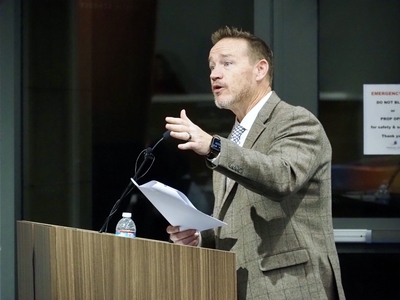
Oklahoma CareerTech state director Brent Haken estimated vocational learning centers alone would lose about $90 million over the next 10 years. Budgets would begin to constrict as inflation rises, he said, ultimately costing career training programs that help Oklahoma meet workforce demands.
“We will start to first be stagnant in program offerings, and then over time reduce because the cost of doing business will continue to rise while our cost of collections is not rising,” Haken said. “So, 10 years from now, you would expect to see less students enrolled in CareerTech than we do today if that measure were to pass.”
Local government entities still will receive more revenue than they did the year before, just at a lower rate, said House Speaker Kyle Hilbert, R-Bristow.
Oklahomans have been asking their state lawmakers for relief from rising costs, which prompted the state Legislature to put SQ 847 up for a public vote, said Hilbert, who co-wrote the ballot measure.
Homeowners have been struggling under increasing home insurance costs and “through the roof” interest rates while “their house is getting hit with that maximum increase of 3% per year” in taxed valuation, he said.
“When you look at the national market of housing and interest rates, as a state government how much could we as a state do?” Hilbert said. “I’m not sure, but the one piece of that equation that we can certainly have an impact on is the property tax.”
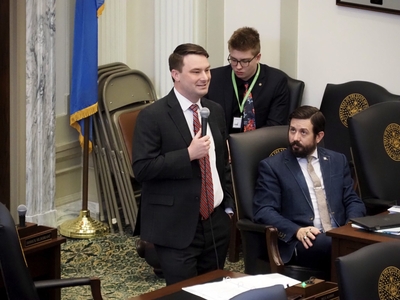
Hilbert pointed to the expected $45.78 million decrease in property tax growth as an endorsement of the state question, not a drawback.
“At the end of the day, that’s $45 million that’s being saved to taxpayers, which I think is a good thing,” he said. “And so, I think that’s the crux of this argument, is the tax consumers who are against this bill are upset because they’re not going to be able to raise taxes by $45 million next year.”
The Oklahoma Farm Bureau, an organization representing farmers and ranchers, also has supported the state question.
Agricultural properties sometimes lose money because of factors like drought, input costs, and fluctuating crop and livestock prices. Meanwhile, “property taxes on that land continue to steadily climb,” the Farm Bureau wrote in its voter guide.
In Guthrie Public Schools, Superintendent Mike Simpson estimated property tax revenue generates about 30% of his district’s budget.
Bond issues, which also are paid through property tax collections, have been crucial in financing the construction of new school buildings, the cost of which has risen dramatically, Simpson said.
Districts still paying back bond debt suddenly would have less revenue growth than expected, which Simpson said could cause a short-term increase in property tax millage rates. Hilbert said lawmakers considered this issue and adjusted the state question to mitigate it.
SQ 847 would limit districts’ long-term bonding capacity, Simpson said, and it would pinch school facility budgets that rely on property tax revenue.
“The relief (for taxpayers) will not be immediate at all,” he said. “It will be over time, and the net effect on the homeowner will be less advantageous to them than it will be a tremendous problem financially and a burden to the school districts and the entities that receive the property tax.”
Oklahoma City, OK