Hawaiʻi’s Youth Are Leaving. Meet The People Keeping Talent Here
Oct 14, 2026 | 6:01 am ET
Description
Photo courtesy of Honolulu Civil Beat
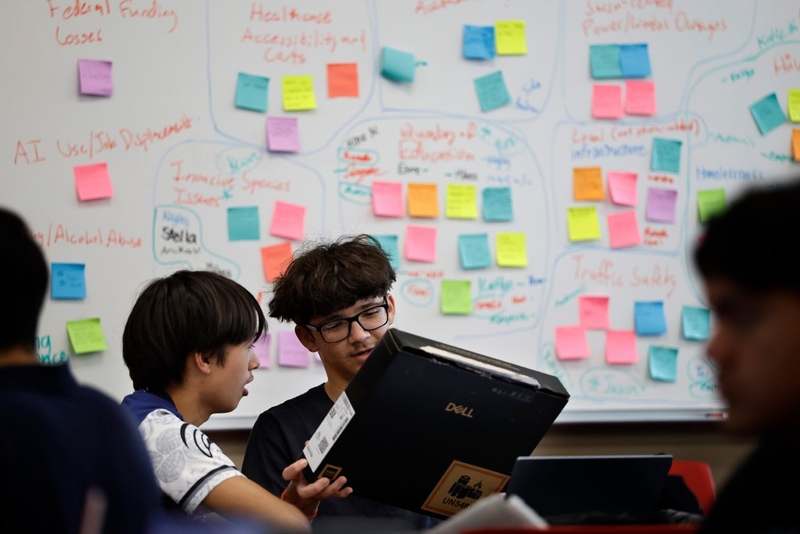
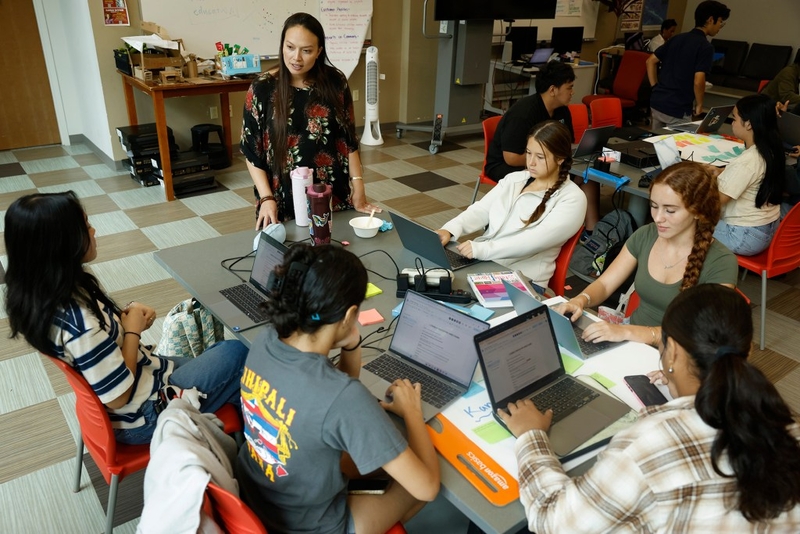
While most Hawaiʻi students were relaxing on fall break, it was crunch time for teens at Nalukai Academy in Hilo.
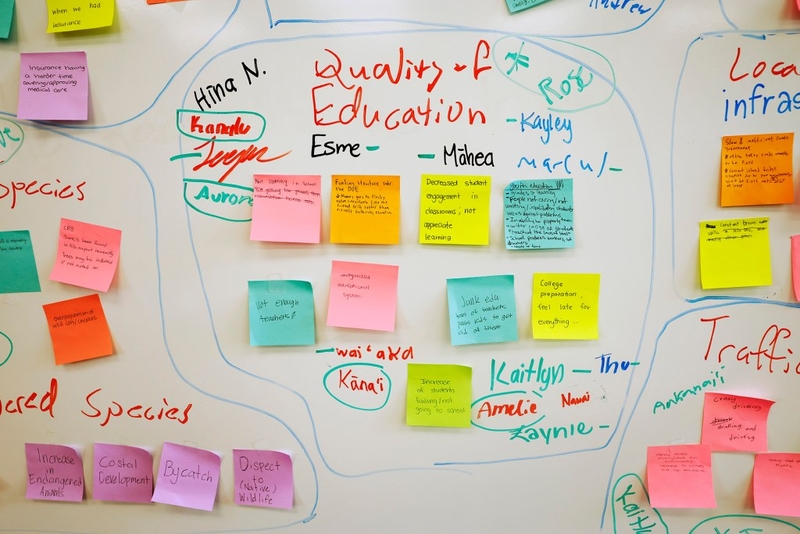
The high schoolers had spent the past three days researching and brainstorming solutions to statewide challenges ranging from housing insecurity to invasive species. Now, students had just a few hours to put everything together and create prototypes of the websites or apps they would use to test their solutions.
"Today's going to be a wild day," Nalukai program facilitator Auston Stewart told students as they booted up their laptops in the morning.
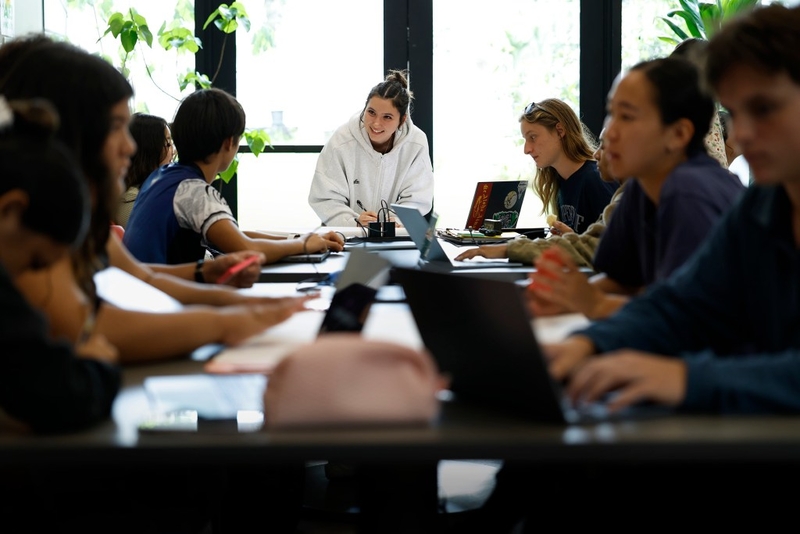
Now in its 10th year, Nalukai's mission is clear: empowering Hawaiʻi youth to solve local challenges. By exposing high school students to different career paths and developing their problem-solving skills, the nonprofit hopes to show teens they can pursue their passion and find meaningful jobs without leaving the state.
The program challenges the popular narrative that students need to move off-island for more opportunities and lucrative career paths, according to Stewart. This exodus of young professionals – a phenomenon known as Hawaiʻi's brain drain – threatens to leave the state with fewer skilled workers, a smaller tax base and a shrinking, aging population. Communities also lose young adults with a strong sense of local values and culture.
"There's this mismatch between what we're investing in and what we're pushing our young people towards, and what they want," Stewart said. "We desperately need to be showing young people from a young age how to create and operate their own businesses and social ventures, so that they can create opportunity for themselves and for others in their community."
Nalukai aims to make this change through a series of programs primarily run during students' school breaks. The most recent program, run at the University of Hawaiʻi Hilo, enrolled 20 teens from public and private schools across East Hawaiʻi island. More than half of participants were Native Hawaiian, and 70% attended low-income schools.
The nonprofit primarily relies on grants and donations, board member and former Nalukai student Nick Wong said. Every student who completes Nalukai's spring, summer or fall program receives a free laptop.
In this fall's program, some students proposed an online platform that would allow Hawaiʻi residents to sell their properties to other locals. The goal was to keep housing affordable and out of the hands of mainland investors. Another group created a website that could help students set up savings accounts with their local banks to gain a firsthand understanding of financial literacy.
"They know what some of the difficult problems are, and they know that they can be part of changing them," said Rep. Kirstin Kahaloa, who represents Kailua-Kona and also serves on Nalukai's board. "I think that helps with the brain drain. It gives people hope and courage that hope there's a future for them here in Hawaii."
A Crash Course In Entrepreneurship
The program isn't teaching students how to create a business for the sake of maximizing profits or attracting the largest investors. Instead, students say Nalukai has taught them how to build something that serves their communities through the program's emphasis on Native Hawaiian values and personal responsibility.
"There are plentiful opportunities here," said Kayley Shimazu, a Waiākea High School student who attended the six-day program this month. "As a person who lives in Hawaii, I can also do something to get change here."

By the late morning, students were busy familiarizing themselves with artificial intelligence tools that could design mock-up websites or apps for their proposed businesses and services. Containers of chicken katsu and loco moco sat discarded on teens' desks as they hunched over their computers to put the final touches on their products: Community members were arriving in just under two hours to start testing their designs.
Later, one group of students intently watched Justin Clayton of The Food Basket, Big Island's food bank, click through their website, which promoted their proposed business of turning invasive limu into fertilizer for native plants. After a few minutes, the verdict was in: The website was easy to navigate and visually appealing, Clayton said. But he had questions about the team's business plans. What’s the supply of invasive limu? he asked. How much limu would farmers need to treat an acre of land?
The teens jotted down his advice and huddled together to decide how to incorporate his feedback into their project.
By the end of the day, all teams had gone through similar rounds of feedback with community members and Nalukai staff. The following day would be dedicated to developing the pitches that they would present to community members at the end of the week.
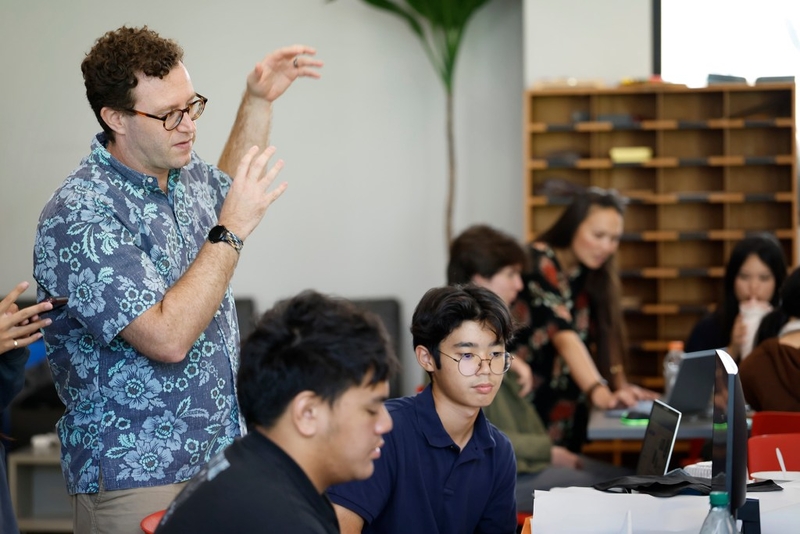
The teens were smiling and excitedly chatting about their projects as they packed up their laptops and put away their supplies. The teams had a lot to be proud of, programs director Sara La Torre said, reminding students they had learned new skills in just a few hours and put them to the test.
"When I told you yesterday you'd have a working prototype by today, did you believe me?" La Torre asked, laughing as students shook their heads. "Yeah, you guys didn't look like you believed me!"
What's At Stake?
On Oʻahu, Nalukai graduate Koloikeao Anthony said the program gave him the confidence to apply to top colleges on the mainland. After completing the program in 2018 as a rising senior at Kamehameha Schools Kapālama, he attended Stanford University in California and is pursuing a career in graphic design.
Nalukai was also one of the formative experiences that encouraged Anthony to return home after college, despite the opportunities he had on the mainland. The program gave him the confidence and skills to know he could do anything, he said, and it also instilled in him a sense of responsibility to his community.
"Coming home was important to me because it was a responsibility bestowed upon me, especially by the guys at Nalukai, to come back and uplift community in my own way," Anthony said.
So far, Nalukai has served more than 400 students from roughly 60 schools across the state. The nonprofit estimates two-thirds of its graduates continue to pursue entrepreneurship by starting a business, earning a related college degree or pursuing other opportunities. Many of these initiatives are based in Hawaiʻi, although it's difficult to determine an exact number because the organization relies on survey data from alumni, Stewart said.
"They're typically small,” Stewart said, “but it can definitely be said that jobs have been created and businesses created as a result of Nalukai."
Some projections suggest it will be difficult for Hawaiʻi residents to stay after high school unless they find the right opportunities. Already, the state has experienced a net loss of residents to the mainland for years.
Between 2019 and 2023, roughly 20% of Hawaiʻi residents leaving to the mainland were born in the islands. More than half were college-aged or young professionals between the ages of 18 and 44 years old. However, recent research from UH suggests more working adults may have moved back to Hawaiʻi in recent years.
One study from the Hawaiʻi Workforce Funders Collaborative projects that Hawaiʻi will have only 120,000 job openings paying a living wage for the nearly 168,000 young adults expected to enter the workforce by the end of the decade.
"Too many people in Hawaii don't see that visible path to the kind of career that they want here," said Matt Stevens, executive director of the Workforce Funders Collaborative. "One, because we don't have enough opportunity, but two, depending on who you are and where you live, your access to that opportunity is going to be different."
Some of the factors driving locals out of Hawaiʻi are beyond the control of schools or nonprofits like Nalukai.
Wages for Hawaiʻi professionals are much lower than the mainland when accounting for the state's high cost of living, said Steven Bond-Smith, associate director at the University of Hawaiʻi Economic Research Organization. The state also lacks job opportunities in industries like technology that have grown out of major cities on the mainland.
But if the state could scale up the work of Nalukai and other initiatives, it could empower more local students to find high-paying jobs that match their interests or develop their own career paths, Stevens said. The state education department has heavily invested in career and technical education programs training high schoolers in industries from construction to nursing, although the most popular pathway remains hospitality and tourism.
"If we really want to get this right, it's a more symbiotic approach," Stevens said. "Where it's less supply versus demand, and more like: The talent we need is here. How do we coordinate the way learners and workers are navigating the workforce system?"
Micah Tajiri, an engineering student at UH Mānoa who completed Nalukai's program in 2024, isn't waiting for Hawaiʻi's technology industry to catch up to his career aspirations. Tajiri is working on an ocean technology startup based in Hawaiʻi with the hopes of generating jobs for his peers who want to work at home and pursue related careers.
Nalukai taught him to create the opportunities he wanted to see, Tajiri said, while also helping him gain the confidence to pursue his passion.
"I just need to know that what I'm working on is something very important," Tajiri said. "I need to be confident enough in the idea that I know some hard things are coming, and I won't stop trying."
Honolulu, HI