Parent advocates seek stronger AI chatbot protections in next Colorado legislative session
Oct 13, 2026 | 6:49 pm ET
Description
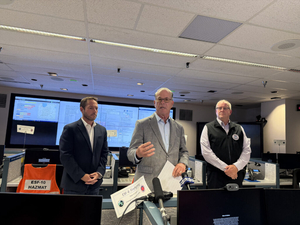
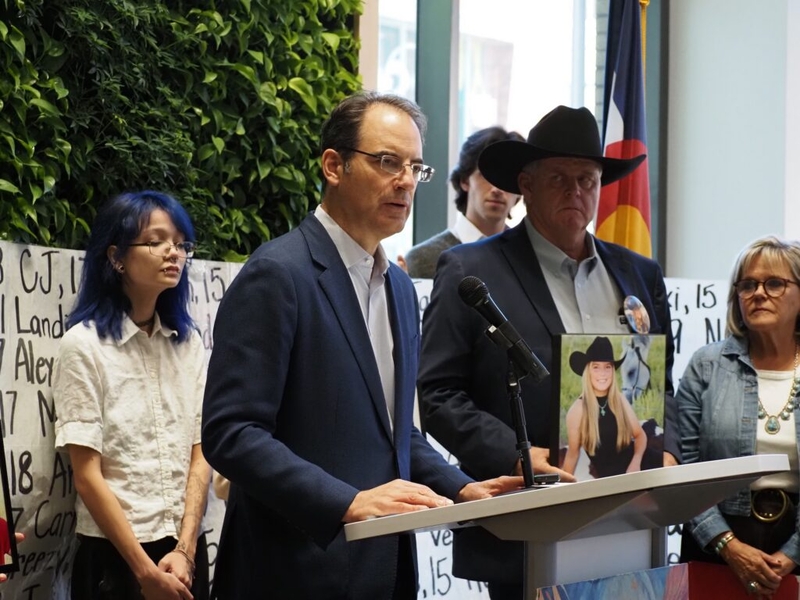
Colorado Attorney General Phil Wesier speaks about social media safety policy on Oct. 13, 2026 in Denver. (Photo by Sara Wilson/Colorado Newsline)
Parents of children harmed by social media and artificial intelligence chatbots called for Colorado to pass stronger protections into law next year, while standing beside the Democrat likely to become the state’s next governor.
“When I hear from people that they know young people who have easier access to guns or fentanyl than a job, we’ve got to do something about it,” Attorney General Phil Weiser, the Democratic candidate for governor in November, said Tuesday afternoon ahead of a symposium about online safety for young people. “When we hear young people are struggling because they’re feeling disconnected and lonely, we’ve got to do something about it.”
Parent advocates from the organization Blue Rising want state lawmakers to strengthen a law regulating artificial intelligence chatbots that passed this year. That law requires companies that operate chatbots to take steps to determine a user’s age and implement anti-self-harm protocols. It also seeks to prohibit chatbots from having sexual conversations with children.
As the new law wound its way through the legislative process, parents pushed back on what they saw as weak provisions in the policy. The law, for example, requires chatbot operators to institute “technically feasible measures” to prevent the technology from showing sexual content to minors and take “reasonable measures” to prevent harm. Parents say that language leaves it up to the technology companies themselves to self-regulate and decide what is feasible.
“It was basically two words that gave Big Tech a get-out-of-jail card. No more,” said Lori Schott, whose daughter Annalee died by suicide in 2020 after becoming addicted to social media. “With the legislation we have coming up, we are going to do anything and everything we can to change the language of that bill and possibly add others that will protect children from harmful content.”
“Those words save them from any legal ramifications and any harms that families experience, because if it’s not technically feasible to implement safety, they’re not going to do it,” she added.
Bill sponsors said during the legislative session that the language mirrored statutory requirements for landlords and companies who possess private consumer data, and they also said at the time they would be willing to work on it in future legislative sessions.
Schott and other parents who spoke on Tuesday said they were left “standing in the hallway” at the Capitol while tech companies influenced bills about social media. Google played a role in shaping the chatbot bill, according to reporting from NPR.
“Let this be the year that parents have a seat at the table, because we know these harms better than anyone,” Schott said.
She, and others, are excited about the likelihood of Weiser’s governorship next year and his proven commitment to social media protections for youth, including his work on the recent $17 billion settlement with Meta. Democrats are favored by 12 percentage points according to recent polling, and Colorado voters last elected a Republican governor in 2002.
“This upcoming legislative session brings new leadership in the governor’s office and a big opportunity to truly protect kids like Juliana,” said Cynthia Montoya, referring to her 13 year-old daughter who died by suicide after interacting with an AI chatbot. “This session, I hope that legislators will work with people who have lived in this unbelievable pain.”
She wants to see a “robust, common-sense framework” that will evolve alongside the technology.
“I am certain that many more lives, like my Juliana’s life, will be lost if we wait to improve our chatbot laws here in Colorado,” she said.
In a statement, Mary Kate Morr, the director of communications for Healthier Colorado, which led the chatbot bill, wrote that the bill was developed through an “extensive and diverse stakeholder process” with groups including mental health providers, technology companies and teen advocates.
“We used the best available data and lessons learned from other states to make Colorado’s law the strongest in the country. We had pushed for even more than was ultimately signed and consider this law a strong foundation on which we intend to continue building,” she wrote.
Blue Rising also wants to see the reintroduction of a bill that would require social media companies to take down accounts if they are sexually exploiting minors or selling guns or drugs. Gov. Jared Polis vetoed the bill in 2025 over privacy and innovation concerns.
Denver, CO