Morningside University to expand nursing training and support with federal grant funds
Oct 13, 2026 | 5:08 pm ET
Description
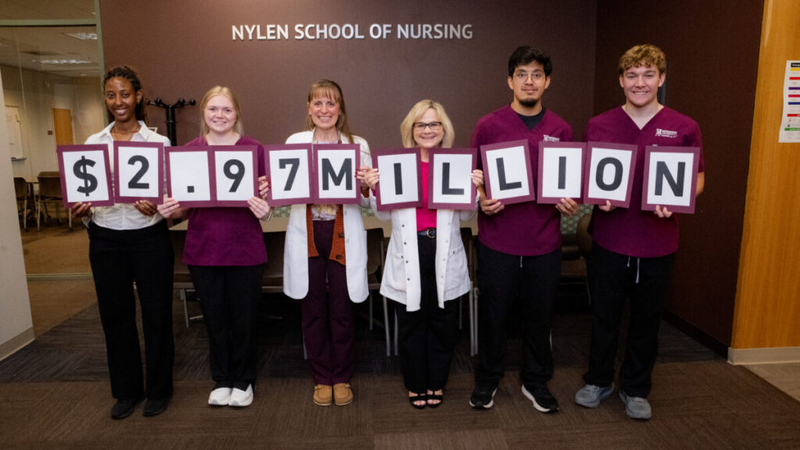
Morningside University's Nylen School of Nursing and Health Sciences received a federal grant to expand simulation training and nursing student support. (Photo courtesy of Morningside University)
Morningside University will use federal grant funding to expand simulated experiential learning and help those hoping to instruct in the health sciences field one day, with the goal of supporting nursing education and workforce needs in its communities.
The Sioux City private university announced this week it has received the largest grant in its history — $2.97 million over four years from the Health Resources and Services Administration — to fund an underserved community nursing initiative.
Project CONNECT CARE, or Community-Oriented Nursing, Navigation, Engagement, Clinical Training, and Career Advancement through Rural Experiences, will help Morningside further its outreach and draw in partners in need of educational resources and facilities, said Nylen School of Nursing and Health Sciences Dean Jackie Barber.
“We need a strong healthcare nursing workforce to take care of all of us, and Morningside wants to be that partner in that space,” Barber said.
The majority of grant funding will go toward expanding simulation equipment and training for the faculty and outside nurses who will work with students in simulated healthcare situations, Barber said. Morningside will also use funding to establish a certified nursing assistance program, with Barber calling it a good first step into healthcare careers.
Currently Morningside houses a four-room patient simulation suite, which will see additions of an intensive care unit and emergency care simulation suite. Barber said the university will also duplicate simulations it has in maternal, pediatric and primary care to accommodate multiple student groups simultaneously — a helpful expansion after Morningside acquired St. Luke’s College last year.
Morningside will also establish immersive role-play and virtual reality simulation rooms for further training, and simulation spaces with wearable equipment for students to work through different situations together with their peers.
“It gives a very, very real experience of doing those types of care on patients,” Barber said. “We can do things like these wearables that are wound care, maybe even IV care … we have one that’s like a chest tube, so all these different things that just really give a very true, real-life learning component to it that you just don’t get every day.”
Expanded simulation areas will serve more than just Morningside students, Barber said, but the university’s “practice partners” as well. Healthcare practices in the rural areas surrounding Sioux City often don’t have the opportunity to provide simulated learning to train and upskill nurses, but Morningside hopes to be a “regional resource center” for them to send employees who want to further their education.
The grant will also support mentoring, tutoring and other resources for students in need as they complete their education. With these new experiential learning opportunities and new curriculum the university has switched to “to meet the national call for preparing our nurses to be competent and confident and just ready for practice,” Barber said the nursing school wants to ensure that students have strong outcomes and are able to achieve them outside of the classroom once they graduate.
A separate, one-year grant of $95,000 from the Health Resources and Services Administration will provide student loan reimbursement to doctor of nursing practice program students who go on to become faculty in their field.
Describing the second grant as “small but huge,” Barber said nursing programs can’t be successful in graduating enough practice-ready professionals to meet demand without a strong faculty group teaching them. Morningside students who go on to become faculty will have up to 80% of their student loans forgiven.
“We know that strategically we have been a good resource for our practice partners, all the facilities out there, and they have been such a great resource to us too,” Barber said. “We just want to make sure that we can continue to expand that beyond our area, and then just (ensure) that we’re really doing our part to have practice-ready nurses out there, nurses that are ready for practice, but most importantly, that they stay in practice and stay in those careers.”
Des Moines, IA