Secret deal with feds moves Iowa church closer to use of controlled substances
Oct 13, 2026 | 4:53 pm ET
Description
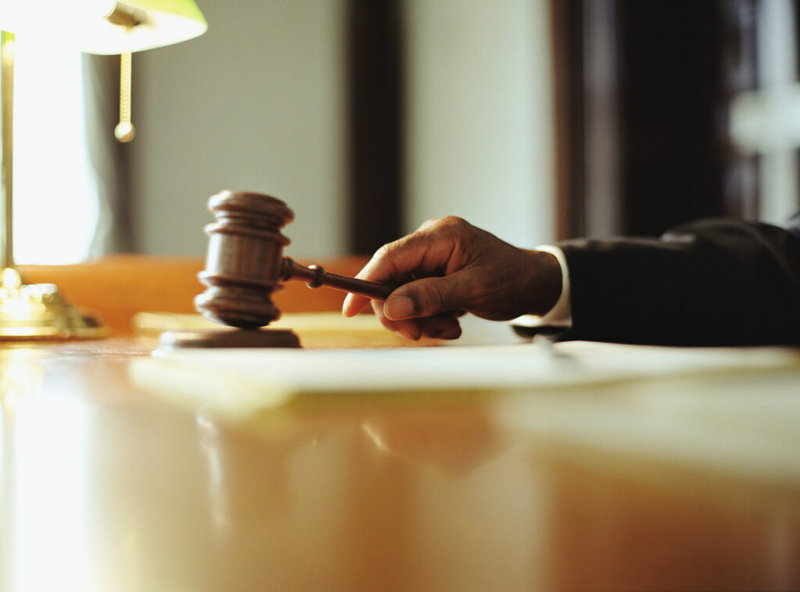
The Iowa Board of Pharmacy has agreed to award the Iowaska Church of Healing the state certification that is needed to clear the way for the issuance of federal certificates to not only import a controlled substance, but also to manufacture from it a tea that is to be used in religious ceremonies. (Photo via Getty Images)
After years of litigation over its nonprofit status and use of a hallucinogenic controlled substance, an Iowa-based church is one step closer to being able to import the drug.
The Iowa Board of Pharmacy has agreed to award the Iowaska Church of Healing the state certification that is needed to clear the way for the issuance of federal certificates to not only import a controlled substance, but also to manufacture from it a tea that is to be used in religious ceremonies.
State records indicate the church was formed in Iowa in September 2018 and is run by Admir Dado Kantarevic and by Shaman BaBa DaDo, the latter of whom the church describes as “an internationally renowned healer and clairvoyant.” For a time, the church’s official headquarters was Kantarevic’s former home in Des Moines.
Iowaska’s teachings are built around the use of ayahuasca, a tea that is brewed from the leaves of shrubs and vines found in the Amazon. The church has acknowledged that under the federal Controlled Substances Act, an ingredient of ayahuasca called dimethyltryptamine or DMT, is a Schedule I drug and a hallucinogenic alkaloid, and that there is no statutory exemption allowing for its use in religious ceremonies.
Church fights IRS and DEA in court
In January 2019, Iowaska filed an application with the IRS seeking tax-exempt status and was denied because, in the IRS’ view, the church’s use of the Sacrament of Ayahuasca in its religious practices was illegal.
In 2021, the church sued the IRS in U.S. District Court, challenging the federal agency’s decision. In court papers, the church argued the IRS was violating the Religious Freedom Restoration Act of 1993 and noted that the church’s mission was “to help individuals attain healing of the mind, body and spirit through the sacred Sacrament of Ayahuasca under the guidelines of North and South American indigenous traditions and cultural values. Ayahuasca is consumed in the form of a tea during religious ceremonies.”
At the same time, the church was asking the federal Drug Enforcement Administration for a religious exemption from the federal Controlled Substances Act. In court, the church argued the DEA never responded to its request, which then resulted in the IRS refusing to grant nonprofit status.
In March 2023, a federal judge at the district court level ruled in favor of the IRS and dismissed the church’s lawsuit. The church, the court noted, “has had as many as 20 members living in different states and foreign countries, and generally holds its ceremonies on weekends, with members staying in frequent contact with ‘healers’ to help guide them through their daily struggles.”
Organizations may be denied tax-exempt status if their activities violate public policy, the court ruled, adding the church’s activities violated public policy in that the use of ayahuasca remained illegal under the federal law for which the DEA had yet to grant an exemption.
In the meantime, the church continued to seek that exemption from the DEA. Earlier this year, the church went to federal court and argued the DEA and federal government had failed to discharge their duties for more than five years, thereby imposing a “clearly unjustified prior restraint on religion.”
Lawyers for the DEA argued the government “continues to act diligently in reviewing Iowaska’s request for an exemption,” but acknowledged its lack of a decision in the matter.
Confidential agreement reached with DEA
In June 2026, lawyers from the U.S. Department of Justice informed the court that the DEA and the Iowaska Church of Healing had settled their differences and signed a “memorandum of agreement” on the church’s request for a religious exemption to the Controlled Substances Act.
The DEA and the church then filed a joint motion to provide the court with a copy of their agreement only under seal, making the contents of the agreement inaccessible to the public.
“The parties agree that maintaining the memorandum of agreement under seal is necessary to protect important public and privacy interests,” lawyers for the DEA and the church told the court.
The agreement, they said, contained confidential information such as “personal identifying information” of church members, the names of individuals responsible for handling the controlled substances, security measures for storing the controlled substances and the manner in which the controlled substances were to be imported to the United States for the church’s use.
The agreement, they said, recognized the church’s “right under the Religious Freedom Restoration Act to practice its Sacrament of Ayahuasca, subject to agreed conditions.”
That agreement, they said, resolved only the first stage of the DEA’s two-step process for obtaining a religious exemption to the Controlled Substances Act. Step two, they said, involved the Iowa Board of Pharmacy awarding the church an Iowa Certificate of Registration, after which the DEA would “expeditiously” process the necessary exemption, registrations and permits.
On Oct. 5, 2026, the Board of Pharmacy agreed to provide the church the certificate of registration. In its order, the board stated the confidential agreement between the DEA and the church “effectively grants” the church a federal certificate to not only import “concentrated paste of ayahuasca,” but also a federal certificate to manufacture, in bulk, the ayahuasca tea used in ceremonies.
According to Board of Pharmacy records, the board-issued state certification will be placed on probationary status for one year. In addition, the church will be required to report to the board any “adverse events that occur with any participant in (the church’s) religious ceremonies using ayahuasca” if those events require some sort of off-site medical intervention.
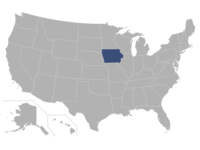
Des Moines, IA