Montana US Senate candidates share debate stage
Oct 12, 2026 | 7:53 pm ET
Description
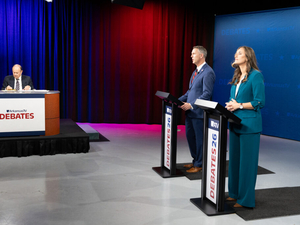
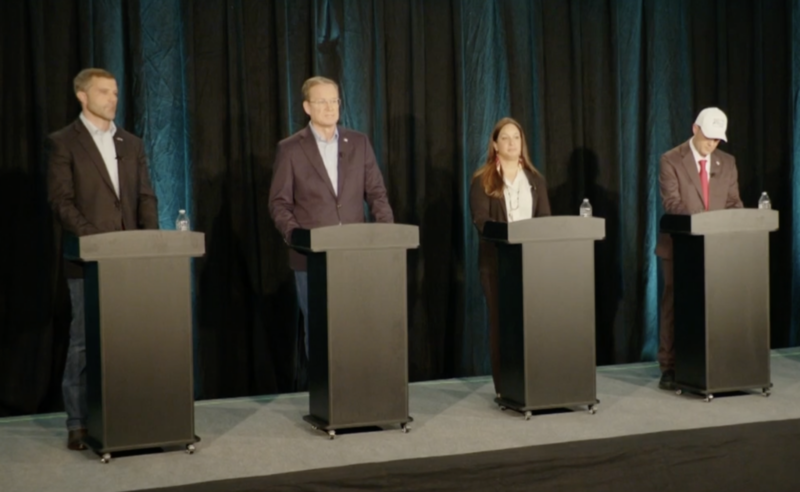
Seth Bodnar, Kurt Alme, Alani Bankhead and Kyle Austin attend a debate for U.S. Senate candidates in Bozeman on Oct. 11, 2026. (Screenshot via CSPAN)
All four candidates for Montana’s open U.S. Senate seat shared a stage Sunday for a 90-minute debate to distinguish themselves in the eyes of Montana voters.
The event, sponsored by the Montana Broadcasters Association and the Greater Montana Foundation, took place at the Field and Stream Lodge in Bozeman and candidates discussed their views on a range of issues, including foreign policy, affordability issues in Montana, the environment, and artificial intelligence.
It was the first time all major candidates made an appearance together, as Republican Kurt Alme, the frontrunner in the race, has declined other invitations.
Four panelists from various broadcast news agencies took turns asking questions of the candidates. There was no direct back-and-forth conversation between the candidates, but they still took a few shots at each other’s platforms, backers and bonafides, with Libertarian Kyle Austin spending the most time attacking his opponents.
The candidates:
Kurt Alme is the Republican replacement for Sen. Steve Daines, who bowed out of his reelection campaign minutes before candidates filing closed in March, letting Alme slip in without additional Republican or major Democratic candidates getting notice.
He is a former U.S. Attorney and served under two Republican governors heading the state’s budget and revenue departments.
“I’m the only candidate up here with a proven record of cutting taxes, balancing our state budget, and locking up violent criminals,” Alme said. “I’ve spent my career serving and protecting Montana families, and I’m ready to step up and serve again to make our lives more affordable, make our communities safer, and protect our Montana way of life.”
Democrat Alani Bankhead has made headlines as a political unknown who won the Democratic primary boosted by millions of dollars from progressive dark-money organizations and Republican political actions committees, successfully elevating her over the primary field.
A former U.S. Air Force lieutenant colonel who spent time on antitrafficking task forces and investigating internet crimes against children in Hawai’i, Bankhead has committed to staying in a race despite trailing an independent candidate in many polls.
“I’m the only one on the stage who has trust built with D.C. folks who I’ve grown up with since the ‘90s, who are now in charge of things in government, and we’ve spent the last 20 years protecting you from corruption. I’m not beholden to D.C.,” Bankhead said. “I will absolutely fight for the people of Montana because I’m unbought and unbossed and unafraid.”
Seth Bodnar, a Green Beret and former University of Montana president, bucked the hopes of many state Democratic party members and entered the race as an independent back in March. He has consistently outraised all candidates, has support from elected officials from both parties, but was unable to manage a one-on-one race against Alme, which would have put Montana’s Republican-held seat onto a competitive list with other independents making coalition waves across the country.
“This country was founded on a promise — the promise that we govern ourselves, and that those that we elect work for us. I put my life on the line to defend that promise, but that promise has been broken today,” Bodnar said. “Washington D.C. is filled with cowards who answer to their party bosses, their corporate donors… We have a chance in Montana to tell Washington D.C. that neither party owns the state and that nobody gets to take us for granted, because you know what? Montana is my party.”
Kyle Austin won the state’s Libertarian primary even as the Montana Libertarian Party said he doesn’t share their values. He has tried to paint himself as the true conservative in the race, and pointed to having experience in agriculture and healthcare as reasons he’ll be effective in Washington D.C.
Austin has consistently shown single digit support in polling done in the state.
“Who is the real Montana conservative out there with Montana values? Who is the candidate with the most integrity and who has the deepest roots that can serve you day in and day out? I feel I can be that candidate,” Austin said.

On addressing healthcare costs:
Alme said that the Affordable Care Act failed to make health care affordable and instead served to subsidize pharmaceutical and insurance companies.
“We need to hold them accountable, and we need to make healthcare more affordable by making it more transparent, more competitive, and by putting patients first,” Alme said. “And we can do that with things like being sure prices and costs are more transparent, being sure that healthcare dollars get distributed out to patients so that they can shop and buy the best quality policy that they can get.”
Bankhead has repeatedly said she favors universal healthcare and points to the nation’s military healthcare system, TRICARE, as a model for covering primary care, dental, eyecare and mental health under a single system.
Paying for universal healthcare is possible, Bankhead said, by ending the war in Iran and funneling those funds elsewhere. Having citizens in the richest country on earth unable to afford healthcare is “completely unacceptable.”
Austin said his 18 years as a pharmacist showed him the impending healthcare crisis the country is facing. His plan, “Healthcare 2.0” would transform the system “to create one set of rules, to get the payers to clean up their mess and actually pay our providers what they’re worth.”
Bodnar said healthcare is a prime example of where Washington politicians have failed. He said a universal coverage option should be available for all Americans while “maintaining choice and competition.”
He also said restoring Affordable Care Act subsidies which expired last year is key to lowering costs. He pledged to protect Medicaid expansion and eliminate hoops to receive health care.
On Social Security:
By 2034, it is estimated that incoming payroll taxes will only cover around 83% of the program’s benefits.Pointing to his time as a state budget director, Alme said he knows how to pay off debt and balance a budget, and would focus on eliminating waste, fraud and abuse across the federal budget to help bolster Social Security funding.
He said he will work with any member of Congress to strengthen the program and “will never support a cut in benefits for seniors.”
Bankhead said on the campaign trail she’s heard “the horror stories of retirees who are not able to retire with dignity, which I find completely unacceptable because nobody works harder than a Montanan.”
The solution, she said, is to remove the wage limit for contributions — which in 2026 kicks in at $184,500 — and require all income to be subject to Social Security taxes.
“This race is not about Democrat versus Republican. It’s about the 1% versus everybody else. And what we need to do is tax the wealthy, and it starts by ensuring that they pay their fair share of Social Security,” Bankhead said.
Austin shared his own update to the “outdated” Social Security program. His plan includes putting together trust funds for individuals where contributions will stay with them, rather than paying for current retirees.
“At the end of the day, when you’re ready for retirement, it’s your money, not the government’s money,” he said.
Bodnar also focused on using taxation tweaks to fix Social Security, saying that higher earners paying more into the system will help shore it up.
He also took shots at the Republican Party, and Alme, for talking about fiscal responsibility when he said the current party running D.C. is focused on “reckless spending” for ballrooms and wars.
On AI:
Bodnar said Congress needs to step in and regulate artificial intelligence companies, but can’t because it’s “paid for by big tech.”
“The reality is that we need to stop any AI data center that wants to come into this state and exploit Montana communities, taking our water, driving up utility rates,” he said.
He also said protecting kids from “unfettered, unsupervised access” to chatbots should be a priority as well as protecting workers from being displaced.
Alme said when it comes to AI companies building data centers in Montana, they should be “transparent, clear about their cost to the community and other effects.”
He said data companies need to pay their own way, create local jobs, and have no adverse effects on water users, water quality, and electricity bills for Montanans.
“I’ll work to be sure that we have transparency, we have clear guardrails, and that Montana communities are heard,” he said.
Bankhead cited her experience on an internet crimes task force as proof she is willing to stand up to big tech firms and prevent exploitation. She also voiced the strongest opposition to the industry.
“Make no mistake that this entire election, all roads lead to AI data centers, and I am the loudest on this stage about being opposed to them,” she said. “We don’t currently have AI being held accountable, and our public lands are being opened up for AI data centers… if you want more of the same, you can expect that from the Republican candidate.”
Austin said there is no stopping AI and data centers, but there needs to be safeguards. He says putting data centers in space or in the ocean is the way to move forward, as opposed to putting them in Montanans’ backyards.
“This is an AI race not only for national security, but for the future of America,” he said, adding that tech companies will “drive energy, drive jobs, and drive our economy.”
On Montana’s public lands:
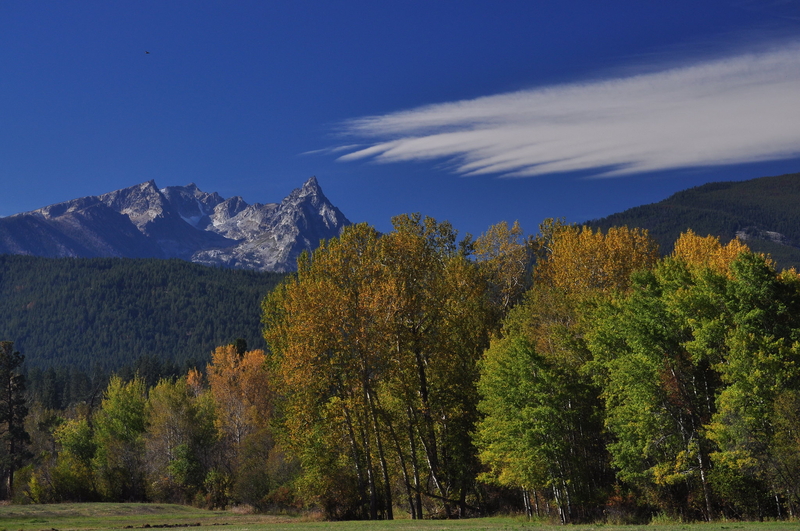
The Trump administration proposed rescinding the Roadless Rule, which means opening large tracts of wilderness to development, logging or other uses which some groups say will harm endangered and sensitive species.
“We need a U.S. senator who’s going to stand up and fight like hell to defend our public lands, not be the servant of Mike Lee down in Utah, who’s going to do everything he can within the Republican Party to sell off our public lands,” Bodnar said.
He touched on the Roadless Rule, which the Trump administration has proposed to rescind, which will change how around 6 million acres of Montana is managed.
“We need to make sure that we’re protecting key habitat areas, key species, and that we’re funding the agencies responsible for smart management, proactive management of our forests, and we’ve seen those agencies gutted in the past year,” he said.
Alme did not touch on specific policies of the current administration, such as rescinding the Roadless Rule, but talked about how important the state’s public lands were for his family, having grown up in Montana.
“I will always fight to keep our public lands in public hands, and all fight against anyone who tries to sell them off,” he said.
“All roads lead to AI data centers,” said Bankhead, adding that the current Republican administration has relentlessly opened up public lands for additional “exploitation.”
Changing how land management agencies are structured, relocating offices across the country and rolling back rules is “all about chipping away” protections to eventually put data centers on more public land.
“Public lands will remain public lands,” Austin said.
But he said the “far left agenda” adds too much red tape and rules that prevent good management of public lands — leading to problems like more wildfires.
“We need access to our wilderness, so we can bring back responsible management of our forests,” he said. “The Roadless Rule will open it up so we have access for responsible logging. We can bring back the mills so we can build affordable lumber to build affordable houses, but we will gate that so it does not turn into an interstate and it does not ruin our environment.”
The debate can be viewed in full online.
Helena, MT