Utah House speaker says he’s open to repealing controversial development law
Oct 12, 2026 | 6:51 pm ET
Description
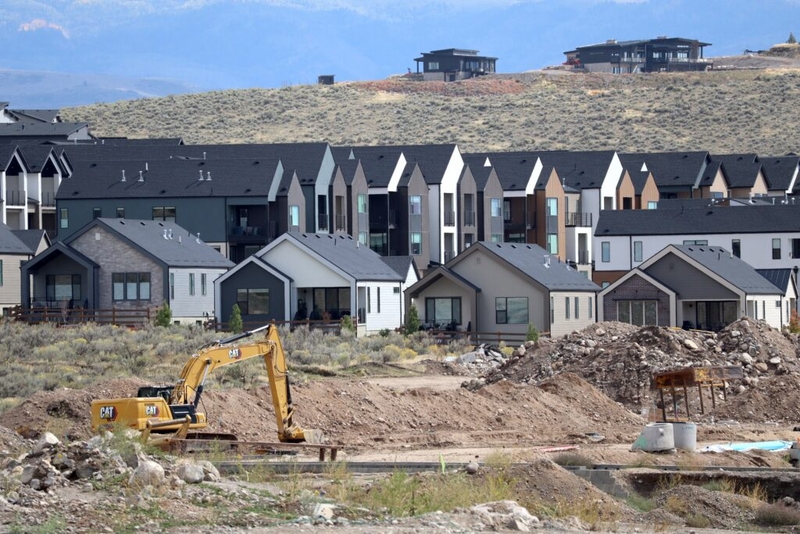
A new housing subdivision is under construction in the Heber Valley on Sept. 19, 2026. (Katie McKellar/Utah News Dispatch)
Amid ongoing controversy over a state law that allows landowners to essentially self-form a new city or town, one of Utah’s top Republican lawmakers says he’s open to a change — or even a full repeal of the law.
House Speaker Mike Schultz, R-Hooper, told Utah News Dispatch in an interview Monday he’s supportive of addressing issues with SB258 that passed in 2024, and he fully expects a repeal or substantial changes to the law to be discussed in the upcoming legislative session scheduled to begin in January.
“There should be a broader discussion, and I think, you know, a full repeal should be part of the conversation,” said Schultz, who has worked in residential and commercial real estate and owned development companies. “We will be open to all options right now, including a full repeal.”
In response to a request for comment and a question asking whether the governor would be supportive of a repeal or alterations to SB258, Cox issued a prepared statement Monday indicating he would be open to changes.
“We’re committed to making Utah a place where our children and grandchildren can afford to live and raise their families. That means exploring all options to address housing affordability,” Cox said.
In a formal resolution approved last month, Wasatch County leaders called on state lawmakers to walk back SB258 because they said it allows developers to “entitle large-scale projects while sidestepping the infrastructure, housing, oversight and accountability standards every other community in Utah must meet.”
The law created a pilot program that allows up to three landowners in mostly undeveloped, unincorporated areas to petition to create a “preliminary municipality,” which Wasatch County leaders described as “a step toward eventual full incorporation.”
“The process requires a feasibility study but sets a comparatively low bar for what that study must show and grants the applicant substantial entitlement and development authority well before the community it describes has any residents, tax base, or independent capacity to deliver services,” Wasatch County officials wrote in a report listing the flaws they see in the law.
What led the issue to ‘blow up’
Outcry over SB258 has been particularly sharp in Summit and Wasatch counties, where the issue recently caught more attention after Utah Gov. Spencer Cox’s senior housing adviser, Steve Waldrip, issued a threat to withhold state road funding from Wasatch County because leaders rejected a 144-lot proposal about six miles east of Heber.
After Wasatch County rejected the project, Philo Development partner Greg Whitehead told a local radio station, KPCW, that it “sounds like we’re getting some retaliation” for pursuing a preliminary municipality under SB258.
“We’re getting punished because we are considering a preliminary municipality,” Whitehead told the station. “Because we considered it, we’re not welcome to develop in Wasatch County, is what that sounds like.”
‘Threat’ to block state funds from Wasatch County stirs anger over ‘top down’ development pressure
In an interview with Utah News Dispatch last month, Wasatch County Manager Dustin Grabau said Waldrip’s comments appeared to be a reaction to an “untrue rumor” that Wasatch County was somehow “going to collude with other counties to defy state law related to preliminary municipalities.”
Since then, after meeting with Wasatch County leaders, the threat to withhold state funding over the issue has been dropped and state and local leaders say they’re now working together. But some Wasatch Back residents continue to be frustrated with the governor’s tactics, and local leaders continue to push for SB258 to be repealed.
It’s also been a top campaign issue in the House District 59 race between Democrat Celeste Johnson and Republican Luke Searle. Both candidates oppose the law, The Park Record reported earlier this month.
Schultz noted that the Utah House earlier this year unanimously approved a bill, HB510, to create more requirements for preliminary municipalities, but that bill failed on a narrow, 14-12 vote in the Senate on the final night of the 45-day session.
Schultz said he’s been talking with Searle and listening to all of the concerns with the law, which he said have become more widespread after Waldrip’s comments.
“We in the House have been supportive … of making changes and modifications to it and feeling like the proper balance hadn’t been struck,” he said. “But now to see it kind of blow up to the extent that it has, is it time to just do a full repeal and start over? I think those are all options that are on the table.”
Utah housing market remains among most expensive in U.S., with 91% of renters priced out
Schultz added that until now, “we really didn’t understand how much pushback there is inside Wasatch County on this particular issue.”
Since longtime Senate President Stuart Adams, R-Layton, lost his primary election, he won’t be returning to Capitol Hill next year — and it’s not yet known who will be in Senate Republican leadership. However, Schultz said he’s been talking with some senators who are “on all sides of this.”
“Some are open to a full repeal. Others want to make modifications to it,” Schultz said. “So we’ll see kind of where that lands. … I think most everybody sees that there needs to be changes. Now, is that a full repeal? You know, that’s something that we’re certainly open to, or (should we) make modifications? Those discussions are going to be had.”
The House speaker noted that lawmakers have tried to balance local planning authority with a push to increase more affordable housing stock across the state, but he said the Philo Development proposal and the “preliminary municipality” law didn’t seem to do much to advance that goal.
“These are very large lots, very expensive homes. And, you know, it obviously really has people upset up there,” he said.

‘Everybody makes mistakes’
As for Waldrip’s comments and the controversy about an apparent threat from the governor’s office to withhold state funding over the issue, Schultz said “everybody makes mistakes.”
“I’m not going to be too critical of that,” Schultz said. “I appreciate Steve and the governor in recognizing that they could have had a different approach that may have had a better outcome. You know, I think that’s what’s kind of caused the stir that’s brewed up at this point.”
Waldrip, in an interview with Lindsay Aerts for ABC4’s Inside Utah Politics show last week, said the governor was “frustrated” with Wasatch County and he wanted Waldrip to “make sure that they understand we’re very serious about these issues.” However, Waldrip said they took the wrong approach.
“Fortunately, out of the back end of that, we’ve got really productive conversations that are going on right now,” Waldrip said in the interview with Aerts. “And yeah, we could have done a better job of delivering that message.”
The issue has also prompted a larger debate around top-down development pressures from state leaders and whether other entities like the Military Installation Development Authority — which was behind the highly controversial Stratos data center proposal in Box Elder County and a major Deer Valley resort development in Summit County — drive economic development that add to housing pressures without enough local planning.
Schultz noted that local authorities must first give a nod of approval before entities like MIDA can create project areas in their communities. However, he agreed that the state and local officials need to work together, not against each other.
“I do think the state and local elected officials need to work together to provide housing opportunities for our kids and grandkids. That’s what I think is important, and that’s what we should be focused on,” Schultz said. “I don’t think it should be a top-down, heavy-handed approach. I do think it ought to be a collaborative approach.”

Salt Lake City, UT