Ballot proposal would impact Oklahoma judicial selection panel
Oct 12, 2026 | 6:30 am ET
Description
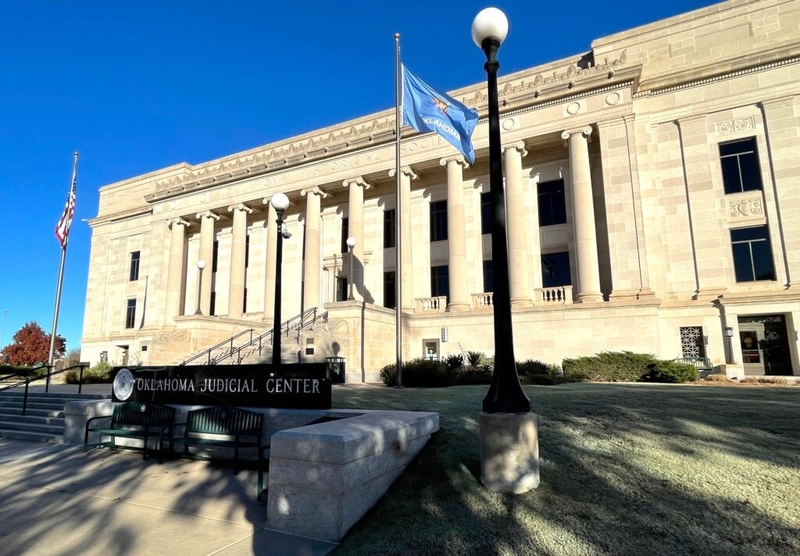
The Oklahoma Judicial Center is the headquarters of the Oklahoma Supreme Court and Court of Criminal Appeals. (Photo by Carmen Forman/Oklahoma Voice)
OKLAHOMA CITY – Voters on Nov. 3 will be asked to make changes to a panel that vets judicial candidates and sends their top picks to the governor for possible appointment.
Critics say the proposed changes in State Question 845 could result in one political party having too much influence.
Supporters say reforming the Judicial Nominating Commission is needed to better reflect the Republican super majority in the Legislature and GOP control of all statewide elective offices.
The state question seeks to reshape a constitutional provision that defines who can serve on the 15-member Judicial Nominating Commission that plays an influential role in selecting the state’s judges.
The state question seeks to remove party affiliation restrictions and the prohibition that certain members not be attorneys or have family members who practice law, the length of time commissioners can serve and realign the district boundaries where they can reside.
The current construction of the Judicial Nominating Commission favors Democrats, said Sen. Todd Gollihare, R-Sapulpa, during debate earlier this year.
He is the Senate author of the state question, which lawmakers voted to put on the November ballot. Gollihare did not return messages seeking comment.
“The majority party is running behind the minority party because of the structure of the Judicial Nominating Commission,” he said.
He said it was not equitable for the majority party to have five members when the minority party has 10.
The 15-member Judicial Nominating Commission was approved by voters in 1967 by a constitutional amendment following a judicial scandal in which Supreme Court justices took bribes. The Commission was created when Democrats controlled the Legislature.
Prior to the creation of the body, appellate court judges ran as politicians and accepted campaign donations.
Under the existing structure, the Commission selects three nominees to fill judicial vacancies that the governor then chooses from.
The Oklahoma Bar Association picks six members who serve staggered six-year terms.
The governor chooses six to serve staggered six-year terms.
No more than three of the governor’s six appointees can come from one political party. The Senate Pro Tem and House Speaker each have an appointee. The 14 members of the Nominating Commission then elect the final member.
Of the latter three, no more than two can be from the same political party. They serve 2-year terms.
If approved by voters, the measure would limit members to serve 12 years in total, removing language that prohibited members from back-to-back terms.
“Because we do believe that institutional knowledge is important, especially with a function as critical as providing names to a governor from which he or she must choose a justice, that we should allow the member of the commission to serve a second term,” said Senate Majority Floor Leader Julie Daniels, R-Bartlesville.
But Andy Fugate, D-Del City, said the existing structure is designed to ensure the Commission is not overly partisan.

“The process is intended to bring multiple parties to the table, not focus on a single party,” he said. Fugate voted for the measure, but said he only supported it at the time in exchange for action on another bill.
Fugate said he opposes the changes.
“The party in power wants a judiciary that will play ball and what the people of Oklahoma deserve is a judiciary that will follow the law and the Constitution,” Fugate said.
Rep. Anthony Moore, R-Clinton, the House author, did not return phone calls seeking comment.
The Judicial Nominating Commission and the Oklahoma Supreme Court have been targets of the Republican-controlled Legislature after numerous GOP-backed bills were deemed unconstitutional.
In 2010, voters approved State Question 752 that added two members to the panel to be appointed by the Senate Pro Tem and House Speaker. That constitutional amendment was put on the ballot by lawmakers. The measure passed by nearly 63%, according to the Oklahoma State Election Board.
Last year, a bill that proposed asking voters to abolish the Judicial Nominating Commission failed to secure the support needed to advance out of the Legislature.
In 2024, a bill that would require appellate and district court judges to retire at 75 also failed to garner enough support. Daniels, the author, said the bill was needed because justices had invalidated Republican bills.
Oklahoma City, OK