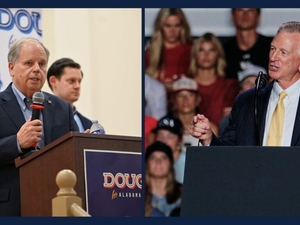
Debates have changed the course of U.S. history. They could change Tennessee’s.
Oct 12, 2026 | 6:00 am ET
Description
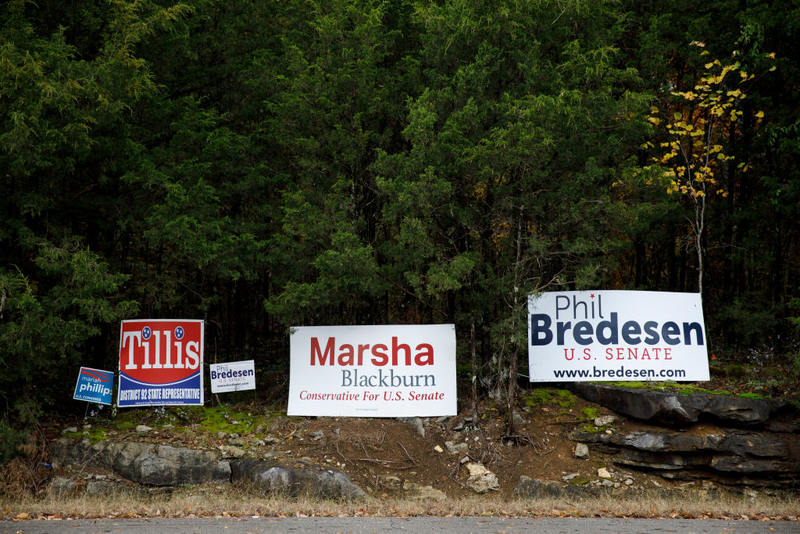
The last time U.S. Sen. Marsha Blackburn participated in a public forum, unconstricted by partisan politics, was furiThe last time U.S. Sen. Marsha Blackburn participated in a public forum, unconstricted by partisan politics, was during the 2018 U.S. Senate race with former Gov. Phil Bredesen. (Photo by Drew Angerer/Getty Images)
One of my hills to die on is that candidates for office should be willing to stand up before a public audience and state their cases.
If a person believes they are the best person to serve in elected office, it should be a simple matter to state their qualifications, what they intend to do in office, to at least have an idea about how they might accomplish it and to advocate for why they are the best choice.
And yet, over the last decade, it has become increasingly difficult to hold candidates accountable through forums.
This isn’t for a lack of effort: the Tennessee Press Association, TPA, which represents more than 135 news outlets across the state, invited the four major candidates — Republican nominee U.S. Sen Marsha Blackburn, Democratic nominee and Memphis City Councilmember Jerri Green and independent candidates David Hatley and Lauren Pinkston — to an Oct. 27 gubernatorial forum at Middle Tennessee State University.
In full transparency, I am a member of the TPA board.
For ease of participation, TPA offered the candidates three dates from which to choose. Closed studio setting — no big public audience with which to contend, no security risks — live-streamed statewide, content distributed to organization members, held at Tennessee’s second-largest institute of higher education.
But it’s been no easy thing to get candidates to confirm.
We got no response from Blackburn’s campaign despite multiple efforts: this wasn’t a surprise as Blackburn has agreed to no forums or debates throughout the campaign, including in the Republican primary.
Blackburn, who has nearly 30 years of electoral experience in a state that hasn’t elected a Democrat to statewide office in 20 years, is the likely frontrunner. It’s no surprise every other gubernatorial candidate wants to get on a stage with her.
Several weeks ago, Hatley offered $1 million to three charities if Blackburn would debate him.
Green, who has repeatedly challenged Blackburn to a showdown, confirmed her attendance after initially sending a news release saying she would only agree to participate if Blackburn did and blasting TPA for including the two independents, questioning TPA’s “criteria” for their inclusion.
Pinkston said she would debate anyone.
At this point, I’m considering setting up a “CSI”- style string-and-thumbtack chart in my office to keep track of who will debate whom and under what conditions.
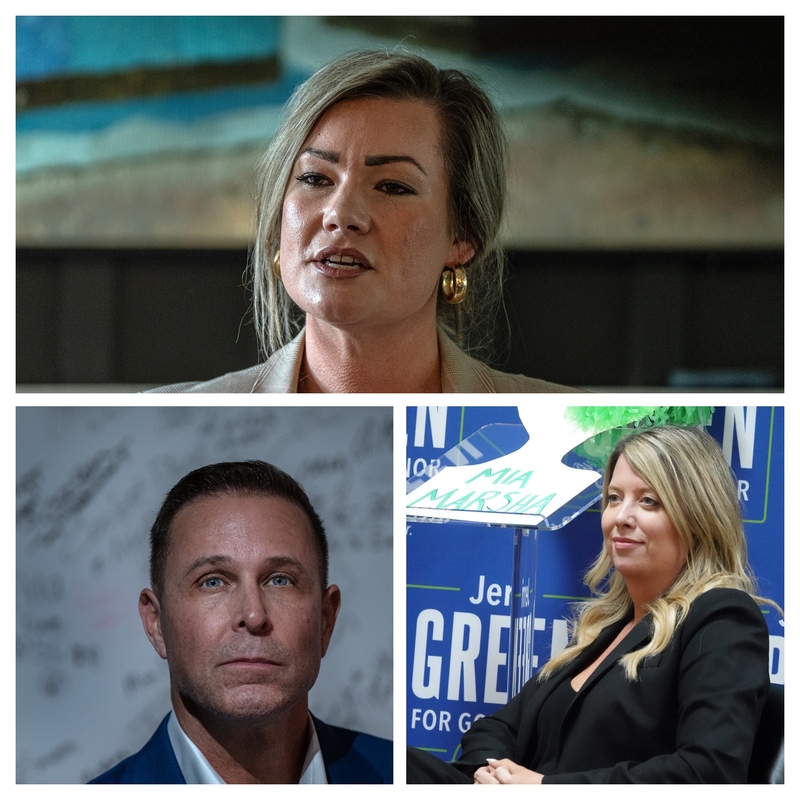
In the not-so-distant past, debates, or public forums at least, were common in most Tennessee races. Traditionally, news outlets have hosted nonpartisan forums. Gannett, the parent company of the Tennessean in Nashville, the Memphis Commercial Appeal, and the Knoxville News Sentinel, among other outlets, has hosted many such events.
They hosted a series of three in 2018 when Blackburn and Democratic nominee and former Gov. Phil Bredesen were vying for the U.S. Senate — the last time Blackburn participated in a fully open, nonpartisan public event.
In 2022, The Tennessean held six candidate events statewide in the primary alone.
But over the last decade, Republicans in Tennessee’s supermajority have become loath to debate, and GOP candidates rarely agree to do so. When Gov. Bill Lee ran for reelection in 2022, he said he couldn’t participate in a debate with Democratic nominee Dr. Jason Martin because of his wife’s health: First Lady Maria Lee was battling a rare lymphoma.
No one will fault a guy prioritizing his wife’s health. But at the same time, Lee did find time to sit down solo with Tennessean Editor Michael Anastasi for a one-on-one at the University of Tennessee, and when questioned by Lookout Senior Reporter Sam Stockard in October 2022 on debate plans with Martin, Lee shied from answering.
I’m glad Tennessee voters will have the chance to see at least three of the gubernatorial candidates in action at the TPA forum, but there won’t be a public forum in the hotly contested 9th Congressional District, a race that has drawn national interest, between Rep. Justin J. Pearson, the Democratic nominee, and Republican state Sen. Brent Taylor..
Fifth District Republican nominee Charlie Hatcher has said he will debate his Democratic opponent, Columbia Mayor Chaz Molder, in an event sponsored by the Nashville Scene, but the election is less than a month away, and there’s nothing scheduled.
I may be screaming into a void, but I firmly believe debates, or forums, are one of America’s noble political traditions. Without the 1858 Illinois U.S. Senate debates between Abraham Lincoln and Stephen Douglas, would Lincoln have won the Senate seat and ultimately become president?
Political scholars still cite the 1960 presidential debate between John F. Kennedy and Richard Nixon as a triumph of television, then a new medium: radio listeners thought Nixon the clear winner while TV viewers, taking note of Nixon’s pallor and sweat as he recovered from a knee infection, viewed the tanned Kennedy as the winner.
Public interaction between candidates has, literally, changed the course of U.S. history.
And, with or without Republican participation, it’s likely to change Tennessee’s, too.
Nashville, TN