Michigan needs more behavioral health professionals.
Oct 12, 2026 | 8:00 am ET

Description
Getty Images
There is a particular kind of frustration that comes with needing mental health care: finally deciding to ask for help, making the call, and then being told the next available appointment is weeks or months away.
For many Michigan residents, that is already a reality. Our state needs more behavioral health professionals, and the people experiencing that shortage don’t care whether the reason is a workforce statistic, an education policy, or a federal regulation. They simply need someone available to help.
Michigan knows it has a workforce problem. The state is putting real resources toward solving it, including investments in social work education and training. But at the same time, federal policymakers are changing the way graduate programs are financed and evaluated, making it harder to enter the field.
One of the newest changes deserves particular attention because it could affect not only how students pay for graduate education, but whether some programs can continue participating in the federal student loan system at all. The federal government’s new earnings-accountability system is intended to identify programs whose graduates do not earn enough to meet a specified earnings benchmark and prevent them from taking out federal student loans.
The goal is understandable: students should have meaningful information about the financial outcomes associated with their education, and they should not be encouraged to take on debt that is unlikely to be manageable. But good intentions do not eliminate the need to ask whether we are measuring the right thing.
For graduate programs, the earnings benchmark is based on workers with a bachelor’s degree. That means the earnings of workers whose education stopped at the bachelor’s level are being used as a benchmark when evaluating programs that prepare students at the master’s level.
Consider social work. A bachelor’s degree in social work and a master’s degree in social work are not interchangeable. They represent different levels of education and professional preparation, and they can lead to different roles, licensing opportunities, and wages. A graduate social worker may go into clinical practice, administration, research, teaching, policy, or other specialized work.
So what does it tell us about the value of a master’s degree if we compare its graduates against people who did not pursue that degree?
That question matters because the consequences of the earnings measure are significant. A graduate program that fails the measure in two out of three years can lose access to federal Direct Loans for at least two years. This is not simply a question of whether a student can borrow more or less. It can become a question of whether students can use federal loans to attend the program at all.
And social work is not a profession that exists on the margins of Michigan’s healthcare system. It is a core part of the behavioral health workforce that communities rely on every day. This is also happening alongside another federal change affecting graduate education. Social work is not included among the programs currently classified as professional degrees eligible for higher federal loan limits.
That classification deserves scrutiny. The U.S. Department of Education describes professional degrees as programs that prepare students to enter a profession, require skills beyond those normally expected from a bachelor’s degree, and generally require professional licensure. Social work meets those core characteristics. The Department received extensive comments making that case and ultimately chose not to include MSW and DSW programs in the professional-degree classification.
The result is a policy landscape in which students pursuing the education needed to become social workers face lower federal borrowing limits, while the programs educating them may also face a new federal earnings test that could ultimately affect their access to federal loans. That should matter to Michigan.
At LifeWays, we envision “a fully integrated healthcare network that supports individuals in our community to reach their full potential.” Reaching that vision requires more than expanding services on paper. It requires having qualified professionals available to provide those services.
Michigan is already investing in the behavioral health workforce because we know we need more of those professionals. There are an estimated 530 annual openings for mental health and substance use social workers alone.
We should absolutely continue asking whether students are receiving a good return on the education they finance with federal loans. But we should also ask whether the measures we use to answer that question accurately reflect the value of graduate education—and whether they account for the workforce consequences of getting that answer wrong.
Because when a policy makes it harder for a student to become a social worker, the impact does not necessarily end with that student. It can eventually reach the person sitting in a waiting room, hoping someone will call their name.
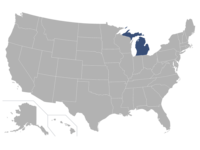
Lansing, MI