Criminalizing reproductive healthcare makes pregnancy more dangerous
Oct 09, 2026 | 1:44 pm ET
Description
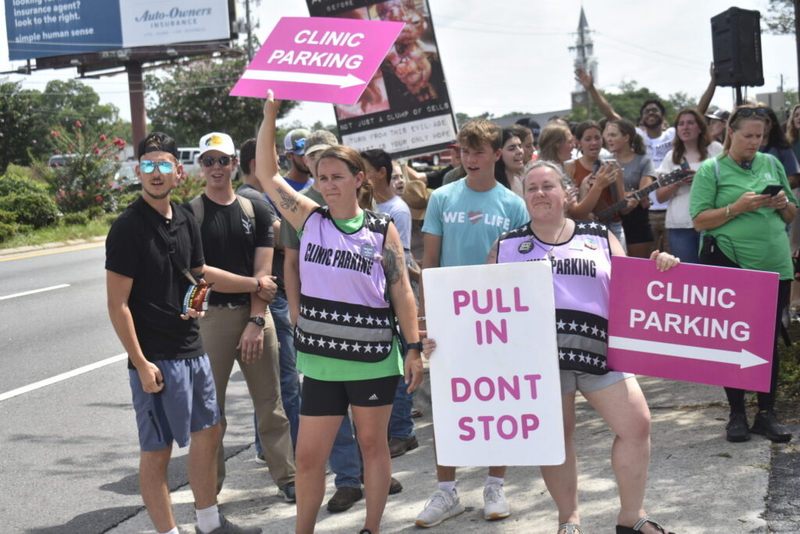
Clinic escorts attempt to stand between patients and anti-abortion protesters outside A Preferred Women’s Health Center of Atlanta in Forest Park, Georgia, in July 2023. (Photo by Ross Williams/Georgia Recorder)
Since the dismantling of Roe v. Wade, medication abortion has become one of the most common methods of managing miscarriages and ending pregnancies in the United States. Medication abortion is essential care, especially in states with abortion bans or restrictions.
Despite abortion medication’s proven safety, lawmakers are aggressively working to restrict its distribution and even criminalize possession.
Attacks on abortion care are not new. For decades, anti-abortion extremists have mobilized at the national and state levels to strip away our bodily autonomy. That is why those of us in the reproductive justice movement have always said that Roe v. Wade was never enough to protect our communities.
It is time that we look beyond abortion access to laying the foundations for a future in which we can all not only have the right to decide if and when to have children, but also to know that if we do, that we will have equal access to the conditions that will allow us to care for our families in thriving communities.
Reproductive justice asks us to imagine a world with economic stability, access to nutritious foods, clean air and water, quality housing and schools, and neighborhoods free from violence and exploitation.
The overturning of Roe was just one step in a coordinated plan to dismantle reproductive healthcare. While Southern states have served as a testing ground for abortion restrictions and other limits to bodily autonomy for decades, this can no longer be written off as a Southern issue.
Since the Dobbs decision, 23 states have banned or severely restricted abortion care. But the bans haven’t just prevented people from accessing abortion care, they’ve stood in the way of fertility care, miscarriage treatment, pregnancy care and assistive reproductive technologies like IVF.
We know extremist lawmakers hellbent on controlling the bodies of others won’t stop there.
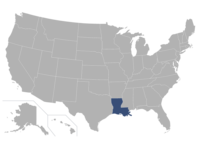
Already, we’ve seen Louisiana reclassify mifepristone as a Schedule IV drug, criminalizing its possession and making it less accessible to physicians in emergency situations. While many view this as a major shift in our country’s history, reproductive justice leaders recognize this as just the latest strategy used to reduce bodily autonomy, limit opportunity, maintain control of and finally imprison marginalized people — particularly Black people and people of color, poor folks, and LGBTQ+ communities.
In 2023, Louisiana had the highest maternal mortality rate in the country. Louisiana’s criminalization of mifepristone has since likely worsened maternal mortality and morbidity by causing delays in critical pregnancy care such as emergency postpartum hemorrhage management. The Schedule IV classification also requires increased licensing and reporting for the drugs, creating a chilling effect among medical and pharmacy professionals who fear surveillance and criminalization if they dispense the medications, even for uses not related to abortion care.
By criminalizing abortion medication, legislators are making pregnancy and childbirth even more dangerous.
In 2022, Tennessee lawmakers passed a law that made it a Class E felony to provide abortion-inducing medication through courier delivery/mail services. Violators can face between one to six years in prison.
At this moment, the rest of the country should look to the South to understand what is coming and to learn from its long history of resistance and building alternative systems of care to support their communities.
For many Black communities across the South, medication abortion is not just a matter of convenience, but it is often the most accessible option. With many abortion clinics in the South forced to close following the end of Roe, medication abortion can create additional pathways to care — especially for rural communities who face increased transportation and economic barriers. These barriers are being exacerbated by the recent drastic funding cuts to Medicaid that put hundreds of rural hospitals at risk of closure.
By imposing criminal penalties on medication abortion, states are further stripping our most vulnerable communities of their autonomy while also putting their lives at risk. More than a third of birthing people now live in a county or parish with no obstetric care — in an emergency that can very well make the difference between life and death.
A future where healthcare is rooted in autonomy, empowerment and equality is possible. Building that future requires meaningful and long-term engagement from communities, advocates and policymakers.
Marginalized people have disproportionately had to navigate systems that control their bodies and deny them access to comprehensive care. Black women in the reproductive justice movement have been strategizing to meet this moment for decades, and they have the experience, expertise and vision needed to lead us toward that liberated future.
Their voices and lived realities must be centered in present-day conversations to shape policies and systems of care that will move us toward greater reproductive freedom.
Baton Rouge, LA