Idaho voters should ask themselves 1 question: Are you better off than you were 18 months ago?
Oct 09, 2026 | 6:00 am ET
Description
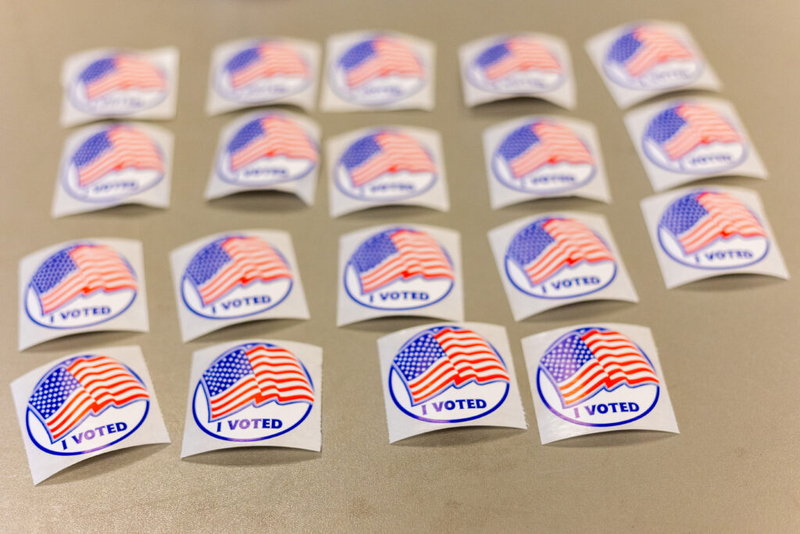
"I Voted" stickers await Bonneville County voters for the primary election on May 21, 2024, at the College of Easter Idaho in Idaho Falls. (Photo by Pat Sutphin for the Idaho Capital Sun)
The political race was close, with polls showing that the incumbent had a slight advantage and the challenger’s support had flattened out despite voters facing a dire situation. Rising inflation, higher unemployment, soaring interest rates, record high gas prices, family budgets stressed to the breaking point, a frustrating conflict with Iran, and the sense among Americans that the politicians in Washington, D.C., did not care about them.
To turn the momentum in his direction, the challenger asked Americans on the eve of the election: “Are you better off now than you were four years ago?” On Election Day, the answer from voters was a resounding “No!”
If this scenario sounds like the state of our nation in the fall of 2026, you are correct. But this was October 1980, and the president was Jimmy Carter and the challenger who asked Americans if they were better off than four years earlier was Ronald Reagan.
Idaho’s general election is less than a month away. Here’s what you need to know.
The dramatic moment came in the last televised debate between Carter and Reagan, which drew the largest TV audience of any presidential debate. Reagan’s question shifted the tide of the campaign to his favor, and he ended up beating Carter in a landslide.
Reagan’s question is as relevant today as it was back in 1980. Do Idaho voters feel better off today than they did 18 months ago when Donald Trump promised to lower inflation, improve the economy, address the kitchen table concerns of American families, keep the country out of foreign wars, and drain the swamp?
By all objective measurements, the answer to that question should be an overwhelming “No!”— just as it was back in November 1980. And polls show that President Trump’s approval rating is sinking, even in strong GOP states like Idaho.
Most midterm elections are a referendum on the job performance of the president. But this year’s midterm election is not just a referendum on Donald Trump – it is also a referendum on the acolytes in Congress who have not challenged his policies that have led to the economic carnage we suffer today.
Idaho’s congressional delegation, especially, has supported the president and his policies without question. Instead of remaining faithful to the Constitution and the founders’ system of checks and balances, Idaho’s congressional members have remained silent as the president alienated our closest allies and trading partners, burdened Americans with costly tariffs, and launched an unnecessary and costly war, leading to the runaway gas and food prices we have today.
Not only that, but they also contributed to the damage by voting for the so-called Big Beautiful Bill which provided the greatest tax cut in history to the wealthiest Americans at the cost to our country’s working people and most vulnerable citizens, while adding billions of dollars to the national debt. Debt that our children and grandchildren are now forced to carry.
U.S. Sen. Jim Risch, who is asking voters to re-elect him this November, and U.S. Sen. Mike Crapo have voted against ending the Iran War 15 times since March. As chairman of the once-powerful Senate Foreign Relations Committee, Risch has not once held a hearing on the war or publicly questioned the president about how he plans to end it.
Meanwhile, last week unleaded gas at Albertsons cost $5.35 and diesel $6.45 cents per gallon. The cost of putting food on the table has risen 3.5 percent since Trump took office, adding hundreds to the average family’s grocery bill.
Elections are about more than voting for someone because they are a Democrat or Republican. Elections are also about holding those in power accountable for their actions – or inactions. In 1980, 27 percent of voters who identified as Democrats voted for Reagan rather than the Democratic president.
Elections are also about whether those who are asking for another term have fulfilled their responsibilities to help make life better for Americans and their families.
Unfortunately, the challengers who want to hold our current congressional delegation accountable will not have a chance to debate the incumbents and ask the same question Reagan did: Are voters better off now than they were 18 months ago?
That’s because our congressional representatives have decided that debates are not in their self-interest, forgetting that elections are not about them, but about the people they represent.
Instead, they have amassed huge campaign budgets which they are using to scrub their lackluster record and convince voters they have their best interest at heart. But they are not willing to defend those records in free town hall meetings or televised debates.
The election is about a month away and many of you are already casting your ballot. This is the hour of upmost importance to our democracy and society.
As you decide, remember this: If you can cut through the paid political propaganda airing on TV or arriving in your mailbox, you can best consider what candidate is working for you. Ask yourself: Does the candidate cling to power for power’s sake and to serve those who are already comfortable? Or does the candidate stand with you and your family?
The best way to judge that is to ask what Ronald Reagan did in 1980: Are you better off now than you were 18 months ago? If the answer is a resounding “No!” what are you going to do about it?
Boise, ID