Lindstrom reports $50 spent in 2026 NE gubernatorial campaign. The total is likely higher.
Oct 09, 2026 | 12:01 pm ET
Description
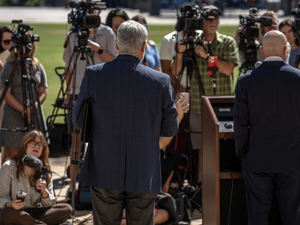
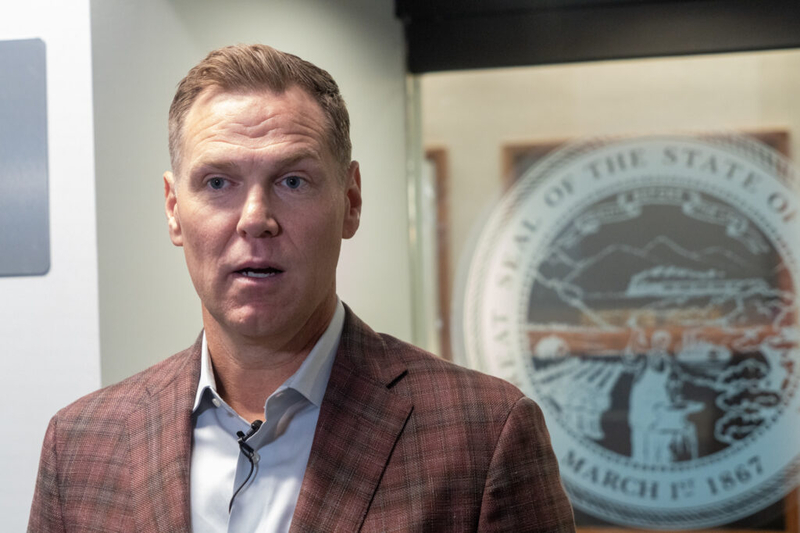
Former state Sen. Brett Lindstrom of Omaha, newly registered member of the America First Party, talks with reporters outside the Nebraska Secretary of State's Election Division after filing paperwork to be the gubernatorial candidate for the new political party on Tuesday, Sept. 1, 2026, in Lincoln. (Photo by Zach Wendling/Nebraska Examiner)
OMAHA — Former state Sen. Brett Lindstrom of Omaha twice petitioned this summer for the 2026 ballot for Nebraska governor, but he reported Thursday he only spent $49.50 this year so far. That number is likely to change.
Lindstrom has said his initial nonpartisan bid for Nebraska governor, from July 13 until he turned in 5,765 signatures Aug. 3, included paid signature gatherers. It was on Aug. 14 that Lindstrom’s nonpartisan bid fell flat as 2,407 signatures were rejected. Many of those were flagged as possibly fraudulent, the largest portion in Lancaster County. He needed 4,000 valid signatures.
Two new political parties also petitioned to get on the ballot — the Nebraska Working People Party and America First Party — and Lindstrom on Sept. 1 became America First’s gubernatorial nominee. In that effort, he needed just 25 signatures from new party members.
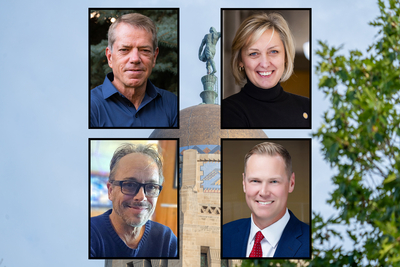
Lindstrom now faces Republican Gov. Jim Pillen, former Democratic state Sen. Lynne Walz and Legal Marijuana NOW’s Rick Beard. Each has selected a running mate. A campaign disclosure committee is required after a candidate raises or spends $5,000.
The latest reporting period was June 17 through Sept. 29, the first for the general election.
In that period, gubernatorial candidates reported the following:
- Pillen: $2.4 million raised, $4.4 million spent and $7.5 million cash on hand.
- Walz: $2.2 million raised, $2 million spent and $860,464.44 cash on hand.
- Lindstrom: $12,154.90 raised, $49.50 spent and $12,105.40 cash on hand.
- Beard: No campaign filings (less than $5,000 raised or $5,000 spent).
Between Jan. 1, 2025, and Sept. 29, Pillen and Walz have raised a combined $14.7 million and spent $9.9 million. More than 70% of that is from Pillen’s campaign. The 2026 election is already the third most expensive governor’s race in state history and appears on track to take the second-highest spot. For just general election spending alone, 2026 is the most expensive.
The 2022 GOP primary, which featured Pillen, Lindstrom, Falls City agribusinessman Charles Herbster and six other Republicans, exceeded $26 million in funds raised and $25 million in funds spent. Pillen would go on to spend $2 million in the general election. Then-state Sen. Carol Blood, a Democrat, spent $635,000 in the whole 2026 election.
The Nebraska Accountability and Disclosure Commission, which is similar to the Federal Election Commission for federal candidates, confirmed that virtually all spending toward the goal of being elected is considered a campaign expense. That includes signature gathering.
“There are a couple specific exceptions in statute, but this is not one of them,” NADC deputy director David Hunter said in an email to the Nebraska Examiner.
He added: “We have had a few candidates and committees lately that are unaware certain expenses like that should be reported as campaign expenditures, so we may need to better publicize that these types of expenses would qualify. I imagine that the Lindstrom campaign will report them when we let them know. That filing and others are currently being reviewed.”
Lindstrom said Friday: “I’m currently getting clarification from the NADC on what I need to update on my form.”
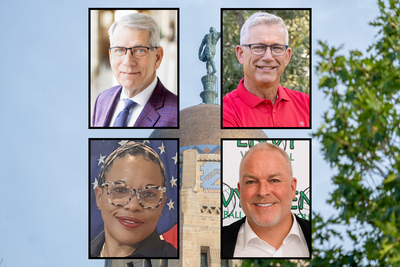
Part of Lindstrom’s first petitions went up in smoke over his work with the signature-gathering firm On The Ballot. That firm also ran the Lincoln petition effort this summer to amend the Lincoln City Charter. Good Government Lincoln at first failed due to significant allegations of fraud. The Lincoln petitions restarted and supporters qualified for the Nov. 3 ballot.
A total of seven circulators have been arrested who allegedly gathered fraudulent signatures on the Lincoln effort. A few of those circulators also worked on Lindstrom’s campaign.
State and county election officials are now considering banning paying per signature, a method Lindstrom voted in favor of legalizing in 2015 after a seven-year ban. In September, Lindstrom said he learned firsthand how a pay-per-signature-collected system could backfire.
Good Government Lincoln spent $390,000 on signature gathering via Vanguard Field Strategies. Vanguard subcontracted work to On The Ballot on June 8, July 1 and July 27, each time at $108,000.
Hunter said all campaign statements that come into the NADC are thoroughly reviewed. They are normally spot-checked in the order received and later reviewed more thoroughly. He said some filings could still be coming in for the Oct. 5 due date as they only need to be U.S. Postal Service postmarked by the due date. Agency staff then enter those filings.
There are two more state reporting periods for Nebraska’s 2026 general election: Sept. 30 through Oct. 19 (due Oct. 26) and Oct. 20 through Dec. 31 (due Jan. 12).
Lincoln, NE