A survived execution exposes the grim science of lethal injection
Oct 08, 2026 | 8:54 pm ET
Description
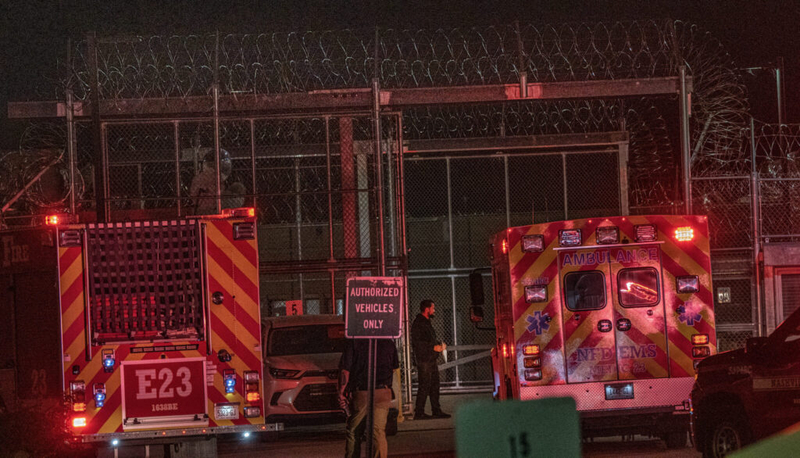
Emergency vehicles at Riverbend Maximum Security Prison in Nashville on Wednesday, Sept. 30, 2026. The execution of death row inmate Christa Pike was halted nearly two hours after the state of Tennessee began the lethal injection protocol. (Photo by John Partipilo/Tennessee Lookout)
It took Christa Pike nearly a week to regain consciousness after the Tennessee Department of Corrections failed to kill her with two doses of the barbiturate pentobarbital, a drug used to put animals to death and to execute humans by lethal injection in Arizona and other states.
She was confused and angry. She couldn’t eat because of damage to her throat, she couldn’t move her arms, and her hands were swollen to where they looked like “surgical gloves,” according to one of her attorneys. It was noted during and immediately after the execution attempt that skin on her arms was chemically burned by the high alkalinity of the drug.
But by Oct. 8, she was “walking with assistance,” according to a memo circulated by her attorneys to federal defenders around the country, “and her arms — which sustained significant injuries during the execution attempt — are healing and regaining movement and strength. Her lungs are clear, and she has started to eat a regular diet. Physicians are encouraged by her physical recovery.”
Pike’s attorneys and medical advisors had warned that Pike had a blood disorder, and that it had always been difficult for medical staff to draw blood from her veins, let alone insert IV lines. During the execution, after several failed attempts, the technicians placed a needle that most likely collapsed the vein. The bulk of the killing drugs likely went into the tissue around the needles placed in her arms.
“I think Christa didn’t die because most of the pentobarbital didn’t get into her brain,” said Dr. Joel Zivot, an Emory University anesthesiology professor who consulted with Pike’s legal team. “It ended up in her arms, so she never had a high enough blood level to kill her. That was the reason — not that she has some capacity to resist pentobarbital. It’s because it just never got into her brain.”
At least not enough to kill her.
The email to federal defenders cautioned that Pike “continues to experience cognitive challenges with concentration and memory. Her physicians have cautioned that it may take months to fully understand whether she sustained lasting cognitive injuries.”
And the burning on her arms belies another frequent problem with pentobarbital used in executions: It is highly caustic. When the drug does flow properly through the veins, the dying prisoner may appear to be sleeping, but in the majority of cases, studies have found that the pentobarbital solution is disintegrating the prisoners’ lungs, burning them apart, causing the condemned prisoners to literally drown in their own body fluids.
That all happens before the drug has a chance to kill the way it is intended to.
“It’s supposed to stop your breathing,” Zivot said. “But it’s supposed to stop it in your brain. This is different. I think the caustic nature of the solution is separate from what’s killing you. The pentobarbital works on the brain and the heart, and that’s killing you. But it’s what it’s cut with that I think is burning your lungs.”
The syndrome is called flash pulmonary edema, and it theoretically produces a sensation similar to waterboarding. In a deposition in federal court in 2019, Gail Van Norman, a researcher at the University of Washington, called it “one of the most powerful, excruciating feelings known to man.” Van Norman studied 27 autopsies of executed prisoners — eight of them men executed in Arizona — and found evidence of pulmonary edema in 20 of them.
Some researchers posit that the dying prisoners may still be able to feel the pain, even if they are too sedated to react. Of course, no one has lived to confirm that theory. And there is no news yet whether Pike experienced it.
Zivot’s own research found pulmonary edema in 33 of 43 executions carried out with pentobarbital or midazolam. The identifying symptoms in autopsies are lungs that are up to three times normal weight and the presence of a pink, frothy liquid in the respiratory tree. The froth, Zivot said, is an indication that the person is still struggling to breathe at the point of onset.
Curiously, though pulmonary edema has manifested in past Arizona executions, it has not been seen in the last three executions carried out with pentobarbital under the administration of current prisons director Ryan Thornell.
Why that is remains a question. The department has not commented.
It may just be luck.
Pentobarbital is used in clinical settings to treat epileptic seizures and also as an anesthesia. It is made by a European pharmaceutical company and marketed under the brand name Nembutal. But the manufacturer will not sell it for use in executions, so corrections departments buy it on the gray market as pentobarbital salts, which then have to be converted into an injectable liquid form by a compounding pharmacy.
In 2020, Arizona paid $1.5 million to a Connecticut company for a kilogram of pentobarbital salts; the company went out of the pento business shortly afterward. Whether the state is still using that supply or has purchased it elsewhere is something it will not disclose. And the identity of the compounding pharmacist, like the identities of the executioners, are kept hidden under state law. Doctors and pharmacists take oaths not to cause harm, and killing people can jeopardize their licenses, as well as their reputations.
Secret jars in a prison fridge hold AZ’s lethal injection drugs, and they may be expired
While clinical doses of pentobarbital are measured in milliliters, the Arizona and federal execution protocols call for 5 grams. During the last execution conducted in Arizona, that of Leroy McGill, Dale Baich, an attorney who has witnessed 16 executions by lethal injection and was in the viewing gallery, timed the process as 12 seconds pushing a syringe filled with saline, two consecutive 45-second injections of pentobarbital followed by another 12 seconds of saline.
In January 2025, during the final days of the Biden administration, the U.S. Department of Justice issued a warning about pentobarbital in executions, citing multiple studies about pulmonary edema. Outgoing Attorney General Merrick Garland had ordered its use stopped.
But in April 2026, the Trump DOJ countered those warnings. After a long preamble about misguided Biden policies, it declared them “wrong on the standard” and “wrong on the science,” and quoted its own expert who said the pulmonary edema didn’t matter because the prisoners were already anesthetized and didn’t feel anything, a claim that has not been scientifically settled.
The reason the Arizona corrections department can’t substitute another, less corrosive and perhaps more effective drug is because in the past they did so too many times, usually at the last minute, leaving defense attorneys no time to litigate.
When lethal injection was first used to replace the electric chair and the gas chamber in the 1970s, it used a three-drug process: the anesthetic sodium thiopental to render the prisoner unconscious, followed by a paralytic drug to ensure the prisoner didn’t breathe or show any signs of discomfort, and a final killing dose of potassium chloride that stopped the heart.
But by 2010, thiopental was no longer manufactured in the U.S. and could not be imported. It had been largely replaced in clinical settings by newer drugs. So, the Arizona Department of Corrections, then under the leadership of Charles Ryan, literally smuggled it from the United Kingdom, a fact not uncovered until after it was used to execute Jeffrey Landrigan. (That did not stop the department from trying to smuggle it in again in 2015, a shipment that DEA stopped at Sky Harbor Airport.)
The Arizona corrections department then switched to pentobarbital as the first drug in the three-drug protocol. And subsequently, right before another execution, the department discovered that one of its drugs had expired, so it decided at last minute to use pentobarbital as a single drug. At the time, before the edema problems were identified, it was heralded as a humane improvement by defense attorneys.
But then the pharmaceutical companies balked at selling pentobarbital for use in executions, and corrections departments had to look elsewhere. In 2014, Arizona experimented with a new protocol, combining midazolam, a drug in the same class as valium, with the opiate hydromorphone.
Poorly executed: ‘The experiment failed,’ halting executions in Arizona
The prisoner, Joseph Wood, snorted and convulsed on the execution gurney for nearly two hours as the executioners injected him with 15 doses of a cocktail that was supposed to kill him in one. His autopsy showed significant pulmonary edema, perhaps explaining the sucking breathing sounds heard by this reporter and other witnesses, and raising questions of what really killed him.
Then-Gov. Jan Brewer declared a moratorium on executions. Death Row prisoners filed suit and the state settled, agreeing to limit the drug menu to pentobarbital or thiopental, if available, as a single-drug protocol. The outside law firm handling the case waived attorney fees, but installed a clause in the settlement that would require the state to pay nearly $3 million of those fees if they violated the agreement.
There were no Arizona executions until 2022, at the end of the Doug Ducey administration, when then-Attorney General Mark Brnovich was running for U.S. Senate. Executions have long been a staple of the tough-on-crime platforms of Republican candidates. That year there were three, all plagued by difficulties in setting IV lines.
When Katie Hobbs took the governor’s office in 2023, she engaged David Duncan, a retired federal magistrate judge, to conduct a study of execution procedures, which had been problematic under long-time prisons director Charles Ryan and his successor, David Shinn. Shinn’s deputy director, Frank Strada, oversaw those three executions in which medical technicians struggled to insert catheters into the arms of condemned prisoners.
Strada left Arizona to become director of the Tennessee Department of Corrections. Pike’s was the second failed execution in Tennessee, and the first failed because they also couldn’t set lines in that prisoner’s arms. Strada resigned nearly a week ago.
Pike likely has a long road back to health.
Even if there was not enough pentobarbital in her bloodstream to kill her, “The whole body has been exposed to this serious blood flow,” Zivot said. “If it affects the brain, it could affect the kidneys, the liver, the intestines, the lungs — all of it. I think it will be revealed soon enough.”
Has Arizona found a better way, or are they just lucky?
The ‘inner terror’ of lethal injection is cruel, law prof argues in bid to stop Gunches execution
Corinna Lain, a University of Virginia Law professor who has extensively researched lethal injection, suggested that perhaps the secret was in knowing how to push the drugs.
Zivot, the anesthesiologist, discounted that theory and questioned whether the secret lay in the preparation of the raw pentobarbital salts into an injectable liquid form, “some way of adjusting the pH so it’s not quite so alkaline.”
But Michaela Almgren, a professor of pharmacology at the University of South Carolina, says that there is little leeway there.
“The catch is that there is a specific pH range in which it has to stay to meet the drug quality,” she said. “We don’t really have clinical evidence, but we don’t study it.”
There’s the rub.
“The medical scientists operate under the same Hippocratic oath as doctors,” Lain said.
“We’re experts in non-killing,” Zivot said. “Anesthesiologists know about drug toxicity and other things. These are dangerous substances, and when mishandled, they can cause dangerous outcomes. But it’s not the practice of medicine in any way.”
What kind of doctor takes money to kill people on behalf of the state, anyway?
“The state may want to use these people,” Zivot said, “but that’s clearly not medicine.”
The Arizona Department of Corrections, Rehabilitation and Reentry had no comment.
Some of the answers may come from Christa Pike’s recovery.
Arizona Attorney General Kris Mayes has requested a death warrant against death row prisoner Ernesto Martinez, tentatively scheduling for execution next January.
We will find out then if the luck holds.
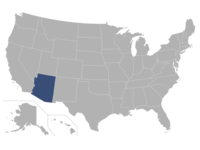
Phoenix, AZ