A prison sentence shouldn’t take away a citizen’s vote
Oct 08, 2026 | 10:54 am ET
Description
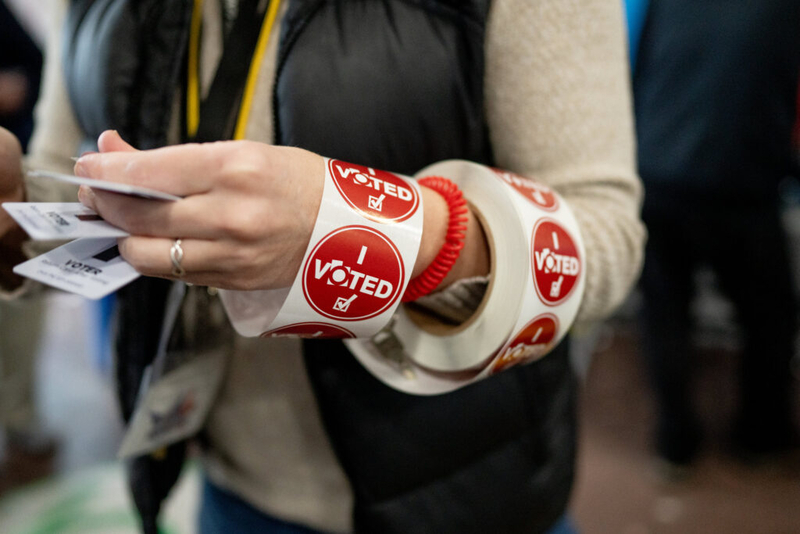
An election worker hands out “I Voted” stickers at the Main Library in Salt Lake City on Election Day, Tuesday, Nov. 5, 2024. (Photo by Spenser Heaps for Utah News Dispatch)
It was Election Day, 1964.
My mother took me to the polling site – Meadowlark Elementary in Great Falls.
She held my hand. We stood in line. A voting booth opened, and we entered. My mother pulled a lever. A curtain closed. She explained that Democratic candidates were on one side. Republicans on the other.
People could tell whether you were a Republican or Democrat by which side of the voting booth you stood. My mother, the daughter of a former Republican Governor, stood on the Republican side. Then, she reached over to vote for all Democrats, except for my father, a Republican candidate. He ran for lieutenant governor as a Republican, but was a proud union member.
In my family, voting was a responsibility. A sacred duty.
Growing up, I assumed every adult voted; universal suffrage, a cornerstone of democracy.
As a lawyer, I learned that Montana denies thousands of citizens the opportunity to vote.
Yes, citizens – people in prison.
We take away people’s freedom. We also take away their right to vote. It’s called disenfranchisement.
What is the public policy behind disenfranchisement? Good question.
Is losing the right to vote part of the punishment? What does that accomplish? Why should a person be prohibited from exercising their responsibility of citizenship? There is no connection.
It is bad public policy.
In Montana, our prison population has exploded. With mass incarceration comes mass disenfranchisement.
In 2024, an estimated 5,330 citizens were barred from voting in Montana. Most in our prisons, but also more than 600 in our jails. Put this in perspective. In Montana during the 2024 election, five legislative house races were decided by fewer than 300 votes, one by only 17 votes.
When elections are so close, we should scrutinize any law that limits who can vote.
The Montana Constitution, Article IV, Section 2, and Montana Code Annotated Section 13-1-111(2) curtail some voting rights. A person “serving a sentence for a felony in a penal institution” cannot vote. Fortunately, under Montana law, a person becomes eligible to vote again after their release. They do not have to complete parole or probation.
It isn’t that way everywhere. Maine and Vermont, Washington, D.C., and Puerto Rico allow people in prison to vote.
It’s worse in other states. It’s illegal for some citizens to vote. I’m not talking about making it “harder” for someone to vote. Against the law.
In some other states, many citizens still can’t vote after they are released from prison. They have been released, but not all of their rights have been restored. Some may be precluded from voting while they are on probation or parole.
The Sentencing Project’s Report, “Locked Out 2024” estimated 4,049,978 American citizens could not vote because of a felony conviction. Around 2.9 million weren’t even in prison. They were in the community, working, and raising families. However, they were still legally barred from voting.
It isn’t this way in other countries. In Canada, the convicted still vote. In South Africa, prisoners have a constitutional right to vote. In Europe, many prisoners vote. Voting restrictions apply only to certain crimes or sentences.
Think about this: What justifies depriving more than 4 million American citizens of their right to vote while also eliminating a cornerstone of our democracy?
There is a difference between loss of freedom and citizenship. A person in prison is still a citizen. Most will return to our communities. Voting allows them to participate in our communities. We want them to be good citizens when they return. Why forbid them from practicing good citizenship now?
We can punish a crime without taking away a person’s right to vote. Disenfranchising them denies them a voice and representation and undermines our democracy.
I remember my mother holding my hand as we entered the voting booth. She taught me that with citizenship came responsibility.
Our fellow citizens in prison are still citizens. We want them to be better citizens when they return to our communities. Forbidding them from voting is contrary to our interests and intentions. A prison sentence should not erase their responsibilities as citizens.
Montana should change its constitution and laws to allow people in prison to vote.
Helena, MT