Roanoke region remains in emergency drought conditions despite rain in other areas
Oct 08, 2026 | 5:27 am ET
Description
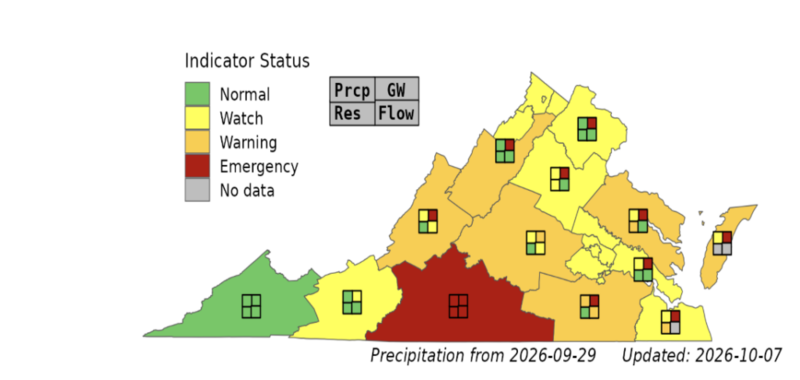
A map shows the Roanoke region of Virginia in emergency drought conditions in October 2026. (Department of Environmental Quality)
Despite cooling temperatures and repeated rain storms in central and northern portions of Virginia that have eased the drought conditions that were pervasive in the late spring and summer, Roanoke and the surrounding region is still experiencing emergency drought conditions.
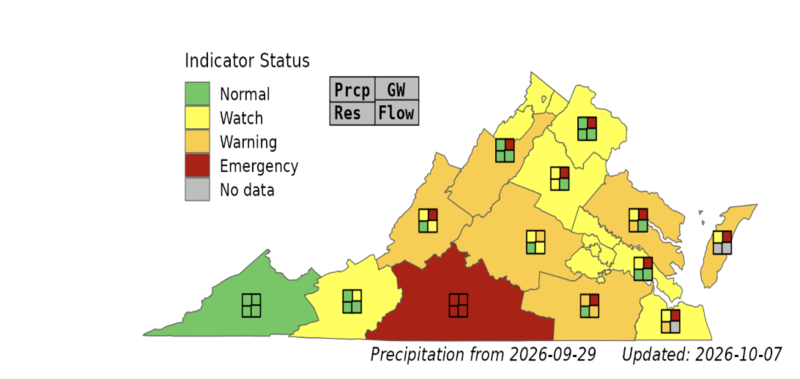
According to the latest drought indicators, Campbell, Halifax, Charlotte, and Pittsylvania counties are in the red emergency category for precipitation, groundwater, reservoir levels, and streamflow. Some water systems in the area have had to implement voluntary and mandatory water restrictions to preserve accessible drinking water.
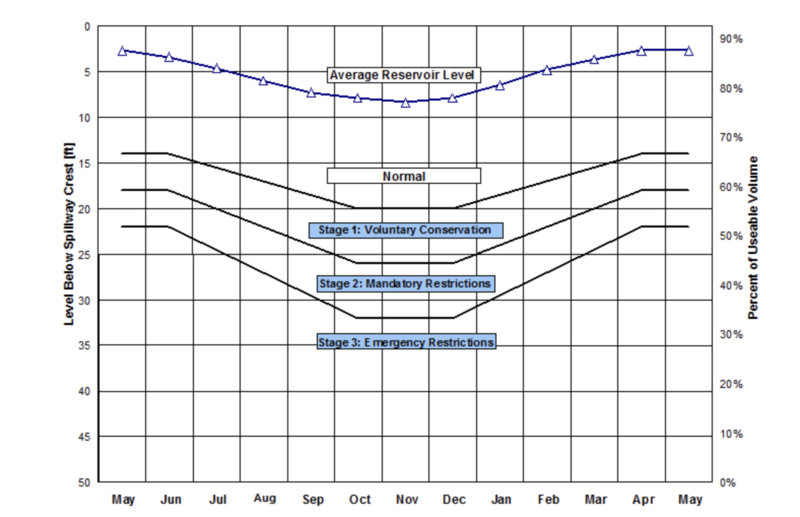
Two key reservoirs in the area provide the starkest picture of the situation. The Carvins Cove Reservoir in Botetourt County is 21.4 feet below full pond, leaving about 52% available. In Roanoke County, Spring Hollow reservoir sits at 27.5 feet below full pond level leaving about 67% available.
The Western Virginia Water Authority that oversees the reservoirs has contingency plans dictating when to implement stricter restrictions in the communities that rely on the water. Both reservoirs are almost low enough to enter the plan’s mandatory restrictions category.
“They’re doing all they can to maintain all the necessary allocations for drinking water for the folks they supply down in North Carolina, as well as out towards Virginia Beach,” said Weedon Cloe, office of water supply manager with the Department of Environmental Quality.
In July, Gov. Abigail Spanberger supported Roanoke area officials’ request for the public to curb non-essential water use and for industrial water users to reduce their withdrawals. Conditions have not noticeably improved since then.
Virginia Secretary of Natural and Historic Resources David Bulova said that these conditions are reminiscent of the 2002 drought, which led to some smaller towns in the state to completely run out of water. That drought triggered the state’s revamp of its water resiliency plans and expanded water reserves.
“We learned a lot from the 2002 drought, and it has allowed for a number of our utilities to be more resilient,” Bulova said. “That doesn’t mean that they aren’t taking proactive measures in order to make sure that they are able to stretch out their supplies as long as possible.”
Bulova added that state and federal agencies have been coordinating with the region on how to best address water needs and monitor weather conditions.
Earlier this year, over 80% of the state experienced severe drought conditions. This was partly due to the commonwealth having a drier than normal winter that did not allow for groundwater sources to replenish as they typically would in the fall and winter months.
There was also less precipitation this spring that led to deficiencies in hay supply, which drove Spanberger to sign an executive order that temporarily exempted over-width hay deliveries from certain transportation restrictions to allow farmers to feed their livestock more quickly.
The drought conditions in most parts of the state have eased with more frequent rain. But Roanoke and the nearby counties have missed many storms that have rolled through.
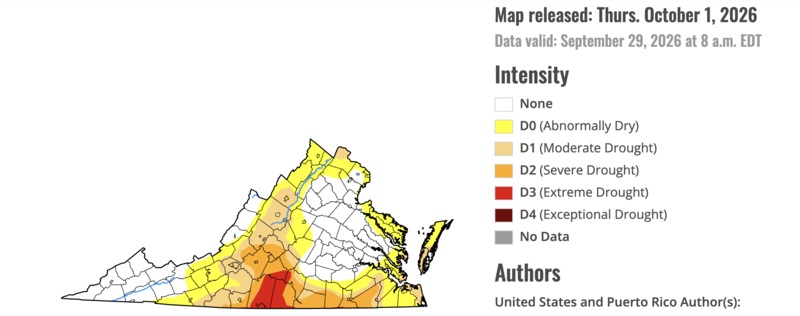
With the exception of the Roanoke area, Southwest Virginia is in the best shape statewide, with all drought categories back to normal. Groundwater levels for most parts of the state remain at emergency levels.
“It just takes a long time for that groundwater to be able to bounce back,” Bulova said. “While a reservoir can get filled up with a couple of key storms, you’re not going to see that with groundwater supplies. It’s going to take some long periods of sustained rainfall to do that.”
The National Weather Service is predicting an El Niño weather pattern this winter, meaning that warmer Pacific Ocean temperatures will be carried on jetstreams to the Gulf Coast and Southeast United States, increasing wet weather. If this pattern comes to fruition, it could help replenish Virginia’s groundwater levels.
But if conditions remain dry, it could mean a tough year for some crops, especially in the Roanoke region.
“With respect to rain and snowpack over the winter … that will help to inform some of those early crops and whether this is going to continue to be a problem into 2027,” Bulova said.
Agencies remain ready to act if the reservoirs continue to drop and the predicted wet winter does not materialize. Things could turn around within the next few months, which was the case in 2002 when drought conditions had heavily ebbed by the new year.
“I can only hope that the El Nino pattern that’s supposed to come in comes in, and we can get that recharge that we need,” Cloe said.
Richmond, VA