A peace plan for New Hampshire Democrats’ primary wars
Oct 08, 2026 | 4:50 am ET
Description
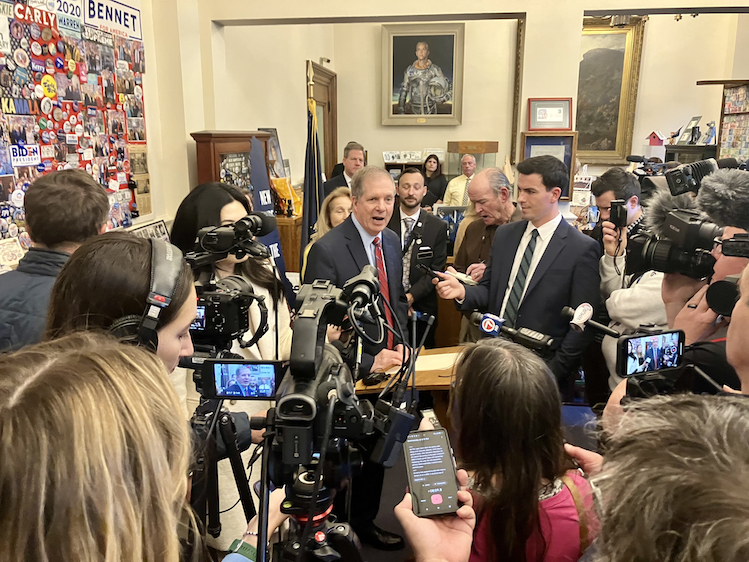
New Hampshire Secretary of State Dave Scanlan takes questions from reporters in the State House visitor center shortly after announcing the date of the 2024 New Hampshire presidential primary. (Photo by Ethan DeWitt/New Hampshire Bulletin)
The shooting war with Iran and the trade “war” with Canada are not the only conflicts roiling American political life these days. In our own backyard, the New Hampshire Democratic Party and the Democratic National Committee are waging a continuing battle over New Hampshire’s place in the queue of Democratic primaries for 2028.
Because both sides appear “dug in” to dubious positions, cooler heads must prevail.
The current dustup dates to the 2024 presidential primary season, when the DNC dropped New Hampshire from its traditional leadoff spot in favor of South Carolina. New Hampshire balked, citing its traditional “first in the nation” role and a state law that requires its primary to occur seven days or more before a primary in another state.
Honoring that law, New Hampshire Democrats retained their preferred date, but President Joe Biden followed the DNC rule instead by declining to appear on the New Hampshire primary ballot. Ultimately, the DNC declined to punish New Hampshire for its transgression and even permitted the state’s delegates to be seated at the party’s national convention.
But the temporary fix did not resolve the conflict.
In August the DNC denied New Hampshire the leadoff slot in the primary schedule for 2028, moving it to third in line, behind South Carolina and Nevada, two larger, more racially diverse states. Once again, New Hampshire Democrats are crying foul, while trumpeting their state’s capacity for evaluating presidential candidates because of its tradition of voters meeting them in small venues.
Neither the DNC’s concern for racial diversity nor New Hampshire’s reputed political skills justify the train wreck that will likely result from a standoff over the 2028 primary calendar.
The Republicans who control the state’s government likely will not support a repeal of the law that requires holding New Hampshire’s primary first because, at least to date, repeal would help only the Democrats. As long as that law is in effect, though, Democrats face an unhappy choice between holding their primary on the DNC’s preferred date, hence violating state law and having to finance the election themselves, and holding it on their preferred date, thereby incurring the wrath of the DNC and possibly facing a candidate boycott. Furthermore, New Hampshire cannot assume that in 2028, the DNC will capitulate and seat the state’s national convention delegates, as occurred in 2024.
Happily, the train wreck is avoidable because both sides’ interests can be served without a major change to the primary schedule.
The DNC can honor and reward racial diversity even if New Hampshire’s primary occurs first, so long as the South Carolina, Nevada, New Mexico, Michigan and Virginia primaries follow soon thereafter. That arrangement would deviate only slightly from the schedule announced in August. And even if New Hampshire produces a quirky result, it could be countered by a succession of contrary verdicts in the other early primary states.
One primary victory does not make a presidential nominee, especially in today’s nationalized, media-saturated electoral environment. Besides, letting New Hampshire go first would acknowledge the state’s continued value as a relatively inexpensive place to campaign that lets candidates meet voters face-to-face.
Thus, in the near term, the DNC should tweak its 2028 calendar to put New Hampshire at the front of the line. In the longer term, especially if Democrats regain control in Concord, they should repeal the presidential primary law that threatens to make their state party a pariah in presidential politics. Then the DNC could devise a national primary schedule that alternates the leadoff position from among small states such as Delaware, Maine, New Hampshire, Rhode Island and Vermont, any of which would enable relatively inexpensive “retail” politics. That system would preserve face-to-face campaigning in a fairer way than the traditional “New Hampshire first” practice does.
New Hampshire is important to the lineup, but it should not be the leadoff hitter every four years.
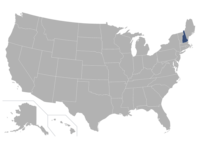
Concord, NH