Virginia doubles ‘distinguished’ schools as state accountability results show major gains
Oct 07, 2026 | 9:56 am ET
Description
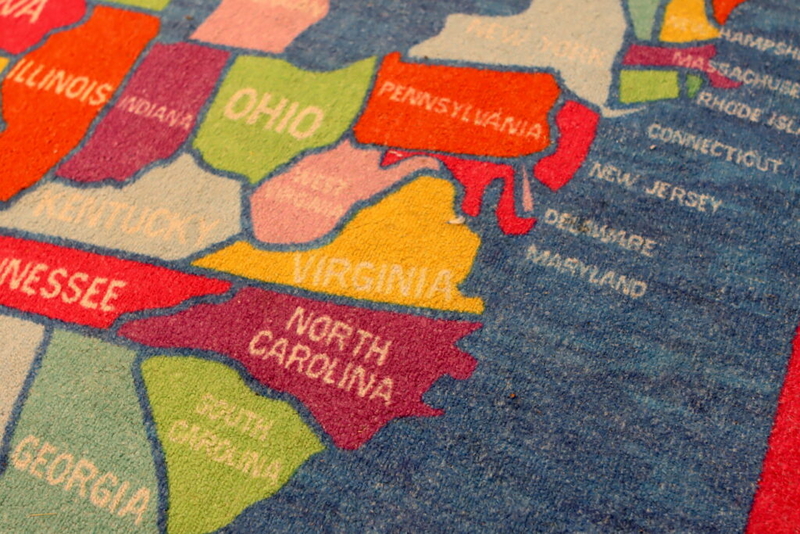
A carpet designed with Virginia and the rest of the United States lies inside a classroom. (Photo by Nathaniel Cline/Virginia Mercury)
Forty-four percent of Virginia schools earned the “distinguished” rating for exceeding state expectations in growth, achievement and readiness, a 21% performance leap from last year, as the state continues efforts to support more than 1,000 schools that fell short.
On Wednesday, the Virginia Department of Education released its accountability results, showing how schools are performing against state expectations. The data will be used to identify schools that need additional support.
The results mark the second release under Virginia’s new School Performance and Support Framework, which replaced the state’s previous accountability system.
Most Va. schools meeting new state expectations, Va. education department reports
State results
Virginia’s share of distinguished schools jumped from 23% to 44%, while the number of schools labeled “needs intensive support,” meaning they are not meeting any of the state’s expectations, dropped from 11% to 7%.
The number of schools labeled “meets expectations” fell from 43% to 26%, while schools “approaching expectations” rose from 22% to 23%.
An agency spokesperson told reporters during a briefing on Tuesday that improvement, particularly in elementary schools, resulted from progress in the growth component, as shown by their gains in reading and math assessments. Along with growth, the accountability system measures school performance through four components: mastery, readiness and graduation.
Federal law requires states including Virginia to identify and support their lowest-performing schools. The accountability tiers are labeled “targeted support and improvement,” “additional targeted support and improvement,” and “comprehensive support and improvement.”
Schools under the federal Comprehensive Support and Improvement status, the most significant level of support and monitoring, contributed to the largest single-year decrease in Virginia.
Data shows that 16 of the 49 eligible schools exited, with six schools moving out of federal identification entirely and 10 moved into targeted support. Most of the schools had been among the lowest-performing 5% of Title I schools for all students since the first year they were identified in 2018.
VDOE also shared that 99.7% of schools are fully accredited, up from 96.8% in the fall of 2025.
Virginia also improved its chronic absenteeism rate, dropping to 11.5% from 13.3%, which is still above the pre-pandemic rate of 10.7%.
Student absences for 10% or more of the academic year — a period equal to 18 or more days — are classified as chronic absenteeism, one of the factors in determining whether a school meets the state’s educational standards.
What’s next
The agency said changes to the framework will continue over multiple years, with all changes approved by summer and implemented for the 2028-2029 school year.
Changes to the framework are tied to House Bill 643, which requires the Board of Education to consider a broader set of changes after the Joint Legislative Audit and Review Commission’s December 2025 review of the framework.
JLARC proposed the board create clearer performance labels and new scoring thresholds that better compare schools across grade levels.
The changes would also adjust how some student achievement measures are scored, account for schools with fewer English learners, and evaluate whether the state’s school improvement program is actually helping schools improve.
The agency said it is reserving $26 million for schools labeled needing “additional targeted support and improvement” and “comprehensive support and improvement.”
VDOE said it will also pilot a new improvement network for schools that need “targeted support and improvement,” and increase its focus on supporting educators serving students with disabilities in all schools.
Richmond, VA