Green Party candidates balk at records demands as they scramble to stall fraud investigation
Oct 07, 2026 | 9:12 am ET

Description
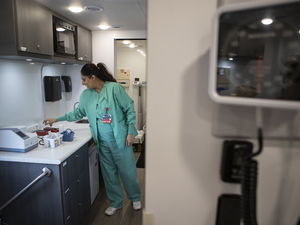
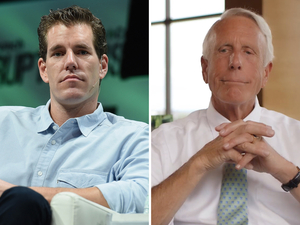
The Arizona Green Party says that Risa Lombardo and Duwayne Collier are fraudulent candidates backed by Republicans who hope to siphon votes away from Democratic incumbents in the gubernatorial and secretary of state races, respectively. So far, their campaign spending shows more than $1 million going to an out-of-state firm tied to veteran GOP political operatives. (Photo by Jim Small/Arizona Mirror)
Two Green Party candidates under investigation for fraudulently obtaining millions in public campaign funds are attempting to dodge subpoenas for records related to the accusations against them.
And the Arizona Court of Appeals on Tuesday rejected their bid to block the investigation from happening at all, the second court to do so in as many weeks.
The Citizens Clean Elections Commission in August launched a civil investigation into whether Risa Lombardo and Duwayne Collier, the Green Party nominees for governor and secretary of state, and Republican Scott Neely, who lost his primary for governor to Andy Biggs, fraudulently qualified for public campaign money. The Arizona Attorney General’s Office is conducting a separate criminal investigation into the three campaigns.
The three candidates are accused of falsifying documentation for enough $5 qualifying contributions from voters to qualify for a collective $4.7 million in public campaign funds.
Like other Clean Elections candidates, Lombardo, Collier and Neely agreed to forgo large contributions and money from PACs in exchange for a fixed amount of public funding, based on the office they seek.
In August, the Arizona Mirror exclusively reported that six people who were listed in campaign finance records as having made $5 contributions to all three candidates were adamant they didn’t give any money to the candidates.
Last week, a Maricopa County Superior Court judge dismissed a lawsuit from Lombardo and Collier that asked the court to block the Clean Elections Commission from ordering the candidates repay the public funding they received. Judge Melissa Iyer Julian ruled that it was too early for the court to step in because the investigation was still under way, and on Tuesday a three-judge appellate panel agreed.
During a Sept. 24 hearing in the lower court, Tim La Sota, an attorney for the Green Party candidates, told Julian that the candidates planned to comply with the Clean Elections investigation and were not trying to stop it.
But on the same day, La Sota sent an email to Tom Collins, the commission’s executive director, saying that Lombardo and Collier objected to the commission’s subpoenas for numerous records regarding their campaign spending, who their campaigns worked with and how they collected the $5 contributions.
In the email, La Sota described the subpoena as “overly burdensome and harassing, and said it was intended to further harm the candidacies of Lombardo and Collier, who the Commission’s Executive Director opposes politically and has suggested are ‘sham’ candidates.”
Collins used that phrasing in letters to the candidates telling them they were under investigation, but it wasn’t his opinion — rather, he was quoting the Arizona Green Party, which initially described Lombardo and Collier as “sham” candidates. That’s because they had no connection to their registered party and numerous ties to the Republican Party. Lombardo was a Republican precinct committeewoman, an elected position that is typically held by people who are highly involved in partisan politics, until days before she filed a statement of interest to run for governor as a Green Party candidate.
La Sota wrote that the subpoena should be thrown out for being overly broad with too tight of a deadline for compliance, and he called it “obvious retaliation against my clients for criticizing the Commission and its Executive Director.”
In emails with Craig Morgan, an attorney for Collins, La Sota promised to explain which parts of the subpoenas he considered overbroad. He never did.
During previous Clean Elections meetings, and in court filings, La Sota accused Collins of attempting to bully his clients into ending their campaigns by sending letters to them on Aug. 25 informing them of the investigation into their campaigns and telling them that they might be ordered to repay the millions in public funding they received.
During a Tuesday afternoon meeting, the Clean Elections commission unanimously voted to deny the Green Party candidates’ request to quash the subpoena. If they don’t comply with the subpoenas, the commission could take them to court to force them to.
Mark Kimble, the commission’s chairman, had some choice words for La Sota, who didn’t attend the meeting.
Kimble called La Sota’s comments about the commission and Collins “totally irresponsible.”
“This is the opportunity for La Sota to back up those claims with some evidence,” Kimble said. “He’s chosen not to appear. We are here because of him, and it irritates me that he has chosen not to appear after sending us this letter.”
During the same meeting, the five-person commission voted unanimously to extend the Oct. 29 deadline for Collins to complete his investigation into the three candidates, given their refusal so far to comply with the subpoenas.
Morgan pointed out in emails with La Sota and in court filings that, when the candidates joined the Clean Elections program, they agreed to provide any records pertaining to their campaigns to the commission for auditing purposes.
Clean Elections candidates are required to retain records for every campaign expenditure for three years and, when asked, to provide those records to the commission.
The subpoenas issued to Lombardo and Collier are wide-ranging and ask for communications between the candidates and various businesses and people, as well as financial documents and records of campaign planning.
Subjects of the subpoenas include:
- Gigs AZ, a business owned by Arizona Republican Party employee Jose Acuna, which did work for both campaigns.
- Uncle Sam Petitions, a petition gathering company that typically works with Republican candidates that did work for both campaigns but was left out of their campaign finance reports. Neither candidate reported spending any money on petition gathering.
- Bruce Gorshe, the owner of Uncle Sam Petitions.
- Bootstrap Campaigns, a shadowy Nevada business created by California GOP political operatives weeks before Lombardo’s campaign made her first payment to it. Together, Lombardo and Collier paid more than $1.2 million to the firm in May, June and July for wide-ranging campaign services. Some of those services, like mailers and sign installation, were actually provided by Uncle Sam Petitions and O’Neil Printing, both located in Arizona. Clean Elections candidates are required to disclose all of their subvendors in their campaign finance reports.
- David Wilson and Bryan McPartlan, experienced GOP campaign operatives from California who were listed as the officers for Bootstrap Campaigns when it was created on May 12.
- Christopher Silva, who replaced Wilson and McPartland as the only officer for Bootstrap 10 days after it was created.
Instead of complying with the subpoenas, La Sota told Morgan that the accountant for both campaigns, Tim Sifert, a former communications director for the Arizona Republican Party, was working to amend their campaign finance reports to include the subcontractors that were initially left out.
La Sota wrote that the amendments to the campaign finance reports “should supply what I feel is an appropriate response to the subpoena.”
But the candidates could still be out of compliance if they didn’t actually pay the subvendors, like O’Neil Printing and Uncle Sam Petitions, because state law requires the payments go directly to vendors and not to consultants, like Bootstrap, who don’t actually do the work.
Collins told the commission in a Sept. 30 letter that La Sota’s suggestion was “not nearly adequate,” and added that the candidates refused to supply the subvendor information to the commission, or even to their own accountant.
Phoenix, AZ