Michigan Advance Fact Check: Tom Barrett’s voting record and Will Lawrence’s goals for healthcare
Oct 07, 2026 | 10:02 am ET

Description
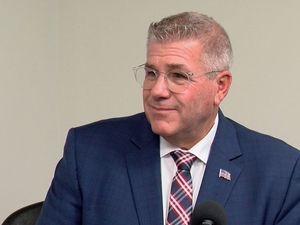
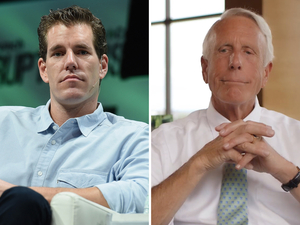
U.S. Rep. Tom Barrett, R-Charlotte, left, and Democratic nominee for U.S. House William Lawrence, right, face off in their first head-to-head debate at WKAR's studios in East Lansing, Mich., on Oct. 6, 2026. (Photo by Andrew Roth/WKAR-MSU)
U.S. Rep. Tom Barrett’s congressional and his time in the Michigan Legislature came under fire during the first televised debate between him and Democratic nominee Will Lawrence, as did the challenger’s claims regarding the feasibility of his healthcare plans and the various attacks he lobbed against Barrett on Tuesday in a forum organized by WKAR-TV.
The debate recorded at the station’s studios on the campus of Michigan State University also included attacks on Barrett (R-Charlotte) for being lockstep with President Donald Trump’s economic, military and immigration agendas, while Barrett hit Lawrence for his past social media commentary on various political issues throughout the years.
Michigan Advance fact-checked the candidates’ biggest claims and compared them with available evidence.
CLAIM: Recent gas price increases were due to the war in Iran and that the economy would recover as the war winds down, Barrett said.
While much of the strain on fuel prices stems from fallout of the Iran war, prices were already high going into Trump’s second term in the Oval Office. Fuel price data shows that it was only slightly lower this time last year. The current average price for a gallon of gasoline in Michigan is $4.40 per gallon of regular unleaded, according to AAA.
The war with Iran started in late February of this year. In October 2025, AAA reported the average Michigan gas price as being $3.09 a gallon. Gas prices in Michigan were at an average of $3.14 per gallon of regular unleaded when Trump took office for his second term in January 2025.
CLAIM: Barrett voted against authorization for Trump to continue waging the Iran war and has separated himself from Trump’s decision to start hostilities.
Barrett was adamant during the debate that he had separated himself from Trump on his determination to wage war with Iran, and that his decision to do so began after Trump’s 60-day window, as dictated by the War Powers Act, closed.
The U.S. House of Representatives roll call votes show that Barrett voted against a resolution in March put forward by U.S. Rep. Thomas Massie (R-Kentucky) to end the war per Section 5C of the War Powers Act. The vote failed 212-219.
A resolution to end the war under the same section of the act was put forward by U.S. Rep. Gregory Meeks (D-New York) in June, which Barrett voted for — one of only four Republicans to vote for the measure, which passed 215-208. It also passed the U.S. Senate 50-48, but it was derailed by Trump after a meeting with Senate leadership.
ABC News also noted that the measure that passed both chambers of Congress did not carry the force of law and only indicated symbolic opposition.
A measure that would have effectively given congressional authorization and potentially ended the war — known as a formal Authorization for Use of Military Force — was introduced by Barrett in May. The legislation would have carried the force of law as opposed to the resolutions passed throughout the year. It would have defined, set limits on and detailed a plan to end the war in Iran. His legislation would have ended the war by July 30, if passed.
Barrett is the only House Republican to have issued an AUMF. The U.S. House has not voted on Barrett’s legislation, and it still sits in the House Committee on Foreign Affairs.
CLAIM: Single-payer health care as promoted by Lawrence was just “Medicare for All” repackaged, and would cost $40 trillion for taxpayers and the nation, Barrett said.
The Centers for Medicare and Medicaid Services concluded in 2017 that healthcare spending in the U.S. would reach nearly $6 trillion by 2027 and that consumers could spend over $42.9 trillion on healthcare over the next decade.
Lawrence has supported a single-payer healthcare system that mimics other progressive Democrats’ call for Medicare for All as a way to not only rein in those costs but devise a healthcare system that would provide better access.
Lawrence faults Barrett over Medicaid cuts, renews Medicare for All push
Various studies and analyses by universities and policy think tanks have offered differing conclusions about the true cost of switching to a single-payer system.
The American Action Forum, a center-right policy institute, has said that the fiscal burden of the switch would be too great and that lawmakers should rule it out. Both U.S. Sen. Bernie Sanders (I-Vermont) and former Vice President Kamala Harris issued plans for the same kind of system when they ran for president over the last decade, respectively. Harris’ platform was expected to increase federal spending by $43.9 trillion.
Yale University’s School of Public Health and the University of Maryland, Baltimore both found in a July study that there could be savings with single-payer healthcare. That said, the Scientific American, which leans left in the AllSides media bias chart, noted that those studies were not peer reviewed. Still, the magazine did note that the money and lives saved with such a system could mean $1.04 trillion in savings.
Yale, as it separately analyzed Sanders’ plan from 2020, also found that a Medicare for All system could save 68,000 lives by increasing healthcare access, and that it could shrink healthcare spending by 13%, or $450 billion a year.
Lawrence, like Sanders and Democratic U.S. Senate nominee Abdul El-Sayed, also believes that his healthcare plan would see end users pay less.
CLAIM: Barrett has rejected corporate PAC contributions from the health insurance industry.
Both The ’Gander Newsroom and American Journal News — two left leaning and progressive news outlets — have noted this year that Barrett’s claims of never taking health insurance PAC contributions was half true: He had accepted contributions but had returned some of that money. One contribution that he hadn’t returned was a $1,000 contribution made to his reelection campaign in June from UnitedHealth Group PAC.
That said, Barrett has accepted more than $20,000 in contributions from the pharmaceutical industry during his time in office, particularly in his 2022 and 2024 campaigns, according to both American Journal News and OpenSecrets, a campaign finance tracker.
CLAIM: Barrett voted against the reauthorization of warrantless surveillance.
The Advance reported in September. that Barrett co-sponsored the Protection Against Mass Surveillance Act, put forward by U.S. Rep. Tim Burchett (R-Tennessee), which bars federal agencies from purchasing and deploying automated surveillance systems like Flock cameras.
The bill would also bar state, local and tribal governments from using federal funds to purchase and operate automated surveillance technology.
As he reiterated in Tuesday’s debate, Barrett has repeatedly said that he was willing to break with his party — and Trump — on the issue of mass surveillance as a way to protect individuals’ Fourth Amendment rights.
However, the House has not moved on Burchett’s bill, and it still sits in the House Committee on Oversight and Government Reform.
CLAIM: Barret said local control on the siting of large scale energy projects, and potentially data centers, was stripped away by Lansing Democrats in pursuit of a Michigan Green New Deal.
Gov. Gretchen Whitmer in November 2023 signed Public Act 233 into law, which allows for the Michigan Public Service Commission to circumvent local ordinances when it comes to the siting of large renewable energy projects. The legislation was a priority for the Democratic-led trifecta in the Michigan Legislature — a time when the party controlled both the state House and Senate with Whitmer in office as the executive.
The projects can include large scale solar or battery storage projects, but the law says nothing about AI data centers.
The worry from some township leaders, like Fabius Township Supervisor Dan Wilkins, is that Whitmer also in 2024 signed PA 181 and PA 207, which offered tax incentives to data centers in Michigan.
That has some like Wilkins worried about residents not being able to opt out of MPSC control over decisions on data centers with state incentives in play. It was not just Democrats, however, who pushed for an uptick in the state’s renewable energy portfolio, as Wilkins notes in a July blog post on the Fabius Township website.
Former Gov. Rick Snyder, a Republican, signed PA 341 of 2016, which sought to increase that portfolio standard from 10% to 15% by 2021. The law did not directly call for new green projects, but it did help spur additional wind and solar energy production in Michigan.
CLAIM: Barrett voted to block state-based AI regulations for data centers and gave $80 billion in tax breaks to corporations interested in building data centers, Lawrence said.
The Center for American Progress reported that Barrett had voted for a version of Trump’s “One Big Beautiful Bill” Act that had included a 10-year ban on enforcing state and local AI regulations. That provision would have barred enforcement of local laws and regulations that could have restricted or regulated AI models and systems, the organization said.
Barrett pushes for international AI agreement as health professionals back Doctors Not AI Act
Barrett said after the debate that was false. The words “data centers” were never mentioned in the language of the bill, Barrett said, and he noted that the language spoke of artificial intelligence only “as a broad technology” like other telecommunications systems. Barrett said the concern was for a potential patchwork of regulatory frameworks across the nation when AI technology, systems and its data could cross state lines. Barrett said he believed the federal government should take the lead on regulations and that states could add on to that framework.
American Century Investments, an investment and financial success firm, wrote a September 2025 blog post analyzing the impacts of the “One Big Beautiful Bill” Act on Big Tech. The firm’s accountants noted that the act gave billions in tax breaks to major AI companies and laid the groundwork to build data centers. Those same companies are projected to save $14 billion to $18 billion a year in taxes due to Trump’s bill.
Barrett both supported and championed the bill. He also voted for the SPEED Act, which helped speed up data center construction and federal permitting, and was widely praised by the data center industry, according to CNBC.
CLAIM: Fentanyl deaths were down since Trump retook office and implemented sweeping immigration action via U.S. Border Patrol and U.S. Immigration and Customs Enforcement, Barrett said.
Like Barrett, The White House this year said that Trump’s targeting of nations he deemed as supporting “narco-terrorism,” his tariffs on nations like Mexico in response to alleged drug trafficking and his use of ICE against supposed gangs like Tren de Aragua, have contributed to steep declines in overdose deaths — 14% between 2024 and 2025. Trump’s administration also noted that fentanyl deaths had dropped 22% in that same period.
The Centers for Disease Control and Prevention reported in February 2025, just one month after Trump returned to office, that it had provisional data to show that there was a 24% decline in total drug overdose deaths in the United States. That said, the CDC noted then that multiple factors contributed to the drop, and that shifts in the illegal drug supply was just one factor.
Yet The Inter-American Dialogue, a non-profit policy think tank dedicated to Western Hemisphere issues, noted that the U.S. had likely “turned the corner on the fentanyl crisis” before Trump even took office. The think tank’s data shows that, instead, fentanyl overdoses began to significantly drop in mid-2023 and at the end of 2024 — when President Joe Biden was still in office.
Lansing, MI