Arkansas lawmakers begin discussions on state’s budget as election looms
Oct 06, 2026 | 5:30 pm ET
Description
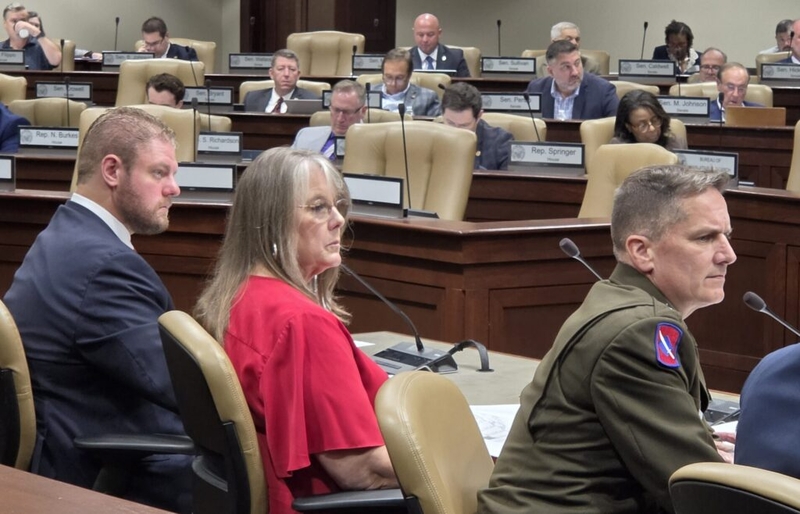
From left: Arkansas Bureau of Legislative Research analyst Blake Smith, Department of Military Chief Financial Officer Diane Worm and Arkansas National Guard Deputy Adjutant General Jeff Wood present the military department's fiscal years 2028 and 2029 budget proposal to state lawmakers on Oct. 6, 2026. (Photo by Tess Vrbin/Arkansas Advocate)
Arkansas lawmakers began a monthlong series of state budget discussions Tuesday, with the state military and labor departments fielding questions about how they expect to spend their money next year.
The Joint Budget Committee approved both agencies’ budget proposals with no dissent. The panel will submit each approved budget recommendation to the full Legislature, which begins its regular session in January.
The Department of Labor and Licensing’s proposed budget prompted several questions from the committee because it projected significantly lower spending than the amount of funding requested.
The agency has been “trying to do more with less” and cutting unnecessary spending, Secretary Daryl Bassett said.
“At the same time, though, we need to have a buffer just in case something happens,” he said.
In June, Republican Gov. Sarah Huckabee Sanders directed cabinet secretaries to “work collaboratively to cut costs” in their departments. Lawmakers have cut individual and corporate income taxes five times in the past five years.
Arkansas ended the 2026 fiscal year June 30 with a $655 million budget surplus, nearly $300 million more than the previous year. The state has about $4 billion in reserves.
Sanders is expected to unveil her 2027 balanced budget proposal in late November.
The 2026 budget included a $139 million state employee pay plan meant to increase the starting salaries of hard-to-fill jobs, such as corrections officers and social services workers, to make them competitive with the private sector and increase retention.
The state budget for the current fiscal year, which began July 1, totals $6.7 billion.
The labor department projects a roughly $4 million increase in its expenditures for each of the next two fiscal years compared to the current one because its pay plan increases salaries and benefits by up to 3% annually, chief financial officer Tyler Cain said.
The Department of Military’s budget proposal requests roughly $118 million for each of the next two fiscal years. The request is about $11 million more than the current fiscal year, Bureau of Legislative Research analyst Blake Smith said.
Lawmakers will hear from the Arkansas Department of Health and the Department of Parks, Heritage and Tourism on Wednesday. Several commissions — including ethics, elections, judicial discipline and public defenders — will present their budgets Thursday.
The budget committee will continue to meet three times a week for the rest of October, with one final meeting Nov. 6, to hear the rest of the state agencies’ proposed budgets.
The Department of Education will present its budget proposal Oct. 28. Lawmakers from both parties have expressed concerns in recent months about the increasing cost of the state’s school voucher program, created in 2023 and open to all students as of the 2025-26 school year. Sanders, who is running for reelection, has made the voucher program one of her highest priorities.
The Department of Human Services will present its budget Oct. 29 amid ongoing uncertainty about the future of Arkansas’ Medicaid expansion program. The federal Centers for Medicare and Medicaid Services verbally declined to renew the program in July, and DHS requested a two-year grace period in August to keep Arkansans covered while the state chooses a new Medicaid model.
Looming federal cuts prompt concerns about food aid in Arkansas
DHS has not yet received a formal notification of the denial, nor has it received a response to the grace period request, agency spokesperson Gavin Lesnick said Tuesday.
Arkansas officials did not increase DHS’ budget for fiscal year 2026, raising concerns from advocates that the agency will not have the resources to handle the rising administrative cost of food stamps. The Supplemental Nutrition Assistance Program is expected to cost DHS an extra $24 million within the next couple years thanks to a 2025 federal budget overhaul.
More than 330,000 Americans lost access to SNAP between May and June, according to U.S. Department of Agriculture data.
Little Rock