St. Louis jury awards $10 million in sprawling Missouri cannabis ownership fight
Oct 06, 2026 | 4:15 pm ET
Description
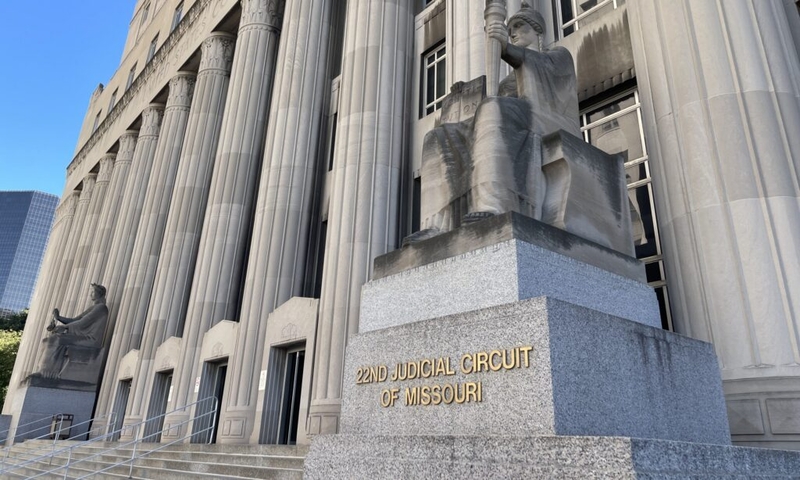
Mel Carnahan Courthouse in St. Louis (Rebecca Rivas/Missouri Independent).
A St. Louis jury awarded $10 million Tuesday to three plaintiffs in a sprawling ownership battle over six Missouri cannabis licenses involving more than 20 businesses and individuals.
Over a week of testimony, jurors heard about a tangled series of business agreements and allegations that partners went behind one another’s backs to secure competing deals.
The case hinged on whether the plaintiffs in the case — AJO MO LLC, Hi-Rise LLC and DMS Facility Management LLC — lawfully acquired a company through a transaction that would have made them majority owners of a cannabis cultivation and manufacturing facility in Waynesville that also included 40% stake in four Heya dispensaries.
Missouri cannabis regulators recognized AJO and Hi-Rise as the owners of the Waynesville facility licenses in May 2024. However, the state hasn’t approved the disputed ownership changes involving the four Heya dispensaries while a series of lawsuits played out.
The jurors sided with plaintiffs on counts of breach of contract and tortuous interference, awarding them a total of $10 million.
“We’re pleased the jury decided in our favor and awarded appropriate damages,” Peter Barden, spokesman for the plaintiffs, told The Independent after the verdict.
The decision may not end the company’s struggles for AJO and Hi-Rise. As jurors deliberated inside the Mel Carnahan Courthouse in St. Louis last week, Missouri cannabis regulators filed proposed rules that would change how the state handles the kinds of complicated ownership arrangements exposed during the trial.
The proposed rules would give regulators new authority when someone with a history of specified violations is found to be “exercising a controlling influence” over a facility. It would lead to a fine of up to $100,000 or suspension or revocation of a license, according to the rules.
That could be significant for AJO, which owns 50% of Delta Extraction, a marijuana manufacturing company whose license the state revoked in November 2023 after it became the center of a massive product recall.
AJO LLC told The Independent last year it was only a passive investor in Delta Extraction, where it owns 50%. However, court documents and testimony in that case contradict that characterization.
St. Louis Judge Michael Noble barred defense attorneys from telling jurors about Delta Extraction’s license revocation and AJO’s connection to the company.
The proposed state rules include a detailed list of offenses that include selling or distributing unregulated THC, fraudulently using an agent identification card, tampering with or falsifying video recordings and refusing to cooperate with a department investigation.
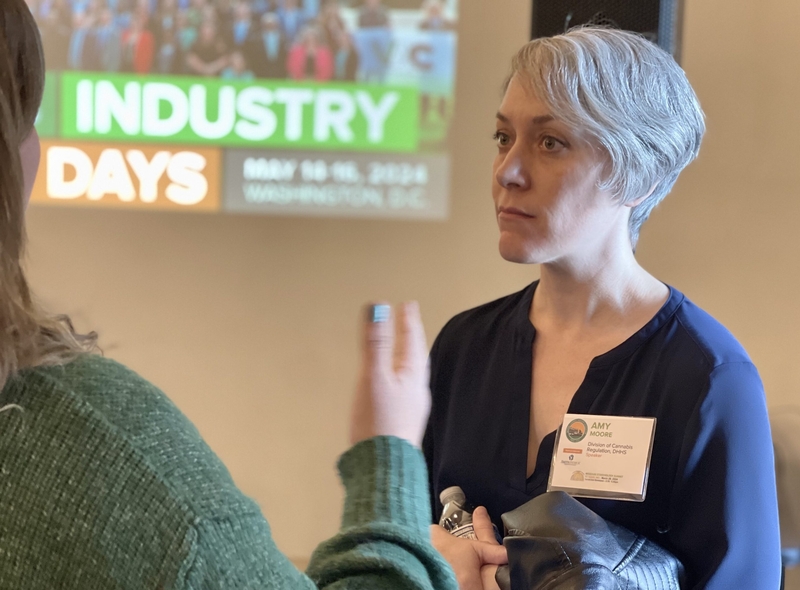
Amy Moore, director of the Missouri Division of Cannabis Regulation, which oversees the marijuana program, explained earlier this year the aim of the rules.
“What we are saying in the rule is if a year from now [if the rules are approved] we look at your ownership,” Moore told The Independent at the time, “and we see you have someone exercising a controlling influence that you know has done these things, then that is a violation.”
With regards to the proposed regulations, Barden said: “We’re reviewing the proposed regulations to determine how they may impact our ownership structure if implemented.”
The Case
The case grew out of a partnership between Eric Kirberg and Scott Sterling, who began working together around 2018 on Missouri medical marijuana license applications. When they didn’t win licenses of their own, they did what many others did at the time: they offered to build and run facilities for license winners in exchange for equity.
Kirberg, a contractor, built out a cultivation and manufacturing facility in Waynesville, and Sterling, a cannabis executive, ran operations as CEO. In return, their company got 9.9% of the entity holding the licenses and an option to buy the rest from its owner, 1913 Holdings. They did the same with four Heya dispensaries and secured 40% equity. The two set up three companies, called the Delphi entities, to hold the ownership stakes, the management contracts and the Waynesville property.
Sterling resigned in October 2021 as CEO but retained his equity in the parent company. Soon after, Delphi defaulted on a loan Kirberg had personally guaranteed.
In May 2022, AJO and Hi-Rise paid about $6.9 million to the lender and acquired the Delphi company that owned the Waynesville facility and property, plus an option to buy 95% of the Delphi company that held everything else. That included the 9.9% stake in the Waynesville license and the 40% share of the Heya dispensaries. Sterling was not a party to the deal and says he never consented to it.
Just before closing arguments, Noble ruled that the option to purchase agreement — which was a major part of the plaintiffs’ case — was never executed. AJO and Hi-Rise instead ultimately obtained control of the Waynesville licenses through a separate deal with 1913 Holdings to secure 90.1% of the Waynesville licenses, while Kirberg retained 6.9% and Sterling 3% of the licenses.
“They couldn’t sue for breach of contract,” defense attorney Jeffrey Lowe told The Independent. “It’s not until it was exercised was it going to be an enforceable contract, so they didn’t have that.”
In March 2023, Kirberg and Sterling sold their Delphi interests to one of the defendants, TMSKirk, whose principals were then running Heya. The defendants argue Heya had a right of first refusal over Delphi’s dispensary stake that took priority over the AJO and Hi-Rise option, which defendants argued was never executed.
“We are here trying to get back the business that they stole from us,” Lowe said in his closing statement.
The plaintiffs successfully argued they were harmed by the defendants.
“This has been a saga for four years now,” Ampleman said in his closing arguments. “You have the opportunity to make a definitive statement on who was in the right and who was in the wrong.”
Lowe said the defense plans to file a post-trial motion arguing, among other things, that Noble’s ruling removing the option agreement from the case immediately before closing arguments created confusion about what remained for jurors to decide.
‘Own the car’
The trial also highlighted a broader issue Missouri regulators are attempting to address: The companies recognized by the state as owners of a cannabis license are not always the same people or companies effectively controlling the business.
One of the defendants, Tim Schlesinger, an owner of TMSKirk, testified last week that he believes under Missouri law, people can buy a cannabis company and operate it without the state’s approval.
“So you can own the car before you get it licensed at the DMV,” he said.
He explained how while state regulators may have an owner down on paper, another company could be filing tax returns, taking all the revenue and acting as the owner. And this occurs with many cannabis companies, Schlesinger said, including Good Day Farm cannabis company who purchased one of the Heya dispensaries involved in the case.
“They are managing it; they’re running it; they’re branded with it,” he said. “The bank accounts are in their names.”
The Division of Cannabis Regulation did not respond to a request for comment on Schlesinger’s characterization.
AJO and Hi-Rise also operated the Waynesville facility before the state approved their ownership change. These dealings make it difficult for the public and even employees to understand who owns certain dispensaries.
The new rules won’t necessarily make those relationships more transparent, but they will make it easier for companies to change ownership by streamlining the approval process.
Currently when a cannabis facility wants to make a change in ownership that’s more than 50%, it has to submit a business-change application and get pre-approval to do so.
That process can drag on anywhere from six months to a year, Moore said earlier this year.
Instead, every licensee would submit a report annually that outlines the ownership percentage for each entity or individual. Licensees must still seek pre-approval if they’re adding a new owner or an individual who has 10% or more interest, or they’re fully transferring their licenses to another entity.
A state audit released earlier this year found that the division took an average of 165 days to approve or deny business ownership change requests from submission to final action, based on data the auditor reviewed from 2020 through 2023.
The annual review requirement will also offer an opportunity for regulators to catch rule-breakers in ownership or management positions.
Under the proposed rules, regulators can deny ownership applications if “any owner or manager of the applicant entity who exercises a controlling influence over the license’s management, policies, or decision-making” had previously broken specific rules.
That provision could create additional scrutiny for companies connected to previously revoked licenses.
When the state approved the license change for AJO and Hi-Rise in May 2024, Delta’s appeal of its license revocation was still pending. The final verdict didn’t come down until nine months later.
“The totality of the circumstances at the time, including the nature of the ownership change, was not sufficient cause to deny the change,” division spokeswoman Lisa Cox said.
Cox also said the state’s administrative rules currently do not prohibit individuals who have had a license revoked from acquiring another license.
The proposed rules would give regulators greater authority to consider that history.
The proposed amendments will be published in the Nov. 2 issue of the Missouri Register, which can be found on the Missouri Secretary of State’s website. Public comments will be accepted from Nov. 2 through Dec. 2.

Jefferson City, MO