Judge dismisses lawsuit against Tosa cops for 2022 shooting
Oct 06, 2026 | 4:00 am ET
Description
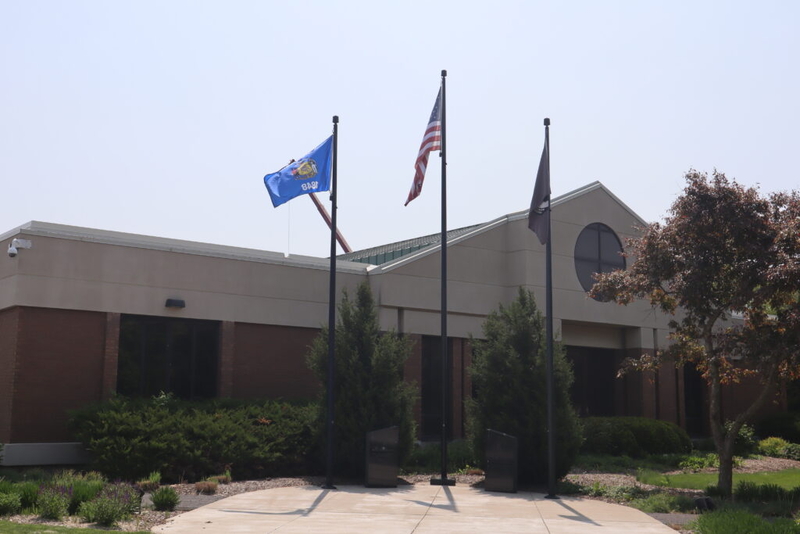
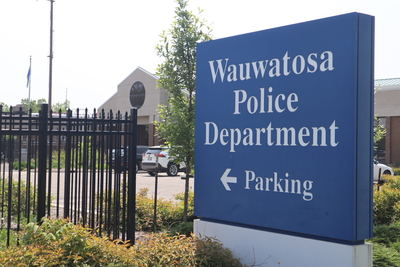
The Wauwatosa Police Department (Photo | Isiah Holmes)
A federal judge has dismissed a civil rights lawsuit stemming from the non-fatal shooting of Damiso Lee by Wauwatosa police officers in April 2022. In a court document filed in late September, U.S. District Judge Brett Ludwig said that among the reasons he issued the summary judgement were the fact that Lee was armed with a handgun, disobeyed officer commands and attempted to run.
A month before the shooting Lee, who was 17 years-old at the time, had reported his car stolen to the Milwaukee Police Department. Lee never called the department to say that he found the car, so it was still listed as stolen when Wauwatosa officer Evan Olson noticed it driving around one evening.
“The [automatic license plate reader] alert was categorized as ‘high,’ indicating that the vehicle had been involved in a felony offense,” a court document detailing Ludwig’s reasons for dismissing the case stated. The document mentions that Lee was returning home after picking up a Doordash order when he drove past Olson. He acknowledged in a deposition that he was in possession of a Glock Model 22 handgun.
After his squad car’s automatic license plate reader system flagged the car, Olson radioed dispatch and followed Lee before deciding to conduct a felony traffic stop. He requested another nearby officer, Dexter Schleis, assist him. Lee drove into an alley behind an apartment complex and parked. “Officer Olson observed Lee open and close the driver’s door without exiting, turn the engine off, and then open the driver’s door a second time and leave it open,” Ludwig wrote.
Body camera footage released by the Wauwatosa Police Department in 2022 shows that Olson got out of his squad and told Lee to “show me your hands” as Lee exited his own vehicle, holding the food container he’d picked up. Olson told Lee to stop and to not reach for his gun, the outline of which he said he could see in Lee’s pocket. In a report from district attorney’s office, explaining the decision not to charge Olson, Olson describes Lee as wearing a black hooded sweatshirt with a Glock logo in large lettering on the front.
The footage shows that Lee dropped the food and turned to run away. Schleis was waiting on the other end of the alley. Olson yelled that Lee was armed and as he ran, Lee fell causing his gun to fall out of his pocket. He got back up, picked up the gun, and both Olson and Schleis fired.
In his decision to dismiss, Ludwig states that while the officers believed that “their use of deadly force was objectively reasonable under the circumstances,” Lee argued that it was not reasonable because he was running away. “Lee’s position is contradicted by the evidence presented, including video recordings of the incident,” Ludwig wrote. The judge questioned whether Olson and Schleis “reasonably believed Lee posed a threat of death or serious bodily harm based on the information they knew at the time.”
Ludwig ruled that the license plate reader flagging Lee’s car, Olson confirming the car’s stolen car status through dispatch, and Lee’s decision to flee while armed rather than explain that it was his car led to the shooting. “Indeed, the officers gave Lee multiple opportunities to surrender before resorting to deadly force, including after he retrieved the handgun,” Ludwig wrote.
The judge discounted arguments by Lee’s attorney, William Sulton, that video shows that Lee was facing away from officers and running when he was shot. Ludwig wrote that Lee “changed directions multiple times during his brief attempt to escape.”
Attorneys offer opposing perspectives
Sulton wrote in an email statement to the Wisconsin Examiner that Lee is considering his options for appeal but that no decision has been made. “Suing law enforcement officers is not like suing other members of society because they have qualified immunity,” Sulton wrote. “I disagree with the judge’s conclusions about what the videos show. The videos show Damiso running away from the officers. The judge saw things differently and ruled that Damiso was running towards one of the officers, justifying lethal force.” Sulton continued, “there are too many cases of officers shooting civilians who are running away from them. This will continue until different decisions are made.”
Attorney Jasmyne Baynard, who represented Olson and Schleis, wrote that she disagrees with Sulton. “Plaintiff’s counsel took no depositions and did not serve any discovery,” Baynard wrote in an emailed statement to the Examiner, noting that Ludwig’s dismissal relied on “substantive law” rather than qualified immunity. “The idea that a police officer is required to wait until a suspect points or shoots a gun before they can act in justified self-defense is contrary to the law and common sense. Police officers are also not mind-readers and can only respond to a suspect’s action.”
The Examiner asked Baynard whether there was anything the officers and Lee could have done differently.
Baynard said that Olson was not mistaken in stopping Lee because his car had been reported stolen and was still flagged that way in a police database. She added that “there is something Lee could have done differently — he could have not gotten high, illegally possessed a firearm, and ignored multiple clear commands to STOP, not reach for a gun and most importantly AFTER dropping the gun, he could have just continued to run off and not picked it back up. No rational and objective review of the video (or Lee’s sworn testimony and recorded statements) supports the view that he was not a threat.”
Lee being under the influence is not mentioned in Ludwig’s dismissal, Wauwatosa Police Chief James MacGillis’ summary of the incident, or the district attorney’s decision not to charge. A check of online circuit and federal court records also turned up no charges or citations listed under Lee’s name.
Baynard stressed that “of course we should question an officer’s actions in these situations — in Wisconsin that is done in EVERY officer-involved critical incident.” In 2025, Baynard helped defend former officer Joseph Mensah during a federal civil trial over the shooting of Alvin Cole, Mensah’s third fatal shooting in five years. Olson and Schleis were called as witnesses during those trials, which ended in two hung juries before a confidential settlement was reached. The 17-year-old ran from police while carrying a handgun, but officers also provided contradictory statements about what happened. Mensah recently received $95,000 from the city of Wauwatosa for a PTSD claim.
Baynard wrote in a statement that “cops are subject to the court of public opinion and unable to respond. But we should also start questioning the behavior of the public. Until we stop forgiving criminal behavior, we will unfortunately continue to see cases like this where officers are forced to make difficult decisions so that they get to go home to their families.”
In 2022, after the district attorney decided not to issue charges in Lee’s shooting, Chief MacGillis spoke to the gravity and responsibility that comes with an officer’s decision to use force. “We all experience trauma when an officer-involved shooting occurs,” said MacGillis. “The injured subject, the subject’s family, the officers involved, the police department, and the community as a whole.”

Madison, WI