Michigan’s next governor will face major challenges at the Department of Corrections
Oct 06, 2026 | 4:00 am ET
Description
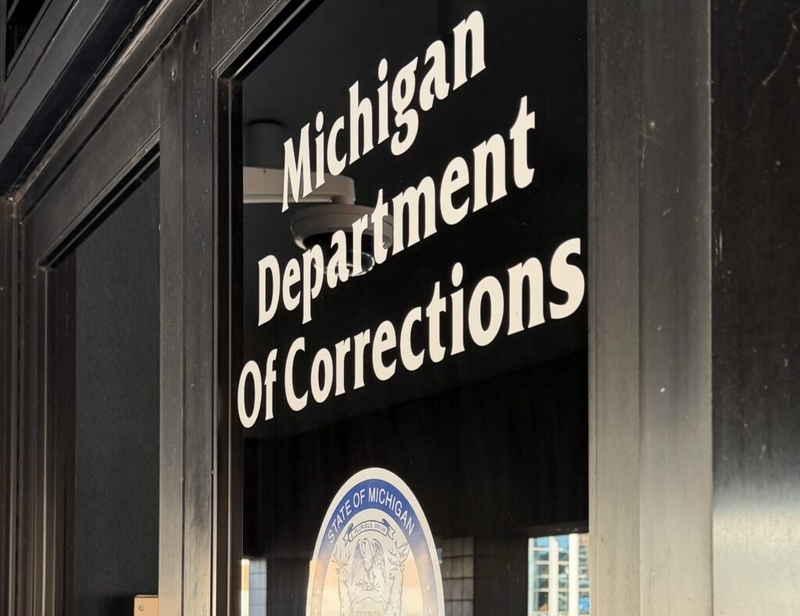
Michigan Department of Corrections office in Lansing. (Photo by Jon King/Michigan Advance)
No matter who becomes governor in January, Michigan’s next administration will face a major corrections problem. Prison advocates and corrections union leadership might generally have very different perspectives on what changes are needed within the state’s prisons. But in conversations with the Michigan Advance, they agreed on one overarching sentiment — something has to change at the top of the Michigan Department of Corrections.
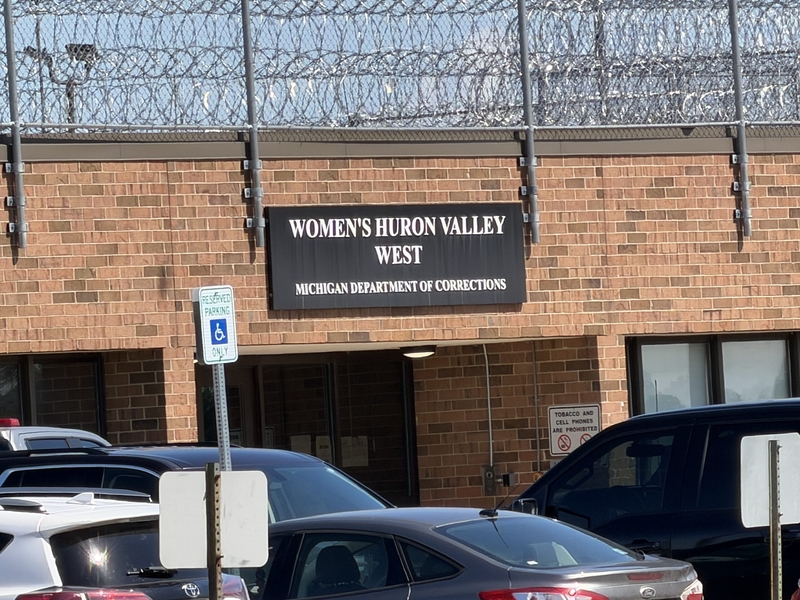
The Michigan Department of Corrections has come under bipartisan criticism from advocates and state legislators, especially in recent months — during which time five women incarcerated at Women’s Huron Valley Correctional Center, the state’s only prison for female inmates, died in a matter of months, and the Michigan Corrections Organization, an SEIU local representing Michigan’s corrections officers, noted a “significant escalation in violence, large‑scale disturbances” throughout July and August.
“The new governor and the new Department of Corrections director are going to have to have a different approach,” Hakim Crampton, the legislative liaison at Michigan Citizens for Prison Reform, said.
Heidi Washington has served as director of the department for over 11 years, first appointed by Republican Gov. Rick Snyder and then kept in the position by Democratic Gov. Gretchen Whitmer.
“We don’t know who’s going to be the next governor, but whether it’s Benson or James, doesn’t really matter to us,” said Byron Osborn, the president of the Michigan Corrections Organization. “We just hope whoever wins sees us over here and throws us a damn life ring because we’re going under.”
Gubernatorial candidates for both major parties — Democrat Jocelyn Benson, the current Michigan secretary of state, and Republican John James, the U.S. House representative for Michigan’s 10th Congressional District — were asked to participate in a one-on-one interview with Michigan Advance to discuss the concerns with the Department of Corrections and their plans for the department if elected in November.
Both campaigns declined to make their respective candidate available for an interview. James’ team initially scheduled an interview with the Advance, but canceled due to schedule changes and did not reschedule.
After declining to interview for this story, both candidates were sent seven written questions about their plans to address specific concerns within the Department of Corrections. The James campaign did not respond to those questions or provide any other written comment on the issue.
There’s no one person who is responsible for where the department is right now. So I think that a change in the director is important, but I also don’t think that just going down the current rank and file is where the next person would need to come from.
Benson shared a written statement in response, in which she said that, having visited the Women’s Huron Valley prison, “it’s clear that the Michigan Department of Corrections needs new leadership.”
“The repeated tragedies, threats to staffs’ lives, and unsafe workplace and living conditions are unacceptable. Corrections officers and incarcerated people alike deserve to work and live free from the constant threat of violence,” Benson said in an email. “As governor, I will appoint new MDOC leadership, hold them to strict accountability standards, and sit down with officers, their union, and families to hear directly what they’re facing. I will also support legislation to improve pay, pensions, and benefits so we can recruit and keep officers. My north star as governor is costs down, wages up, and rights protected, and that includes everyone involved in our corrections system.”
“It’s sad. It’s very unfortunate,” Crampton said in response to both candidates’ declining to schedule interviews on corrections issues. “Once they appoint someone, hopefully they’ll be open to some real change.”
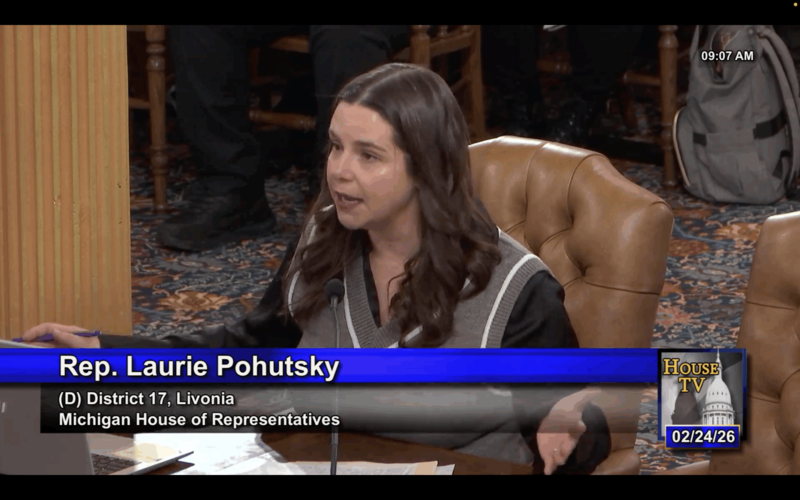
Rep. Laurie Pohutsky (D-Livonia), who has been outspoken on issues especially around the Women’s Huron Valley Correctional Center, said that she hopes the next administration will be “a bit more collaborative” on issues around the Department of Corrections.
She said the current administration “just does not have a willingness to address” those issues with the Legislature.
“Overall conditions need to be addressed, and I mean that in terms of the people who are incarcerated there and also staffing,” she continued, noting a bipartisan appetite in the Legislature for real reform in the department. “There’s absolutely a bipartisan consensus that things do need to change, and there’s also an awareness that there is no one single policy that is going to fix everything. This is going to be something that is going to take time. It’s going to take multiple different policies going into effect.”
Staffing shortages drive problems across MDOC
Many of the concerns raised about conditions in Department of Corrections facilities, for both those incarcerated there and the corrections officers employed there, can be traced back in some way to understaffing at MDOC facilities.
Nearly all of the state’s correctional facilities have at least some vacancies, and some have over a quarter of their positions vacant, according to department data through May 2026.
Osborn said that the staffing vacancy issue exacerbates all of the other problems that he has with the department.
“When you’re running a prison setting with facilities that have anywhere from 15 to 35 percent vacancy rates, you can imagine what that does to the remaining workforce that is there. They’re subject to mandatory overtime on a daily basis. Many of our officers are working 16-hour days, consecutive days in a row,” he said. “This is just not the type of work setting where you should be having exhausted, mentally fatigued, and physically fatigued staff running a prison. But that’s exactly what we’ve had for these past few years.”
That, combined with the risk of working in a potentially violent environment and a lack of substantial retirement benefits, has pushed officers out of the department and failed to attract new talent, Osborn, who has worked for the department for more than three decades, said.
Pension changes could help recruit, retain officers
A set of bills to improve the pension plan that corrections officers have access to was among the nine bills vetoed by Gov. Gretchen Whitmer in July. Although those bills have been reintroduced and passed by the state Senate, their future remains uncertain, even as the corrections union emphasizes their importance.
“The next governor, we hope, is going to advocate for bipartisan cooperation to get something done to make it appealing to come work for the Michigan Department of Corrections again,” Osborn said, highlighting pension reform as part of that.
Benson said in a press release following Whitmer’s veto that she would sign the bills into law if elected.
“I think that that’s something that we can expect to see reintroduced early on and I would like to see that taken care of and squared away,” Pohutsky noted as a policy she would like to see the next governor prioritize early on in their administration.
Crampton added that staffing shortages also have distinct negative effects on incarcerated individuals as well, including limiting access to programs, outside exercise or even eating meals in the cafeteria as opposed to having to eat them still in a cell.
“It affects the overall operation of everything, and especially, you’ve got to be thinking about this, there are people who are incarcerated who are working their way toward their freedom, who are in necessary, essential programming,” he said. “When the institutional flow ceases to have that same speed and consistency, then it slows down their integration with the programming … their opportunity to be released.”
“The prison population is getting screwed over,” Osborn agreed. “There are things that they are required to have. They’re supposed to be able to get out to the yard and go to the rec yard. They’re supposed to be able to get on the phone and call their families. You know, they’re supposed to have day room time.”
Crampton, who has had family members working as correctional officers in MDOC facilities and other family members incarcerated in MDOC facilities, also said that the mindset within the department, of continuing the same cycles of the carceral system that have existed for decades, must change.
“They are the ones that are responsible for the lives and safety and health of people in their system, and people in there stabbing each other, assaulting staff, killing each other, and they are not taking accountability, responsibility,” he said of the department’s leadership. “They seem to think that the design of the Department of Corrections, the way it’s been, is the way it’s going to be, and the way it has to be. And it’s not conducive to either correction staff or people returning home back to our community. We want to see advanced programming, education, vocation, treatment services. Everyone in there should be out of their cell each day involved in programming, participation, and treatment services.”
Competing views on security and violence
Osborn also said that he believes the addition of more high-security beds — the department did announce in September plans for 870 new high-security prison beds across four correctional facilities — will help in reducing violence between prisoners.
“We’ve got all of these prisoners who normally, if the prison system was operating correctly, would be housed in a higher security level due to their misconduct reports and their bad behavior,” he said. “That’s why you see, when we report on a lot of these staff assaults and even some of the prisoner assaults, we’re saying some of these assaults, in most cases, most of them would not be occurring if the department didn’t have a security classification problem. These guys would be in single man cells at Level V, where they can’t assault anybody.”
Crampton had a different perspective on the issue, especially around solitary confinement, and a press release from Citizens for Prison Reform referenced research linking solitary confinement to worsening mental health and self-harm, without consistent evidence that it reduces prison violence.
“If they’re going to continue cycling in and out of our system, and we’re not going to solve the problem of crime in our community, then that system that is holding people is going to have to be accountable to how it operates,” Crampton said. “Because it’s returning people back to our society, who are scorned, torn, traumatized, broken, and unable to pick their lives back up, and help being contributed to our society. They are having an impact on families, on children, and the correction guards, likewise, who work and operate.”
Neither candidate has indicated who they might tap to lead the department if elected. Pohutsky, however, emphasized that a need for a change in leadership might require pulling in a director who is not currently a part of the department.
“I’ve been pretty vocal about the need for a change in leadership. That obviously includes the director, but is not necessarily limited to the director,” she said. “There’s no one person who is responsible for where the department is right now. So I think that a change in the director is important, but I also don’t think that just going down the current rank and file is where the next person would need to come from.”
Lansing, MI