Institute launches in East Texas to address the region and state’s largest water challenges
Oct 05, 2026 | 6:00 am ET
Description
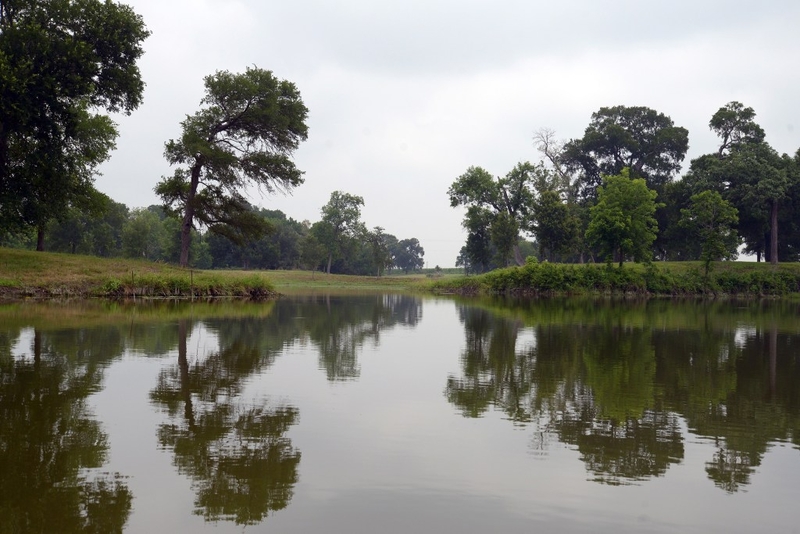
Creslynn Lake near Athens on May 27, 2024. (Joel Andrews for the Texas Tribune)
Subscribe to The Y’all — a weekly dispatch about the people, places and policies defining Texas, produced by Texas Tribune journalists living in communities across the state.
East Texas leaders are building a water institute to improve water research, bolster the labor force supporting water infrastructure and coordinate regional water goals.
The East Texas Water Institute will reside within Stephen F. Austin State University Center for Applied Research and Rural Innovation in Nacogdoches. It is the product of a partnership between Angelina College in Lufkin, Stephen F. Austin State University and the T.L.L. Temple Foundation.
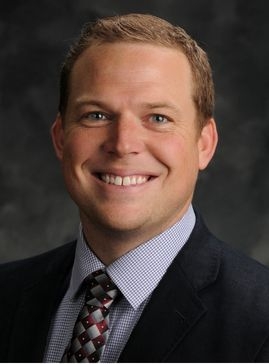
Drew Gholson, a former professor at Mississippi State University, was named executive director of the Institute. Gholson has focused on water conservation, applied research and practical solutions for agriculture and communities throughout his career.
While there are several water institutes across Texas that seek to understand the state’s water needs, the East Texas Water Institute is unique in that it seeks to address a broad gamut of major concerns, said Charlie Glover, CEO of the T.L.L. Temple Foundation.
The institute will prioritize five “pillars” to be implemented as soon as is feasible: water data and measurement resources for East Texas; water education and public awareness in which complex water information will be translated into accessible tools; applied research and technical assistance to provide communities with expertise and resources; educational training to build a workforce that knows how to repair and support water systems; and regional coordination.
Texas is facing a water crisis and many look to East Texas, a water-rich region, to provide resources to dry regions. However, the region is facing its own crises.
Communities in East Texas have gone decades without improvements to their water systems, and now those who know how to maintain that water infrastructure are preparing to retire. That means the region is at the doorstep of major failures compounded by having few people around to fix them.
“If we’re going to continue to repair and build our own infrastructure around water, it should be our workforce that has the ability to engage in that and benefit from it,” Glover said.
Gholson hopes to have staff hired, classes outlined and students enrolled in time for the 2027 spring semester.
The partnership between the foundation and two schools is secured and the technology is on its way. But there are still some logistics, such as building out the curriculum and hiring staff, to work through before the institute is up and running.
“There are still things to set in motion and approvals to secure, but we’re going to work as fast as we can, as strategically as we can,” Gholson said. “We are not going to sit around and wait any more than we need to.”
Other aspects of the institute, such as research, data collection and collaboration will come as word spreads about its goals, technology arrives and research proposals are funded. Gholson would like to begin collecting data on East Texas aquifers, such as the Carrizo-Wilcox, to establish a baseline for further research. And he wants research proposals vetted and funded, so the institute can begin answering some of the state’s major questions.
Texas is in a time crunch for solutions to its water woes. Between a growing population, leaky pipes and climate change, Texas is facing a water crisis that has already begun to play out.
Corpus Christi could run out of water within a year or two. Populations in metropolitan areas, such as Dallas, are booming – as is their demand for water. Rural communities across the state are coping with out-of-date water systems. And water sector workers, on average, are six years older than other public sector employees, according to a 2018 U.S. Government Accountability Office Report – those employees were expected to retire in the next 10 years when the report was published.
East Texas is feeling that squeeze especially hard, said Kelley Holcomb, general manager of the Angelina & Neches River Authority, who also serves on the institute’s advisory board. The region needs at least 1,500 or more licensed operators to provide each water system with one competent operator in 2027. The institute aims to solve that problem by training a new generation of East Texans to maintain and improve infrastructure.
Holcomb believes East Texas has long needed a resource like the institute to help balance the needs of the region and the state. He is excited to see the institute come to fruition even though the region has fallen behind on addressing some issues, such as building a trained workforce.
“I think that we are a decade too late — that’s my personal opinion,” he said. “If we would have done this 10 years ago, we might have avoided this whole issue to begin with.”
Glover sees the institute as a path to sustainability at a time when the state needs real answers.
“We can’t be short-sighted in our understanding and in our management of the precious resource that we have,” Glover said.
Lawmakers were tasked with finding solutions to Texas’ water crisis ahead of the 2027 legislative session. And there are entities across the state working to support those answers.
Gholson sees a world in which the East Texas Water Institute could provide lawmakers with baseline data in their quest to resolve the state’s water crisis. But a nuanced answer to what role East Texas can realistically play in those solutions will take time and high-quality research.
The director especially hopes to provide local leaders with specific research and technical information needed to address their concerns, as well as connect them with experts to answer tough questions.
Most significantly, it will create space for regional coordination that hasn’t existed formally.
“If we can work together as a regional entity and be on the same page, then we can accomplish so much more throughout the region,” Gholson said.
Disclosure: T.L.L. Temple Foundation has been a financial supporter of The Texas Tribune within the past five years. The Texas Tribune is a nonprofit, nonpartisan news organization that is funded in part by donations from members, foundations and corporate sponsors. Financial supporters play no role in our journalism. Find a complete list of them and more information about our financial and disclosure policies here.
Austin, TX