Pa.’s Environmental Rights Amendment is the focus of a Lackawanna County data center fight
Oct 05, 2026 | 4:36 am ET
Description
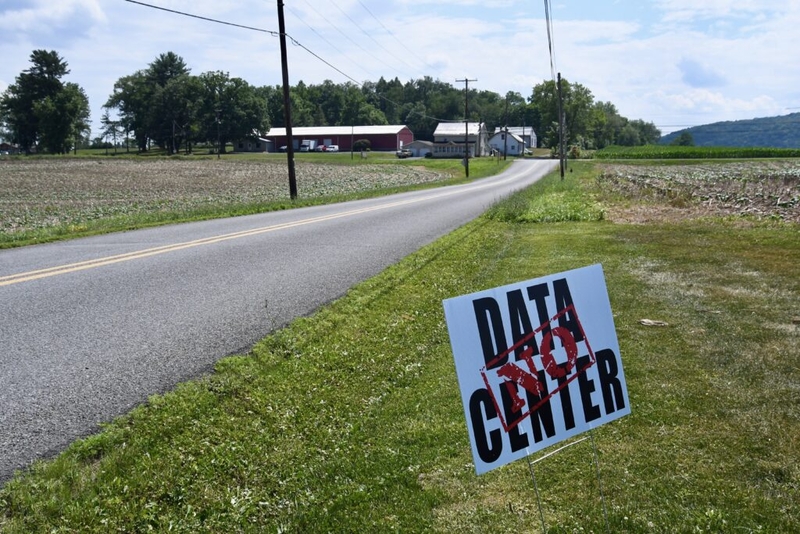
Muncy Township, Lycoming County, is the site of a proposed data center. (Photo by Peter Hall/Pennsylvania Capital-Star)
Property owners on the margins of a proposed Lackawanna County data center complex are suing the commonwealth, claiming parts of its planning code clash with the state and U.S. constitutions.
Williamsport developer Daniel Klingerman’s company submitted plans for a three data center campus on 100 acres in Muncy Township on April 28. That same day, the township board of supervisors passed a resolution declaring a nine-month moratorium on processing applications for data centers and similar high-intensity projects.
The pause is intended to allow township officials to have time to develop and enact zoning regulations to govern the design and construction of the massive computing hubs used to power artificial intelligence and other online services.
Muncy is one of at least a dozen municipalities in Pennsylvania to enact similar moratoriums as big tech companies and speculators flood the commonwealth with plans.
But when township officials didn’t hold a hearing on Danko’s application within the normally required 60 days, the holding company took the position that its proposal was automatically approved under provisions of the Municipal Planning Code.
The lawsuit, filed by the national environmental rights group Green Amendments for the Generations with its members and the township supervisors, asks the Commonwealth Court to declare that those provisions are at odds with the Environmental Rights Amendment of the Pennsylvania Constitution.
It also alleges the planning code violates the rights to free expression, property and due process of law.
The individual plaintiffs in the suit are John Schaeffer, co-owner of the historic 800-acre Muncy Farms, and Sean and Rae-Ellah Tetreault, whose properties adjoin the site of the proposed data center; and Daniel Waugh, who lives with his wife Karin about a mile and a half from the site.
Maya K. van Rossum, founder of Green Amendments for the Generations, said her organization is dedicated to protecting and expanding the rights afforded to Pennsylvanians under Article I, Section 27 of the Pennsylvania Constitution, known as the Environmental Rights Amendment (ERA).
“When we got to this place where there was this asserted, deemed approval we could see how the rights of the people were being stripped away,” said van Rossum, who also leads the Delaware Riverkeeper Network.
The lawsuit also claims the township and board of supervisors have been forced to violate citizens’ due process rights by not holding a hearing and voting on the proposal, which negates the township’s zoning restrictions and obligations under the ERA.
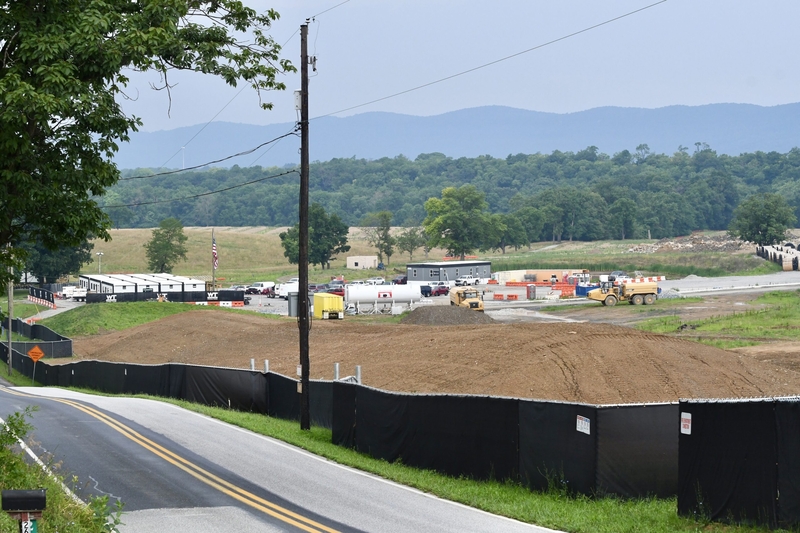
Klingerman, who is not a defendant in the lawsuit, did not return a call seeking comment. State Attorney General Dave Sunday’s office, where the suit was served, declined to comment.
At least 100 data center projects have been proposed across the state, according to the Shapiro administration.
Opponents of the PAX-1 data center campus in Middlesex Township, billed as among the largest on the east coast, lost a round in Cumberland County Court last month. Judge Matthew P. Smith rejected a request by property owners to halt work on the project while their legal challenge is pending.
Four couples have sued the Middlesex Township Board of Supervisors alleging their approval of a data center zoning overlay amounted to spot zoning that benefitted only the developer of the 16 data center campus, which would be illegal.
Data centers, broadly, are buildings where computer servers that power online services are housed and they’ve been around since the dawn of the internet. The latest generation of data centers, designed to support artificial intelligence development and applications, resemble warehouse distribution centers and can house tens of thousands of computers.
Computers generate heat and need to be kept cool, so hyperscale data centers are designed with powerful cooling systems that often depend on large quantities of water. They also need constant power, which requires the facilities to be built with diesel or natural gas generators, which can number in the hundreds.
People across the nation, concerned about impacts on the environment, electricity and water supplies, and noise and pollution have opposed data center projects in their communities. Elected leaders, meanwhile, have attempted to balance the potential economic benefits with public opposition to the facilities.
Gov. Josh Shapiro in May released his plan to incentivize “responsible development” by tying tax incentives to benchmarks for energy supplies, promoting transparency and community engagement, supporting workforce and economic development and protecting the environment.
The Pennsylvania General Assembly has not passed legislation to enact what the administration calls the Governors Responsible Infrastructure Development (GRID) Standards. So, Shapiro issued an executive order in August directing the state Department of Environmental protection to apply them in its permitting processes for data centers.
The Environmental Rights Amendment, passed in 1971, grew out of the environmental movement of the 1960s. It declares “The people have a right to clean air, pure water, and to the preservation of the natural, scenic, historic and esthetic values of the environment,” and that the commonwealth’s natural resources are the property of all Pennsylvanians, including future generations.
Pennsylvania courts, however, limited the power of the ERA for more than 40 years under a doctrine that the amendment only offered protection if another environmental law was violated.
In 2013, the state Supreme Court reinvigorated the amendment in a decision declaring unconstitutional provisions of the Pennsylvania Oil and Gas Act that forced municipalities to allow drilling regardless of zoning restrictions.
While the court cautioned that the ERA does not call for a halt to economic or social development, it held that such progress cannot take place at a cost of unreasonable degradation of the environment.
That holding in Robinson Township vs. Commonwealth was decided by only a three-justice plurality of the seven-member court, meaning it was not binding on lower courts until a four-justice majority adopted it in 2017. Since then, state courts have continued to wrestle with the ERA.
Van Rossum, whose Delaware Riverkeeper Network was among the plaintiffs in the Robinson case, said she’s hopeful that a victory for Muncy Township and its residents will result in more forceful applications of the amendment in the future.
“Every time we properly exercise our environmental rights, our due process rights and get that favorable outcome, we are strengthening what it means to have the Environmental Rights Amendment,” van Rossum said. “We are demonstrating to the rest of the nation why it is so important to have this kind of constitutional protection.”

Harrisburg, PA