Moore signs executive orders to remove hurdles to new housing approval, construction
Oct 02, 2026 | 5:00 am ET
Description
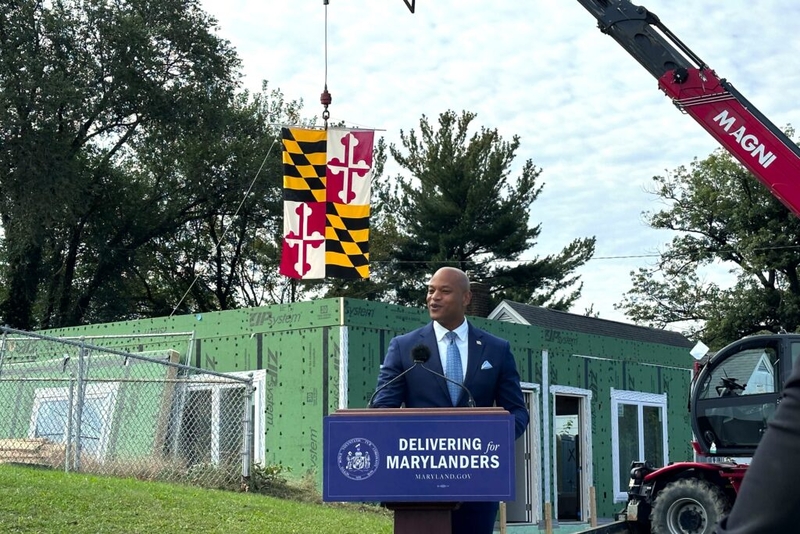
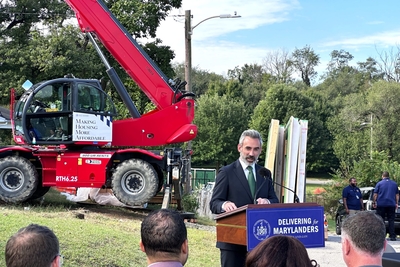
Gov. Wes Moore signed two executive orders Thursday aimed at removing administrative hurdles in permit approval for new housing developments and the construction of housing units. (Photo by Danielle J. Brown/Maryland Matters)
Gov. Wes Moore continued his push against administrative barriers to new housing development Thursday, signing executive orders to identify administrative bottlenecks that delay project permit approvals and to speed construction of those units.
The new “Housing Innovation” and “Permitting and Licensing Acceleration” executive order signings came on the same day as the start of two laws pushed by Moore to boost housing production — and just days after a new independent report showed that the state’s housing shortage has led to high housing costs are a significant contributor to the state’s poverty levels.
Moore’s announcement builds off previous executive orders and legislative priorities to get more new housing units built quickly to counter those rising rent and housing costs.
21% of poverty in Maryland driven by high housing costs, report says
“Here’s what today means: we’re building faster, we’re building smarter,” Moore said at the construction site of a modular home near Curtis Bay. “We’re building a Maryland where more people have a place to call home.”
The construction of modular housing options is a feature in the Housing Innovation executive order. It aims to encourage construction of modular housing for “faster and more cost-efficient way of building more homes in our neighborhood,” Moore said. The order also boosts workforce training opportunities in modular home construction for future and current construction workers.
That same order also creates the so-called “Maryland Housing Innovation Incubator,” which will function as a “space for entrepreneurs and housing experts to identify and scale best practices to bring innovative housing solutions to market,” Housing Secretary Jake Day said Thursday.
“We’ve underproduced housing at a rate of 8,000 units a year for 20 years … Maryland’s housing shortage wasn’t created overnight, and we know it won’t be solved overnight,” Day said.
“The governor’s housing acceleration executive order will help expedite more affordable units,” Day said, “by supporting innovation of new construction techniques, financing, and incubation of emerging technology startups, while complementing them with regulatory reform and a pathway to workforce development in new industries and new fields.”
The other executive order signed Thursday creates a new council to assess permitting and licensing processes to identify potential regulatory hurdles delaying housing projects in the state.
“When permits get stuck, projects don’t get built. It’s that easy,” Moore said. “If red tape is a thing that keeps shovels from getting in the ground, if permitting is a thing that keeps people from becoming homeowners, then we have a fundamental problem that we need to fix.”
Just this week, Pew Charitable Trusts released a report identifying Maryland as a state where above-average housing costs is a leading driver of poverty, with approximately 21% of the state’s poverty level attributable to housing costs and rent.
Experts with Pew suggested Maryland and states in similar situations boost housing supply enough to slow rising rents and housing costs, through reworking the permitting laws that govern approvals of new developments and by giving more flexibility for different housing options.
Those suggestions largely align with the Moore administration’s previous efforts during his term.
Thursday was the official start date of two new laws Moore pushed this past legislative session. The first is the Maryland Housing Certainty Act, which aims to boost housing production by granting developers “vesting rights,” ensuring that their projects are less likely to be delayed due to changing local housing or zoning policies. Another new law encourages housing development around transit-oriented locations, by restricting parking minimums and other local decisions in specific situations.
Moore issued a similar executive order last year to reduce permit approval timelines at the Department of Housing and Community Development along with other state agencies and better utilize state land that could be repurposed for housing development.
He insisted that efforts to speed up project approvals and construction will not compromise health, safety and environmental regulations.
“We can keep standards, we can move faster and we can protect our people. We don’t have to choose between those things,” he said.
Annapolis, MD