US Senate leaves nation’s capital in advance of midterms with much still undone
Oct 01, 2026 | 10:44 am ET
Description
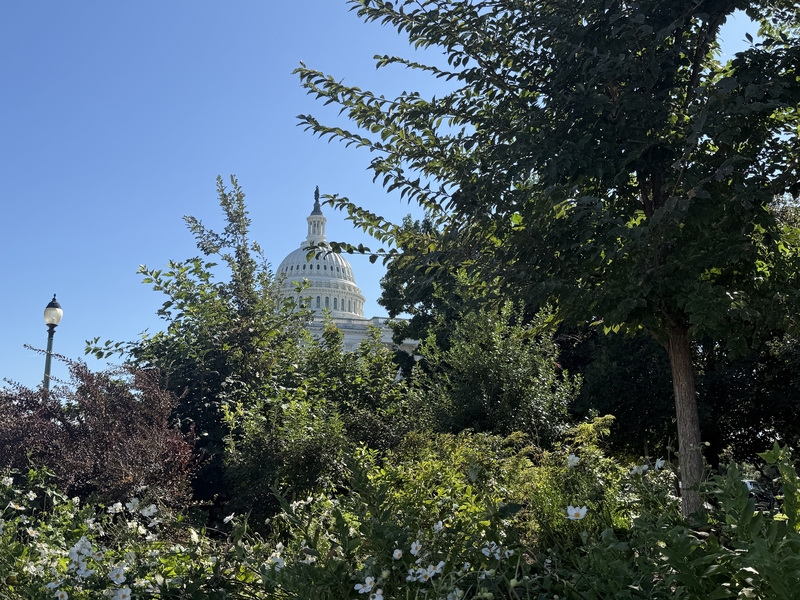
The U.S. Capitol building in Washington, D.C., on Sept. 15, 2026. (Photo by Jennifer Shutt/States Newsroom)
WASHINGTON — U.S. senators departed Capitol Hill on Wednesday night for their campaign break, leaving numerous policy disputes unresolved.
The chamber won’t return until Nov. 9 for the five-week lame-duck session, when party leaders will have to decide which bills they want to negotiate during what could be the final days of unified Republican control.
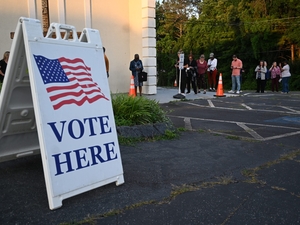
Democrats have become increasingly optimistic they will be able to flip the House and possibly the Senate from red to blue amid rising frustration with the cost of living, the war in Iran and unrestrained development of artificial intelligence.
The bills that hang in the balance aren’t small by any measure:
- Congress has yet to reach final agreement on the dozen annual government funding bills that total about $1.8 trillion.
- Lawmakers haven’t brokered a compromise on the massive annual defense policy bill known as the National Defense Authorization Act.
- The years-delayed farm bill has yet to see enough momentum to make it to the president’s desk.
Agriculture Committee Chairman John Boozman, R-Ark., said this week during a brief interview he hopes a final bipartisan version of that farm aid and nutrition assistance bill will be worked out later this year.
The Arkansas Republican also criticized Democrats for not cooperating more with Republicans on major initiatives ahead of the elections.
“I think a lot of these things will be easier once the election's over and they don't feel like they're giving the president a win on legislation,” he said.
Boozman, who isn’t up for reelection this cycle and won’t need to campaign during the break, said he doesn’t have plans to begin serious negotiations with the House Agriculture chairman or the top Democrats on the committee during the October recess, though he said they may text each other.
Spending bills
In addition to working out a compromise on the farm bill, Boozman is one of the relatively few lawmakers tasked with shepherding a government funding bill through Congress.
Lawmakers were supposed to enact all 12 of those measures before the start of the fiscal year on Oct. 1, but instead leaned on a short-term stopgap measure to avoid a shutdown until mid-December.
When senators and their House counterparts, who left for their campaign break earlier this month, return after the election they’ll have to decide whether to come to an agreement or pass on another temporary funding bill to keep federal departments up and running.
Senate Minority Leader Chuck Schumer, of New York, declined to directly answer a question in mid-September about whether Democrats would negotiate those appropriations bills with Republicans during the lame duck, if Democrats win the majority and would take over come January.
“Look, the bottom line is first I think we have a damn good chance of winning the Senate,” he said. “And we will have to sit down with our Republican colleagues and work out the best bill possible in terms of approps. That’s one area where Dems and Republicans have worked pretty well together.”
Holding over final decisions on major legislation until next year would still require Congress to garner President Donald Trump’s support.
While funding levels and policy might not change substantially if those bills are negotiated during the lame duck or next year, leadership on the powerful Appropriations Committee could.
Senate Appropriations Chairwoman Susan Collins is in an especially close reelection bid in her home state of Maine.
Regardless of whether Collins secures reelection or loses, she will still be in charge of negotiating those government funding bills with Democrats this year. But if voters do elect her Democratic opponent instead, Alaska Sen. Lisa Murkowski would likely become the top Republican on the committee next year.
Lawmakers will also likely want to make some progress on defense policy this year, having approved the annual National Defense Authorization Act every year for more than six decades.
The massive package gives Congress its best opportunity, other than the Defense appropriations bill, to place guardrails on the Pentagon and shape the military's future.
Permitting reform
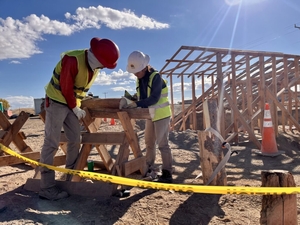
One bill that will very likely be on the Senate floor during the lame-duck session is a long-sought overhaul of how the federal government conducts environmental reviews and permits infrastructure projects.
The bipartisan agreement was announced shortly before the Senate left for the break by West Virginia Republican Sen. Shelley Moore Capito, chairwoman of the Environment and Public Works Committee; Rhode Island Democratic Sen. Sheldon Whitehouse, ranking member on that committee; Utah Republican Sen. Mike Lee, chairman of the Energy and Natural Resources Committee; and New Mexico Democratic Sen. Martin Heinrich, ranking member on that committee.
Capito said during a press conference the “historic” agreement would make it “faster and more efficient and easier to build infrastructure projects” without eroding “strong protections for our environment.”
“In my state, whether it’s too long to build roads or energy infrastructure and other investment, it costs us jobs, it costs us the strengthening of our local economies,” she said. “So when these projects are not built, what happens? Those costs are shifted onto our families, who pay more for energy, housing and other items.”
The goal, Capito said, is for the package to be the first vote when the Senate returns in mid-November, to start the sometimes long and complicated floor process.
Whitehouse said negotiators had to go down several “dead-end avenues” before they were able to reach the final agreement they unveiled Wednesday, though that’s not the end of the process.
“This is a hugely important milestone but there are two big pieces of work in front of us,” he said, noting that their Senate colleagues now get to review the bill and offer amendments.
The second hurdle, Whitehouse said, will be “returning to regular order for wind and solar projects in the Trump administration,” which remains unresolved.
“But we have had what I consider to be a very reasonable opening proposal from the Trump administration. We need more clarity on that,” he said. “And when we have more clarity on that they’ll be back-and-forth to try to resolve those issues. That will happen in parallel with the amendment work.”
Whitehouse said if the legislation becomes law it should “lower electricity costs measurably for Americans,” increase “clean” power, add construction jobs throughout the country and raise the overall economy.
All States Newsroom content is free to republish. Read our republishing policy for more information.