Fontes and Kolodin clash over mail voting and election results as debate devolves into name-calling
Oct 01, 2026 | 9:30 am ET
Description
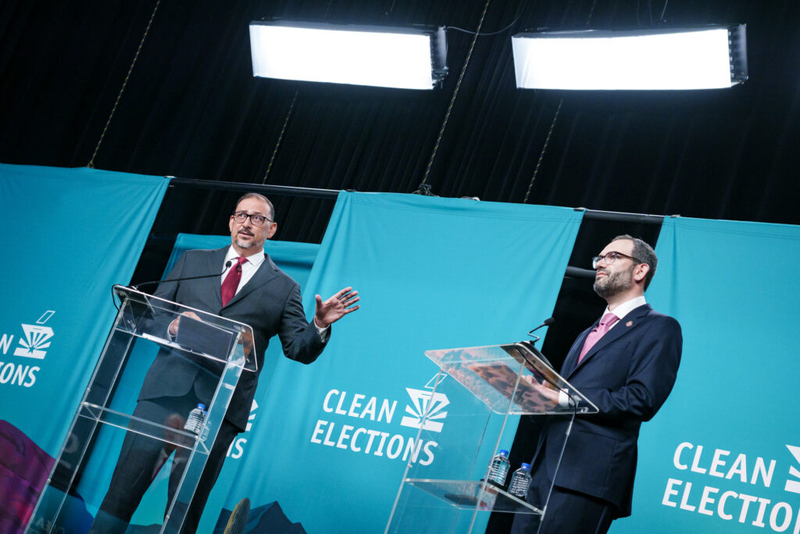
Secretary of State Adrian Fontes (left) and Alexander Kolodin debate in the Arizona Clean Elections Secretary of State on Sept. 30, 2026. (Photo by Megan Mendoza/The Arizona Republic/pool)
In a heated debate full of name-calling and personal barbs, Republican Alexander Kolodin promised Arizonans that, as the state’s top election official, he would deliver election-night results — something that Democratic Secretary of State Adrian Fontes said was impossible.
During the hour-long Arizona Citizens Clean Elections debate, Kolodin, a state representative member of the far-right Arizona Freedom Caucus and elections lawyer who has been sanctioned by the Arizona Supreme Court, worked to distance himself from some of his extreme past positions, including attempts to abolish no-excuse mail-in voting.
Republicans implemented no-excuse vote-by-mail in Arizona in 1991. It is wildly popular, with about 75% of voters casting their ballots that way in each election.
Kolodin accused his opponent of lying when Fontes said that Kolodin wants to “eliminate everyone’s right to vote by mail.”
But when moderators asked Kolodin about his stance on voting by mail, he refused to answer directly, a strategy that Fontes hammered him for in an August debate.
“I think that Arizonans enjoy voting with a wide variety of methods, and as a member of the legislature, I’ve tried to make every single method of voting work better for the people of Arizona,” Kolodin said.
Kolodin’s record in the legislature shows that he has backed seismic changes to Arizona election laws, including banning no-excuse vote-by-mail and returning to voting in tiny precincts, which election officials said was logistically impossible.
Those sweeping election changes were rooted in conspiracy theories about election fraud pushed by President Donald Trump and subsequently embraced by GOP voters. As one of the key attorneys for Trump’s campaign who challenged the 2020 election results in Arizona, Kolodin tried to toss out the state’s presidential vote that year based on outlandish evidence-free claims that were swiftly rejected by the courts. Since then, he has represented a number of prominent election deniers.
Following Trump’s 2020 loss in Arizona, Kolodin was among the attorneys who signed on to the so-called “kraken” lawsuit that was based on claims made by people with no actual knowledge of the elections.
While Fontes said he was the only candidate who would run the office in a professional, nonpartisan manner, Kolodin argued he was the only choice to improve the state’s election system.
“Arizonans deserve elections that are honest, lawful, transparent and secure,” Kolodin said. “My opponent, he’s failed to deliver that. In fact, he’s made our elections into a national embarrassment.”
Kolodin sponsored the legislation that put Prop. 144 on the November ballot, a constitutional amendment that would make sweeping changes to Arizona elections. Kolodin said it would speed up election results and make it easier to vote. Opponents, including Fontes, say it would make it harder to vote and would make voting by mail more difficult.
“The election deniers like Mr. Kolodin forget that convenience and access are actually the same thing,” Fontes said. “When you’re making it less convenient for voters, you’re reducing their access.”
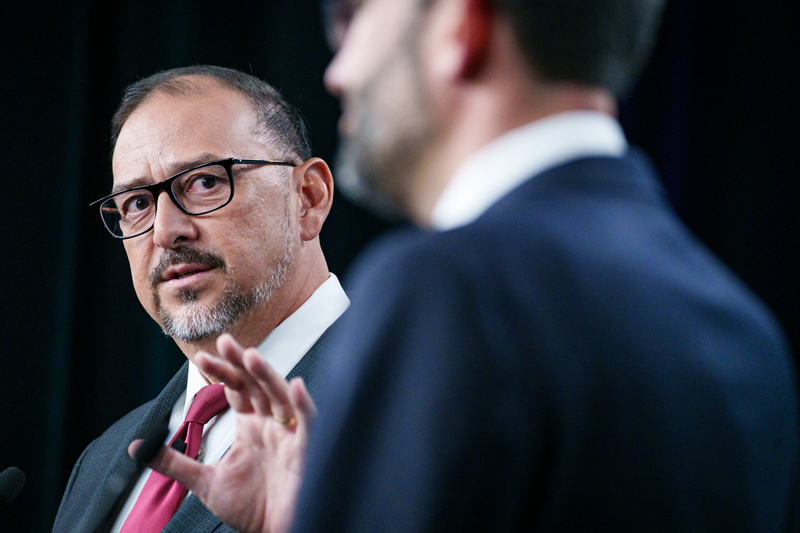
Prop. 144 would require mail-in voters to produce identification every time they vote but doesn’t explain how that would be done, creating a possible barrier to voting by mail. The proposition is a whittled-down version of a proposal Kolodin has been trying to make into law for years, based on how elections are run in Florida.
Fontes said there’s a good reason that Arizona doesn’t run its elections like Florida.
“Florida spends $20 per ballot on their elections,” he said. “We spend around $9. And that’s because folks like Alex Kolodin don’t actually want to fund the administration of elections in Arizona. They’ll scream and yell about it, like he did when he was defending the fake electors, but they don’t actually do anything for it.”
Kolodin pointed to a recent investigation by the Maricopa County Attorney’s Office as evidence that Fontes was failing in his job to maintain the voter rolls.
Out of an initial 200 possible noncitizens identified, the investigation found that eight of them were legal permanent residents who shouldn’t have been registered to vote. But Kolodin said that it was likely there were many more illegally registered voters that haven’t been identified.
“Frankly, one is too many,” he said. “Every time an unlawful vote is cast, it dilutes the lawful votes of Arizonans. That is unacceptable.”
Fontes shot back that he’d done his best to fix the outdated system that stores the state’s voter rolls but that Kolodin and the Republicans in the state legislature have refused his requests for funding to do so.
“He’ll say that he cares about election security, but he won’t help to fund it,” Fontes retorted. “He’ll say that he cares about clean voter rolls, but he won’t help us build the systems that are necessary to do this, and provide the ongoing and necessary human resource and technical support to make these systems work.”
Kolodin and other purveyors of election conspiracies have for years made claims of widespread voter fraud, including noncitizen voting, but have never provided any proof of that.
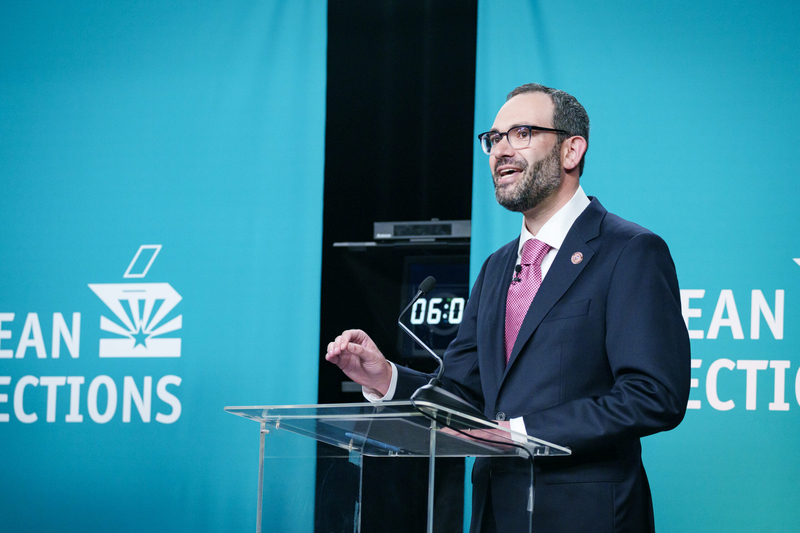
At times, the debate devolved into name-calling, with the two candidates arguing over one another.
Kolodin accused Fontes of working for the Sinaloa drug cartel and “representing pedophiles” when he was a public defender.
In turn, Fontes called Kolodin “a wild-eyed fanatic.” Fontes said he’d never worked for the cartel, but that he was obligated to represent people accused of crimes because they had a constitutional right to an attorney.
Fontes said that it was Kolodin and people like him who had actively worked to decrease confidence in elections, while Fontes had worked on things like a public ballot tracking campaign this year to help improve voter confidence.
“This is a screaming success of a government program run in a bipartisan way,” Fontes said. “We had a 73% increase in the number of folks signed up to track their ballot by mail, which is a program that I initiated.”
Kolodin accused Fontes of taking credit for a ballot tracking program that Kolodin helped former Rep. Barbara Parker pass through the legislature.
“Mr. Fontes has no record to run on, except for perhaps mine,” Kolodin said.
But the Arizona Mirror couldn’t identify any legislation that Parker sponsored related to ballot tracking. She did sponsor legislation passed in 2024 that requires voter notification when their registration is changed.
Phoenix, AZ