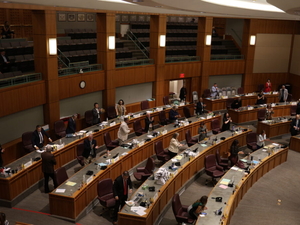
Dover City Council divided over investigation into police chief, FOP
Oct 01, 2026 | 6:00 am ET
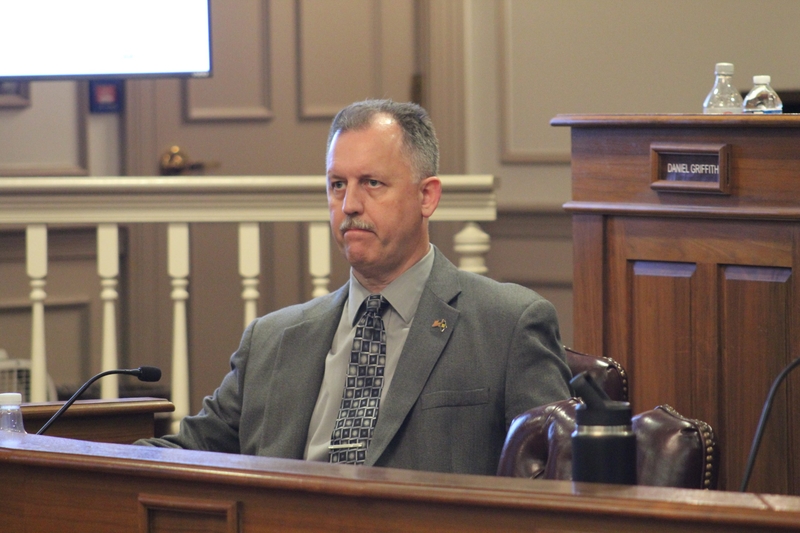
Description
Photo courtesy of Spotlight Delaware
Why Should Delaware Care?
Dover’s city government has become increasingly acrimonious and litigious over the past 18 months. Some of those disagreements among city leaders were borne from a controversy last sumer over the conduct of police department leaders and elected officials. The City Council is now discussing how to respond to an investigation into the controversy — and how to balance transparency with possible legal repercussions.
More than a year since controversy erupted between Dover officials and the local police union over Police Chief Thomas Johnson’s leadership, city leaders are divided over how to proceed with the findings of a third-party investigation into the situation.
But the investigatory findings at the heart of that debate remain unclear, as the city of Dover has not released the contents of the third-party inquiry, citing exemptions to the state’s open records laws.
Spotlight Delaware has appealed Dover’s denial to release the records, but the debate has simultaneously spilled over into public discussions among leaders at a recent city council meeting.
The Dover City Council voted last fall to hire 21st Century Policing Solutions, a Washington D.C.-based consulting firm, to launch a third-party investigation into police union complaints about alleged conduct violations by Johnson, including driving his work vehicle to family vacations, as well as Mayor Robin Christiansen’s subsequent handling of the situation.
Council members received a final report about the investigation’s findings on June 18, but a City Council Legislative and Finance Committee meeting this week marked the first time city leaders publicly discussed what should come next.
The committee, which includes all nine city council members and two additional appointed residents, was divided over whether it should release the full investigation or implement a series of policy changes based on the findings without actually sharing them publicly.
Despite the lack of consensus about how to move forward, the discussion marked a public rise in tension among elected officials over the police union allegations, which the council has not discussed in open session since they initiated the investigation last fall.
The revamped debate over the investigation also comes one week after Spotlight Delaware submitted a Freedom of Information Act (FOIA) petition to the Delaware Department of Justice for the full investigation report. City officials denied Spotlight Delaware’s initial request for the file in late May, arguing it is not a public record because it constitutes a personnel file and contains law enforcement investigatory files.
Despite the city’s initial denial, Christiansen said during the meeting he supports the public release of the investigation because he has “nothing to hide.”
Johnson, however, did not weigh in during the meeting, though city council members said he has an attorney, and they are concerned he might sue the city if the report is released.
In a statement to Spotlight Delaware on Wednesday, Johnson said the City Council has recognized there is “more preparatory work to accomplish” before making a decision about how to proceed with the findings.
In turn, he said it would be “premature” for him to comment on the investigation before elected officials decide how they want to move forward.
To release, or not to release
City leaders did not begin discussing the investigation until nearly 11 p.m. Tuesday night, at the tail end of a marathon six-hour meeting.
Councilman Brian Lewis brought up the possibility of releasing the full report, and both Christiansen and Councilman Gerald Rocha said they agreed.
Christiansen said he had gotten “the advice of my attorney,” and believes publishing the report would prove he did not do anything wrong.
But other council members said they were hesitant to circulate the report because Griffith, the city’s attorney, told them in a private meeting not to. They also said Johnson has not given them his permission to disseminate the findings.
Johnson did not respond to Spotlight Delaware’s questions about whether he will give the City Council permission to release the report.
Griffith, who was not present at Tuesday night’s meeting, declined to comment about the discussion.
In a written response to Spotlight Delaware’s FOIA, Griffith argued that it constitutes an “internal affairs investigation” about specific complaints levied against Johnson. He said the state has upheld in the past that internal affairs investigations are not public records.
Griffith also wrote that the original contract between the city and 21st Century Policing established that investigators would provide the city with a “confidential detailed report,” only to be discussed in a private council session, not publicly.
A handful of residents have also called for the city to distribute the report publicly, both in online articles and at city council meetings.
“We paid for an independent investigation, and now we’re being handed roughly one and three-quarter pages of proposed resolutions,” community activist Vonda Smack said Tuesday night. “We should not have to read between the lines to understand an investigation we funded.”
The investigation cost the city $50,000, according to documents obtained by Spotlight Delaware.
The committee ultimately voted 6-2 against releasing the report, but said they would consider reintroducing the possibility after further considering the legal ramifications.
Considering policy recommendations
While the debate over whether to release the full report became the focal point of Tuesday’s discussion, the committee also considered approving a set of changes to the city employee handbook based on the investigation’s findings.
Councilman David Anderson introduced the idea, which he said is the council’s “right and duty” since they now know the findings.
The recommendations he proposed include creating more “rigid parameters” around when an officer is allowed to use a city police vehicle, adopting a written policy for when city employees can work at a second job and prohibiting “meetings about political matters” between city officials and members of the Dover Police Department while the officers are on duty.
These suggestions seem to respond directly to the allegations made by the police union against Johnson last summer, including that he drove a city-owned vehicle to family vacations and to a second job as an adjunct instructor at Penn State University, and that he was doing work for Penn State during standard work hours in Dover.
The union also accused Johnson and Christiansen of telling members to attack city councilmen Roy Sudler and Brian Lewis for their comments criticizing policing in Dover, seemingly referenced in the recommendation prohibiting political meetings with on duty officers.
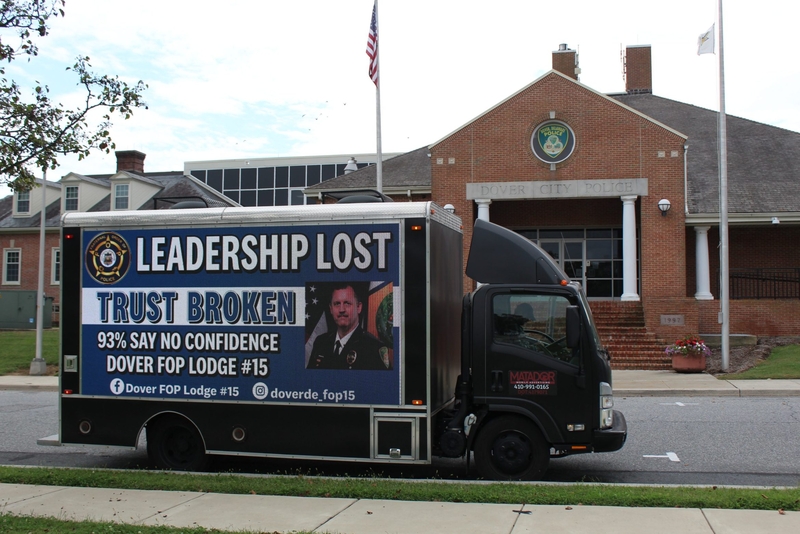
It is not clear whether the third-party investigation substantiated the union’s claims about Johnson and Christiansen’s behavior.
In an interview with Spotlight Delaware after Tuesday’s meeting, Christiansen said neither he nor the chief did anything “unethical,” but he thinks the proposed recommendations are “punitive” and not the appropriate response to the situation.
In an interview in May, Johnson said he and Christiansen have thoroughly discussed all terms of his employment throughout his tenure with the city, and that he has always acted “with permission, not forgiveness.”
Like the proposal to release the investigatory report, the committee also voted to table consideration of the policy recommendations until a future meeting. The City Council is next scheduled to meet at 6:30 p.m. on Monday, Oct. 12.
Maggie Reynolds is a Report for America corps member and Spotlight Delaware reporter who covers rural communities in Delaware. Your donation to match our Report for America grant helps keep her writing stories like this one; please consider making a tax-deductible gift of any amount today by visiting https://spotlightdelaware.org/support/.

Dover