District attorney elections linked to more prison admissions during ‘tough on crime’ era
Oct 01, 2026 | 1:31 pm ET
Description
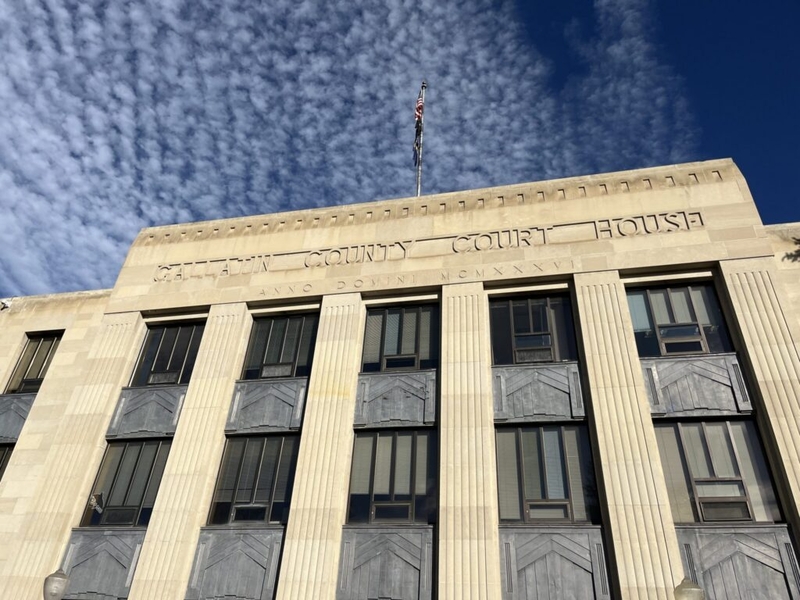
Clouds float above the Gallatin County Court House in Bozeman, Mont. A study on prison admissions during district attorneys’ election years found the increase in incarcerations was concentrated primarily in less serious, nonviolent cases rather than violent crimes. (Keila Szpaller/The Daily Montanan)
County and local district attorneys oversaw higher state prison admissions during election years than in other years during the height of the nation’s “tough on crime” era, according to a new study from Northwestern University’s Pritzker School of Law.
State prison admissions were about 3% higher in years when district attorneys were up for election compared with non-election years, the study’s author found. From 1986 to 2006, that amounted to roughly 63,000 additional prison admissions.
The findings suggest that electoral politics may have influenced prosecutors’ decisions about who enters the criminal legal system and how long people are sentenced to serve. But the study does not show that elections caused the broader rise in incarceration during that 20-year period, and its findings are limited to state prison admissions and sentencing during an era when incarceration was rising sharply nationwide.
The study, led by Chika Okafor, an economist and assistant law professor at Northwestern, examined more than 4,200 district attorneys and prison admissions in nearly 40 states. The study was published in the October edition of the Journal of Public Economics.
States put criminal justice, marijuana policies before voters in 2026
Prosecutors represent the government and have broad discretion in criminal investigations over whether to bring charges, what charges to pursue, whether to offer plea deals and what sentences to recommend.
In his research, Okafor found that prison admissions were about 4.3% higher in election years than in the previous year. Months sentenced to state prison also increased by about 3% in election years, or about 4% compared with the preceding year, according to the study.
The increase was concentrated primarily in less serious, nonviolent cases rather than violent crimes.
“The study provides evidence consistent with prosecutors having responded to perceived voter preferences,” Okafor said in a news release. “That is why efforts to change public attitudes toward punishment deserve as much attention as efforts to change policies or officeholders.”
Okafor also found that the election-year effects were strongest in parts of the South and in Republican-leaning counties. The effects declined as national support for harsher punishment softened after the mid-1990s, according to the study.
During the 1980s and 1990s, politicians frequently campaigned on being “tough on crime,” amid the war on drugs and passage of the 1994 federal crime bill under President Bill Clinton. Prison populations grew dramatically during those decades.
Okafor’s research suggests that prosecutors at the time may have responded not only to laws and formal criminal justice policies, but also to what they perceived voters wanted.
“Collective approaches to hearts and minds — to shifting public opinion around punishment — may be as important as technocratic approaches to public policy when it comes to improving our criminal legal system and wider society,” he said in the release.
But there are limits to what the research can establish.
The study compares election years with non-election years. It does not measure every form of political pressure a prosecutor may experience throughout a term, nor does it establish that an election itself caused the broader increase in incarceration during the period.
The broader “tough on crime” political climate could have influenced prosecutors outside election years as well, according to Okafor. Because of that, the 63,000 additional admissions associated with election years should not be interpreted as the total amount of incarceration attributable to electoral politics.
The research also focuses on 1986 to 2006, a period that predates many of the major criminal justice policy changes adopted by states in the years since.
“District attorneys are critical in promoting justice within the criminal legal system,” he said in the news release. “One responsibility is consistency: an office should charge and make plea offers the same way in an election year as in any other year.”
Stateline reporter Amanda Watford can be reached at [email protected].
- October 6, 202612:15 pmEditor's note: This story has been corrected to remove a sentence that was wrongly attributed to the study's author and to insert new information.